What should you look for when buying?
Compact zoom with a wide-angle setting
Choose this if: you want to take both full-building shots and tighter crops from one spot. Canon Netherlands specifies a 24–100 mm full-frame equivalent range for the PowerShot G7 X Mark III.
Bear in mind: it has less telephoto reach than the travel zooms mentioned; check whether 24 mm is wide enough from your quayside.
Camera with a prime lens
Choose this if: you prefer to photograph with one fixed angle of view. Ricoh Imaging Europe lists a 28 mm equivalent lens for the GR IV; Fujifilm specifies 35 mm equivalent for the X100VI.
Bear in mind: you can’t zoom in or out optically. From a narrow viewpoint, a 35 mm angle of view can make it harder to fit an entire building into one shot.
Compact camera with a telephoto zoom
Choose this if: you often want to isolate details on the opposite side of the canal. Sony Netherlands specifies a 24–200 mm equivalent range for the RX100 VII; Panasonic Netherlands lists 24–720 mm for the TZ99, and Canon Netherlands lists 24–960 mm for the SX740 HS Lite Edition.
Bear in mind: Canon and Panasonic specify a 1/2,3-type sensor for these models. According to Sony Netherlands, the Sony has a 1,0-type sensor and less telephoto reach; these specifications alone don’t determine which camera takes better photos in cloudy conditions.
First decide which composition you’ll need most often: the whole building, an editable shot of the façade or a distant detail. Then compare the angle of view and features of the exact model.
| What to consider |
What should you check? |
Who is this important for? |
| Framing an entire building |
Compare the wide-angle setting in full-frame equivalents, and take your position and available distance into account. |
If I want to capture the whole building and some of its surroundings from a narrow quayside, a wide angle of view is my first priority. Around 36% of consumers put fitting the entire building into the frame first. |
| Editing brickwork and sky |
Check RAW support for the exact model, and look at the exposure settings and white balance. |
If I want to adjust the dark brickwork and bright sky later, I’ll check the file formats and settings first. Around 29% of consumers give editability of the façade and sky top priority. |
| Easy to carry |
Compare the camera’s dimensions and weight; also consider whether a prime lens or built-in zoom suits the compositions you want. |
If I want to try different viewpoints on a city walk, the camera needs to be practical to carry. Around 21% of consumers put portability first. |
| Distant details |
Compare the optical telephoto end of the range in full-frame equivalents, and also check the sensor and aperture specifications. |
If I can’t get closer to photograph an ornament, I’ll look at the optical telephoto range. Around 14% of consumers put distant façade details top of their list. |
Cameras at Joybuy
These Joybuy products are described in their product titles as vlog or video cameras. Before choosing one, check that its angle of view and photography features are right for photographing façades.
 No image available
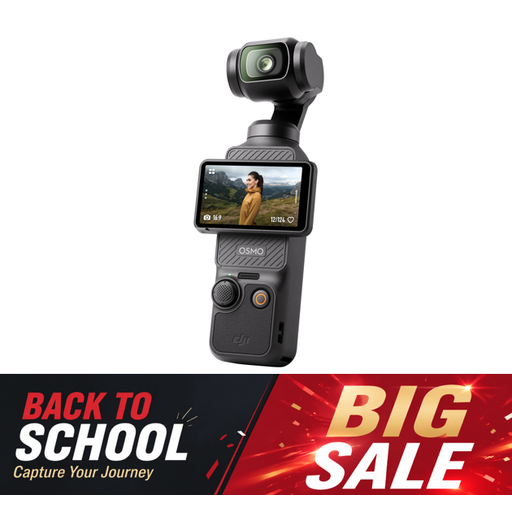
DJI Osmo Pocket 3, 1-inch CMOS, 4K/120fps
The product title focuses on vlogging and video; check that the photo controls and angle of view suit the façade shots you want to take.
The product title lists a 1-inch CMOS sensor, 4K/120fps video and a 2-inch rotating touchscreen.
View at Joybuy
 No image available
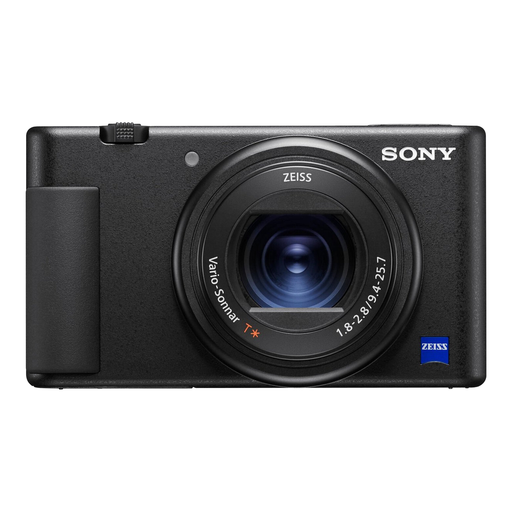
Sony ZV-1 compact vlogging camera
The product title describes it as a compact vlogging camera; check that the angle of view and photography features you need are suitable for your façade shots.
View at Joybuy
Frequently asked questions
Is 24 mm always wide enough to photograph an entire canal house?
No, it also depends on your shooting distance and composition. On the zoom models mentioned, 24 mm is the wide-angle setting in full-frame equivalent terms; check whether the building fits from a similar viewpoint. A 35 mm equivalent prime lens gives a narrower angle of view.
How do I photograph brickwork and a bright sky in cloudy conditions?
Check the exposure on location and adjust the exposure compensation if necessary. If your chosen model supports RAW, you can edit the unprocessed file later; also check the white balance if the brickwork looks an unnatural colour.
What should I check before using a camera for the first time?
Check the manual for the exact model to find out which memory cards and file formats it supports, charge the battery and take test shots from a similar distance. For example, the Fujifilm X100VI manual lists SD memory cards and RAW; this information doesn’t automatically apply to other models.
Is the statutory guarantee in the Netherlands always limited to two years?
No. According to ACM ConsuWijzer, the statutory guarantee depends on what you could reasonably expect from the product. If something goes wrong, the seller is responsible for providing a solution under the applicable terms; don’t automatically confuse this with the duration of an additional manufacturer’s warranty.
Can I share photos showing identifiable passers-by publicly without permission?
First, consider which privacy rules apply to the publication. The Dutch Data Protection Authority distinguishes between private use within a limited circle and wider or commercial publication; identifiable people in an image count as personal data. Whether a particular publication is permitted depends, among other things, on its purpose and legal basis.


