
Maker looking to capture colour accurately
You want the photo to be a convincing representation of the print and are happy to spend time getting the lighting and white balance right.


Start with a test shot using a stable, straight setup and even lighting: a new camera won’t automatically solve reflections or wonky edges. A mirrorless camera is a good fit if you want to choose a suitable lens and settings yourself; a compact camera may suit you if you’d rather use a single fixed setup. For flat cards up to A4 size, you could also consider a scanner. And for a one-off project, try your existing phone first to see if it does the job.
You want the photo to be a convincing representation of the print and are happy to spend time getting the lighting and white balance right.
You want to photograph several cards consistently and square-on, using a setup that can stay in place between shots.
You want to check whether your existing equipment or a scanner can produce the file you need before buying a camera kit.
A good fit if: you photograph cards regularly, want to choose a lens yourself or plan to use the camera for other exhibition work too.
Bear in mind: the body and a suitable lens don’t automatically come as one complete kit. Your setup and lighting still matter too.
A good fit if: you want one camera without having to choose a separate lens, and a test shot works for your card size and shooting distance.
Bear in mind: the lens is fixed and can’t be replaced later.
A good fit if: you want to test whether your existing phone can produce a file suitable for the intended exhibition use.
Bear in mind: you’ll still need even lighting, a straight and stable setup, and to check the image on a larger screen. Avoid using digital zoom when taking the shot.
A good fit if: the cards are flat, fit on the scanning bed and you need individual images rather than photos of the display.
Bear in mind: an A4 scanner won’t work for larger cards or photos of cards in their exhibition setup. The stated resolution alone doesn’t prove that colours will match.
| What to consider | What should you check? | Who is this important for? |
|---|---|---|
| Colour and reflections | Check the white balance settings. Take a test shot in even light, without the built-in flash, and compare the photo with the print. | If I’m photographing colour-sensitive prints, I want to assess reflections and colour casts before taking a whole batch; around 33% of consumers put colour and reflections first. |
| Straight edges and sharp detail | Test the lens with your card size and shooting distance. Check the corners and edges on a larger screen. | For cards with fine lines, I want a straight setup and sharp edges. Around 27% of consumers give straight edges and sharp detail top priority. |
| Cost of the complete setup | Check whether a lens is included with each camera kit, and see what equipment and setup you already have. | For a one-off exhibition, I want to know whether my existing equipment will do the job before buying a complete kit; around 20% of consumers put the total purchase cost first. |
| Consistency across multiple cards | Try the whole process and check a few files before dismantling your setup. | If I’m photographing a stack of cards, I want to be able to repeat the framing and lighting easily. Around 20% of consumers put a repeatable process first. |
A mirrorless camera can use interchangeable lenses, but a body-only deal won’t necessarily include a lens that’s suitable for your cards.
Check what’s in the box and test the complete setup with the card size you want to photograph. If the product information is contradictory, don’t assume a lens is included.
You may need to buy a suitable lens or equipment to keep the setup stable.
The megapixel count alone doesn’t tell you whether the colours will match. Lighting, reflections, the lens and how the camera is set up all play a part. Even art institutions point to the challenges of colour reproduction.
Compare test files with the print and check the colour, reflections and edges before giving extra weight to camera specifications.
The Consumentenbond states that its test dated 9 October 2025 is outdated and that it no longer tests new models.
So don’t use that test as a current ranking for photographing art cards. Assess today’s camera models and kits based on your setup and intended use.
Canon’s range includes both mirrorless cameras with interchangeable lenses and compact cameras with fixed lenses.
The α6400/ILCE-6400A is a mirrorless camera in the E-mount range. Check the full model variant and what’s included in the kit.
The Nikon Z50II is a mirrorless camera sold as a body and in various lens kits.
The Perfection V39II is a scanner, not a camera, and may be suitable for flat cards that fit within A4 dimensions.
These Joybuy cameras are options to compare for photographing art cards. The selection includes compact cameras and mirrorless cameras, including kits with a lens and a body-only version. Check what else you’ll need for your setup for each model.
 No image available
A compact camera to consider if you also want to take still images. Test whether its controls and setup work for photographing flat cards.
The product name specifies a 1-inch CMOS sensor and 3-axis stabilisation. Those terms alone don’t tell you whether the colours and details of your cards will be reproduced well.
 No image available
This mirrorless camera kit may suit you if you want a camera and lens in one package. Take a test shot with your card size and shooting distance.
The product name specifies a 16–50mm zoom lens. Check the contents of the exact kit and assess the card and its edges in the test file.
 No image available
This mirrorless camera with a lens may suit you if you’re looking for a complete lens kit. Test it with the distance and card size you’ll use in your setup.
The product name specifies a 16–50mm f/3.5–5.6 OSS II lens. Check what’s included in the kit and inspect the corners and edges in a test shot too.
 No image available
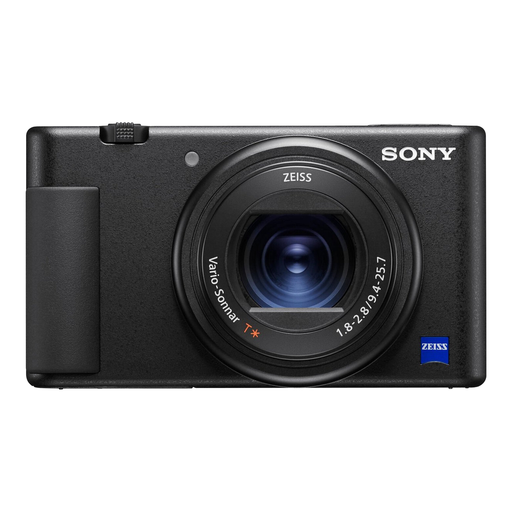
A compact camera to consider if you’d rather not use a separate lens. Take a test shot to check whether its fixed setup works for your cards.
Check the file for colour, detail and straight edges before deciding whether it meets your needs.
 No image available
This body-only version is a suitable option only if you already have a compatible lens or choose one separately.
The product name explicitly states that a lens isn’t included. Before buying, check that you already have a lens suitable for your setup or can get one.
Position the lens parallel to the centre of the card and keep the camera steady. If needed, use the self-timer, then check the edges and sharpness on a larger screen before taking down your setup.
Keep the camera and lighting in the same place, avoid mixing different light sources and check test files as you go. The colour of the light falling on the card matters for white balance.
No. A flatbed scanner is an alternative for flat cards that fit on an A4 scanning bed; it won’t replace a camera for larger cards or photos of the display. Compare a test file with how you intend to use the final image.
For other people’s copyrighted work, the Dutch Government states that you need the creator’s permission to use it. A private copy for personal use must not be shared or made public. Check who owns the rights to the specific cards and get permission for your intended use.
According to the Dutch Government, the seller must provide a solution if a product is faulty. The Netherlands has no fixed statutory guarantee period; a manufacturer’s guarantee is separate from your statutory rights.