
Photographers of weathered keys
You want to show the inscriptions, edges and patina without a harsh reflection obscuring the details. Nikon USA describes similar considerations when photographing small, shiny pieces of jewellery.


When photographing antique keys, start with a panel that you can position at an angle beside the camera and diffuse if needed. A larger panel may need more space, while a compact light is easier to position but won’t necessarily provide the same size of light source. Nikon USA discusses these considerations for jewellery photography, so applying them to antique keys is a well-founded comparison, not a test of these lights.
You want to show the inscriptions, edges and patina without a harsh reflection obscuring the details. Nikon USA describes similar considerations when photographing small, shiny pieces of jewellery.
You photograph several keys under artificial light and want to keep the light settings and white balance as consistent as possible. Nikon USA describes using a white card as a white balance reference.
You want to be able to move the light without having to clear a lot of space for a larger panel and its accompanying setup.
Start by considering where you can position the light. With shiny metal, the size, angle and spread of the light source all affect how reflections look. Then consider colour control, the light output at your shooting distance and how much room the setup takes up.
| What matters when buying | What to look for | Who prioritises this |
|---|---|---|
| Controlling reflections | Check whether you can position the panel at an angle and at a suitable distance, and whether it includes diffusion or is compatible with a diffuser. | If I want to show the patina and inscriptions without a harsh spot of light on the metal, I focus on positioning and diffusion; around 36% of consumers prioritise reflection control. |
| Colour and white balance | Check the adjustable colour temperature range for the exact version, and take a white balance reference under the same lighting. | Anyone photographing a series of keys under the same light will want consistent, repeatable colour and white balance; around 29% of consumers give this consistency top priority. |
| Light at your working distance | Compare lux values only at the same distance and setting. Take a test shot with your camera and usual shutter settings. | If I want to light details at my own shooting distance, I compare light output under the same conditions; around 21% of consumers prioritise lighting details. |
| Space, mounting and power | Check the mounting options, mains or battery power, and exactly what’s included with the version you’re choosing. | When desk space is limited, I want a light that’s easy to position and power; around 14% of consumers prioritise a compact setup. |
A colour rendering or light output rating won’t tell you where a light source will appear as a reflection on a metal key.
First assess the size and position of the light source and how you can diffuse the light. Compare lux values only at the same distance and setting.
You may need a diffuser or a different mounting option to change how the light spreads; check that it’s compatible with the version you’re choosing.
Godox lists batteries for the LEDP260C as sold separately. NEEWER says batteries aren’t included with the RGB660 PRO II kit.
Check the full model name and the contents list for the version you’re considering.
A compatible battery or light modifier may be an additional part of your setup, so also check that the mounting options suit the way you work.
A compact light takes up less workspace, but reflections on the key also depend on the size and position of the light source.
First work out where the light can go in relation to the key and camera, then choose the size.
The P260C Pro is a larger bi-colour panel for a fixed tabletop setup.
The P96 version 3286BC is a compact camera panel for a tight workspace.
The P60x is a bi-colour panel for anyone who wants to position the light precisely.
The RGB660 PRO II two-light kit is designed for a larger setup with adjustable colour and accent lighting.
These Joybuy products are compact, portable lights for photography. They may suit a small workspace, but they’re not the same as a larger panel that you can position beside the camera.
 No image available
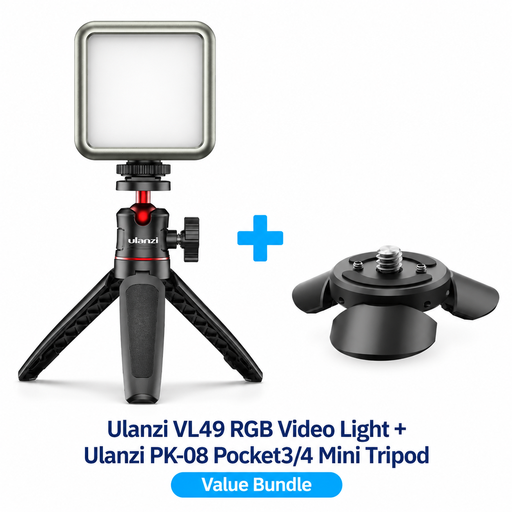
This compact light has adjustable settings and may suit a small photography setup.
The product description mentions RGB lighting and a PK-08 mini tripod for compatible DJI Osmo Pocket setups. Check that the mount works with your camera setup.
 No image available
The portable mini size may suit you if space is limited and you need a light you can move around.
The product title mentions magnetic mounting, a 500 mAh battery and a waterproof design. It doesn’t specify a waterproof rating, so check the details for the exact version and its intended use.
If the applicable EU rules require a CE mark for the electrical panel, it must have one. The European Union explains the rules for CE marking. When buying, check the information for the specific version rather than relying only on a general statement about the brand.
No, a light tent isn’t the only way to diffuse light. Start by adjusting the angle and position of the panel, then see what reflections appear on the key. Nikon USA gives examples using jewellery and flash; these aren’t a direct test of LED panels for antique keys.
Keep the light settings and shooting conditions as consistent as possible, and take a white balance reference under the lighting you’re using. Nikon USA explains that automatic white balance and a reading taken with a white card can give different results.
Check the full model name and contents list for the exact version, including the power supply, battery, mount and any light modifier. Batteries are sold separately for some models or aren’t included in the kit, so don’t assume that another version has the same contents.
If you bought the product as a consumer in the Netherlands and it’s faulty, you can ask the seller to put things right. The Dutch government also explains that many online purchases from a business come with a 14-day cooling-off period, subject to legal exceptions. This cooling-off period is separate from making a complaint about a faulty product.