
Creating a portrait collage
You want to arrange several small faces on paper, check their size and cut out the portraits for a school project. Canon Netherlands describes templates in the SELPHY Photo Layout app for one or more photos.


If you want to arrange several small portraits on one sheet and cut them out yourself, check the paper size and available layouts; a compact printer or a suitable A4 photo printer could do the job. Portable printers are another option for printing individual photos from your phone, but the visible image may be smaller than the film or card size, and refills vary by model. If it’s just for one school project, it’s also worth comparing the cost of getting the photos printed.
You want to arrange several small faces on paper, check their size and cut out the portraits for a school project. Canon Netherlands describes templates in the SELPHY Photo Layout app for one or more photos.
You want to print individual small photos from your phone and are happy with a fixed film or card size. Fujifilm Netherlands and Kodak Photo Printer describe portable printers, each with its own format and refill system.
You’re looking for a device for portraits as well as larger photos or documents, and want to weigh up the purchase price and consumables against how often you expect to use it. Epson Netherlands describes the EcoTank ET-8500 as an A4 photo printer with scanning and copying functions.
A good fit if: you want to arrange several portraits on one sheet and cut them out at home. Canon Netherlands lists 100 × 148 mm paper for the SELPHY CP1500, and Canon Photo Layout offers layouts for multiple photos.
Consider: you’ll need compatible paper-and-ink sets. Check that the crop gives you the size you want by printing a test first.
A good fit if: printing directly from your phone and handing out photos matter more than having a flexible sheet with several cut-outs.
Consider: the visible image may be smaller than the film’s overall size, and the printer uses model-specific film or cartridges. Fujifilm Netherlands lists an instax mini film size of 54 × 86 mm and an image area of 46 × 62 mm.
A good fit if: you want to print A4 schoolwork and larger photos, or scan and copy, as well as print small portraits. Epson Netherlands describes these functions for the EcoTank ET-8500.
Consider: the extra features may be unnecessary for just a few small photos. Factor in how often you expect to use it, as well as the ink and paper you’ll need.
A good fit if: you’re likely to need them for just one project and the turnaround time works with your deadline.
Consider: you’ll have less control over test prints at home. In 2016, the Consumers’ Association described photo labs as a lower-cost option for large print runs; this is historical guidance, not a current price comparison.
| What to consider | What should you check? | Who should pay particular attention? |
|---|---|---|
| Size and layout | Check the paper size, actual image area, available layouts and the size of a test print before cutting anything out. | If you want to fit several portraits on one sheet and check the size of each crop, the format matters a lot; around 36% of consumers say it is their top priority when buying. |
| Total project cost | Compare the number of usable prints and the cost of compatible refills with getting the photos printed, including turnaround time. | If you only expect to do one project, it may be important to weigh up the printer and refills together; around 29% of consumers put project costs first. |
| Printing from a phone | Check phone compatibility, the app required, the image area and which type of film or cartridge the model uses. | If you want to hand out individual portraits straight from your phone, mobile use is a priority; around 21% of consumers value this more than a flexible sheet for multiple cut-outs. |
| Using it after the project | Decide whether you’ll also need to print A4 documents or larger photos, or scan and copy. Factor in ink and photo paper too. | If you want to use the printer for regular work at home or school, versatility may matter more than compact size; around 14% of consumers say this is their top priority. |
With instax mini, the visible image area is smaller than the film’s overall size, so checking only the dimensions of the sheet isn’t enough.
Compare the required portrait size with the image area and, if needed, print a test first.
The Dutch requirements for passport photos used on official documents don’t automatically apply to a school project. Checking only the overall dimensions isn’t enough for official use either.
Ask the school what size is required. If the photo is also for an official document, check the relevant requirements from the Dutch government.
Compact and smartphone printers can use different, model-specific consumables, so the purchase price doesn’t tell the whole story for your project.
Include compatible paper, film, cartridges or ink for the number of photos you need, and compare the total with getting them printed.
The SELPHY CP1500 is designed for compact prints and arranging multiple photos using an app.
The instax mini Link 3 is designed for printing individual instant photos from a smartphone.
The EcoTank ET-8500 is designed for people who want to print A4 photos and scan and copy as well as print portraits.
The Mini 2 Retro P210R is a portable option for small 4PASS prints.
This selection includes portable printers described in the product information for phone-based or small-print jobs, as well as A4 printers for a wider range of school and home tasks. For thermal models, check that the paper is suitable for the portrait photos you need; a reference to photos alone doesn’t tell you the print size or how the image will look.
 No image available
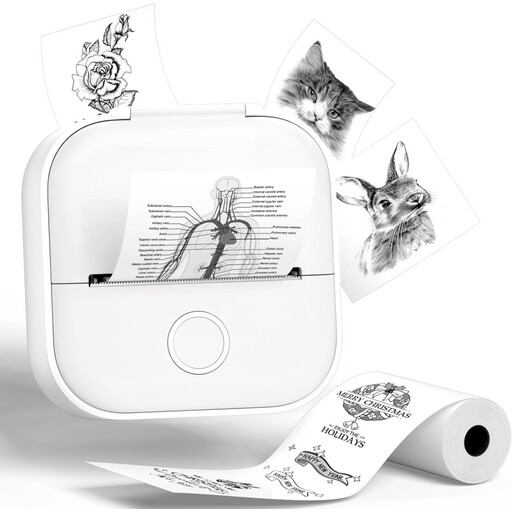
The product information lists photos, notes and labels as possible print jobs; check that thermal paper is suitable for the portraits in your project.
Bluetooth and the Fun Print app are mentioned. The listed version includes 10 rolls of thermal paper.
 No image available
The product name mentions study notes and stickers; check that the paper and print are suitable for the portraits you need for your school project.
The product information lists thermal printing, Bluetooth and use with a smartphone app.
 No image available
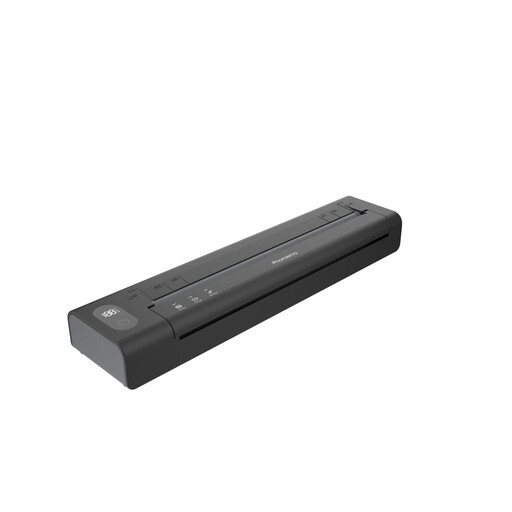
The product information mentions documents and use on the go; check that this suits the photo prints you want and the paper you’ll need.
Bluetooth printing from iOS and Android devices is listed.
 No image available
The product information lists colour printing, scanning and copying, making it an option if you have other school or home tasks to do as well as your project.
Double-sided printing is mentioned in the product name. Check which paper is suitable for the photos you want to print.
 No image available
This A4 colour printer is an option if you also want to print school documents; check separately that the paper and printing options are suitable for portraits.
The product name lists inkjet, colour, A4, Wi-Fi and 4800 × 1200 dpi.
No. The requirements set by the Dutch government for passport, identity card and driving licence photos don’t automatically apply to a school assignment. Ask the school what size they need. If the photo is also for an official document, requirements apply to factors including size, image, paper and resolution; the required size for the documents mentioned is 35 × 45 mm. A printer or app won’t automatically make a photo suitable.
First decide on the required size for each portrait, then measure a test print before cutting anything out. Leave enough room in the layout for the cut-outs. If you’re using instant film, check the image area: Fujifilm lists an instax mini film size of 54 × 86 mm and an image area of 46 × 62 mm.
It depends on the model: the SELPHY CP1500 uses compatible paper-and-ink sets, the instax mini Link 3 uses instax mini film, and the Kodak Mini 2 Retro uses a 4PASS cartridge with paper and an ink ribbon. Before buying, check compatibility with the exact model and what comes with the printer.
According to ACM ConsuWijzer, online consumer purchases often come with a 14-day cooling-off period from delivery, although there are exceptions. You also have statutory rights if a product used normally doesn’t do what you could reasonably expect; the seller is your point of contact.