
Student with a few school portraits
Wants to print the occasional portrait for an album or small frame, and starts by deciding which size they need.


For occasional postcard-sized school portraits, a compact dye-sublimation printer is a good fit, provided the paper size and required paper-and-ink set are suitable for your photo. A mini printer is designed for smaller photos or stickers; choose an A4 photo printer if you also want to print, scan or copy documents. This comparison is based on stated specifications and usage scenarios, not comparative print tests.
Wants to print the occasional portrait for an album or small frame, and starts by deciding which size they need.
Is looking for a small printer for mini portraits or stickers and is happy with a smaller image area.
Needs A4 prints as well as portraits, and may also need to scan or copy.
Choose this option if: a single postcard-sized portrait is large enough and you want a compact printer.
Keep in mind: the Canon SELPHY CP1500 uses a mains adaptor and does not offer A4 printing or a scanner function.
Choose this option if: a small image for an album or room decoration is all you need.
Keep in mind: the Canon SELPHY QX20 uses 72 × 85 mm or 54 × 85 mm paper; the instax mini Link 3 has an image area of 62 × 46 mm. These sizes are not a substitute for a larger school portrait.
Choose this option if: you want to print portraits up to A4 size and also print, scan or copy documents.
Keep in mind: a larger printer takes up more space; weigh the purchase price and consumables against how often you print. If you print infrequently with an inkjet, extra ink may be used for cleaning.
| What to consider | What should you check? | Who does this matter most to? |
|---|---|---|
| Portrait size and cropping | Compare the image area and crop you want with the paper size. Postcard paper measuring 100 × 148 mm is not exactly 100 × 150 mm. | If I want a portrait for a small frame, the image size really needs to fit. Around 36% of consumers prioritise their preferred portrait size. |
| Space in your student room | Check the printer’s dimensions, the space it needs while printing and its power supply. | I want to be able to store and use the printer easily in my room. Around 29% of consumers give limited space the highest priority. |
| Costs for occasional printing | Compare the printer, the right media and the ink for your expected usage; don’t treat maximum yields as a personal prediction. | If I only print a portrait now and then, I want to know which media and ink suit my usage. Around 21% of consumers focus mainly on the costs of occasional printing. |
| Portraits and documents | Check whether each model supports A4 printing, scanning and copying. | If I also want to work with coursework, I’m looking for one device with the functions I need. Around 14% of consumers prioritise this combination. |
A small photo may be too small for the frame or album you have in mind.
Measure the portrait or frame you want and check both the image area and paper size before buying media.
Paper, ink and film vary between systems. Infrequent inkjet printing may also use ink for cleaning.
Compare the complete set of media and consumables that suits how often you print. Don’t treat a stated maximum yield as a prediction of how many prints you’ll get.
A compact printer for small portraits does not automatically offer A4 printing, scanning or copying.
Decide in advance whether you only want to print portraits or also need to work with coursework.
If you later want to print, scan or copy A4 documents, you may also need a separate device.
Canon recommends the SELPHY CP1500 and QX20 for smaller photo sizes, and the PIXMA G650 for A4 photos and additional features.
Epson positions the EcoTank ET-8500 as an A4 photo printer for anyone who wants to handle photos and documents with one device.
According to Fujifilm, the instax mini Link 3 is designed for small smartphone prints when a smaller image area is all you need.
These printer options range from portable printers for small prints to A4 printers for photos and coursework. Before you buy, check that the supported media and size are suitable for the school portrait you want to print.
 Image unavailable
For anyone looking for a portable printer for notes, labels or small images; check the size and media before choosing it for school portraits.
The title mentions Bluetooth, thermal printing and 10 rolls of thermal paper. The product description warns that friction can turn thermal paper black.
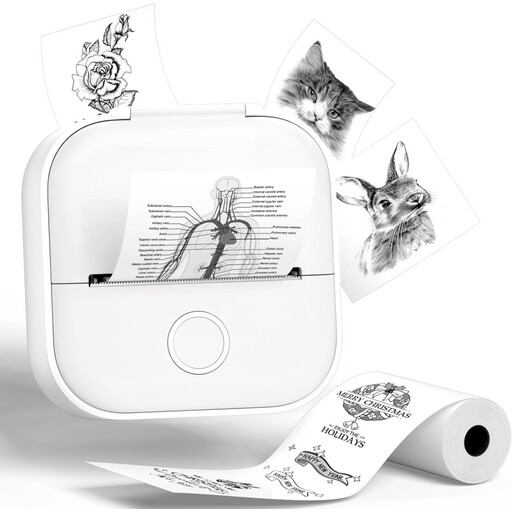 Image unavailable
A portable mini printer for anyone who wants to print study notes or stickers; check the media and size before choosing it for portraits.
The product title mentions prints for study notes and stickers.
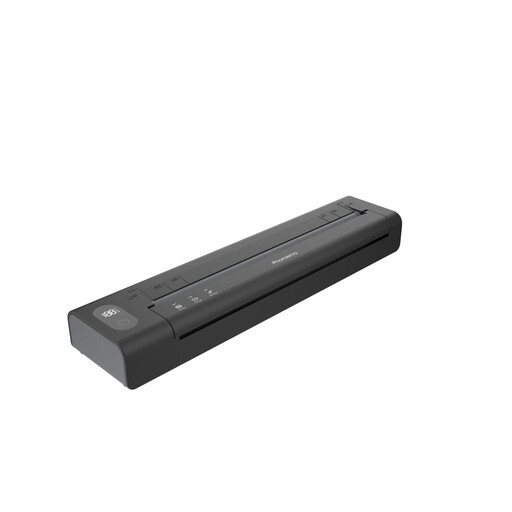 Image unavailable
For anyone looking for a portable printer for text and images, with the option to print from a phone.
The product description mentions Bluetooth printing via the Phomemo app on iOS and Android devices, and a weight of 600 g.
 Image unavailable
An option if you want to print, scan and copy A4 coursework as well as colour prints.
The product information lists A4 support, double-sided printing, scanning and copying.
 Image unavailable
Suited to anyone who wants to print, scan and copy documents as well as photos.
The product information lists paper sizes up to A4 and support for 10 × 15 cm. Printing, scanning and copying are also mentioned.
Not with the media specified for the Canon SELPHY QX20 or instax mini Link 3: their paper or image sizes are smaller. First decide on the size you want, then check the printer’s exact media specifications.
Check the power supply, connection and compatible media for your chosen model. The Canon SELPHY CP1500 uses an external power adaptor, while the instax mini Link 3 requires a phone app. If you print infrequently with an inkjet, ink used for cleaning may also affect your costs.
That depends on the model and bundle. Canon lists different box contents for the CP1500; Fujifilm states that instax mini film is available separately. Check what’s included in the exact offer before you buy.
According to Dutch consumer advice, the retailer is responsible for the statutory guarantee if a product is faulty; a manufacturer’s guarantee does not replace this right. The appropriate solution depends on the fault and what you could reasonably expect from the product.
The Dutch government says that making a private copy of copyright-protected photographic material for personal use is permitted, but distributing or publishing it is not. The Dutch Data Protection Authority distinguishes between private use and sharing identifiable people more widely; schools have their own GDPR obligations when taking and publishing identifiable pupil photos. Printing a photo privately and a school publishing one are therefore different situations.