Choose a printer based on when you’ll hand out the portraits and the print size you want. For lots of small prints during the reunion, a dye-sublimation printer offers a different option from an inkjet printer for larger portraits. Then check the compatible media, how the printer connects to your shared workspace and the pace of the entire workflow. A printer’s stated speed doesn’t tell you how long selecting, editing and handing out the prints will take altogether.
Which printer is right for you?
Organisers handing out portraits straight away
If you want to hand out a batch of small portraits during a reunion, focus on print throughput and the media required. DNP and Canon describe models for small prints, each with its own formats and consumables.
Creators making larger portraits
If you want to select and edit portraits first, then print them in A4 or A3+, the desired size and choice of paper may matter more than handing prints out straight away. Epson and Canon offer models for a range of larger formats.
People managing a shared printer
In a studio where several people print regularly, it’s also important to agree how files, settings and consumables will be managed. The right things to focus on depend on the printer and workflow you choose.
What should you look for when choosing?
First decide whether you’ll hand out portraits straight away or print them later in a larger format. Then compare the relevant media, connections and requirements for shared use.
| What to consider |
What to look for |
Who is this important for? |
| Print speed |
Compare the speed for your desired format and the media required; also consider how the printer connects to your workspace. |
If we want to hand out lots of small portraits during the reunion, we’ll want to keep waiting times down. Around 36% of consumers say immediate handover is their top priority. |
| Size and finish |
Decide on the finished size you want and check which paper sizes and types the exact model supports. |
If we need larger portraits or a particular finish, we’ll want to know which size and paper are suitable. Around 29% of consumers say size and finish are their top priority. |
| Consumables |
For the same print run and size, compare the paper, ink, film or roll media required; factor in any known maintenance too. |
For repeat printing, we’ll want to know in advance which materials and maintenance are needed for the printer we choose. Around 21% of consumers put managing consumables first. |
| Shared use |
Check the supported connections and agree who will manage files, print size, settings and handover. |
If several people print in the studio, we’ll want to agree a clear process for submitting files and handing over prints. Around 14% of consumers make shared use their top buying priority. |
Common buying mistakes
-
Confusing printer speed with the speed of handing out prints
DNP states that the DP-DS620 can print up to 400 prints per hour. This manufacturer figure describes the printer, not the time needed to select, edit and hand out portraits.
Plan the full process from file to print, and compare speed figures only for the size you intend to use.
Allow time for selecting and editing portraits, as well as handing out the prints.
-
Choosing a small print when you need a larger portrait
A printer for small prints or instant film isn’t automatically suitable for portraits on A4 or A3+ photo paper.
Decide on the finished size you want before choosing a printer technology.
Larger portraits may need a separate printing process.
-
Assuming the manufacturer’s stated yield is fixed for your prints
Epson bases the stated yield for the ET-8500 on test conditions; it isn’t a guaranteed result for every print run or size.
Compare the materials needed for your desired size and print run, and factor in maintenance. Epson says that initial setup of the SC-P700 uses ink and reduces the maintenance box capacity.
Brands to consider
DNP
The DP-DS620 is a dye-sublimation printer for batches of small portraits, with several supported print sizes.
- DNP states that the DP-DS620 can print up to 400 prints per hour.
- The printer uses media specific to each size. Its stated capacity doesn’t include the time needed to select, edit and hand out prints.
Canon
The SELPHY CP1500 is designed for small prints, while the PIXMA PRO-200S is a separate inkjet option for larger formats.
- Canon states that the SELPHY CP1500 takes around 41 seconds per postcard print and uses model-specific media. The PIXMA PRO-200S supports A3+ and uses eight CLI-65 dye ink cartridges.
- The two models differ in size and consumables, so check which option suits the print you want.
Epson
The EcoTank ET-8500 is a refillable inkjet printer up to A4, while the ET-8550 supports A3+. The SureColor SC-P700 is a separate option that uses UltraChrome Pro 10 ink.
- Epson describes the models as offering different sizes and ink systems for a range of printing needs.
- Epson’s yield and quality descriptions are manufacturer claims, not comparative tests carried out in a studio. Initial setup of the SC-P700 uses ink and maintenance box capacity.
Fujifilm
The instax Link WIDE 2 is an option if you want to create an instant film print from a smartphone as a keepsake.
- Fujifilm lists the app and instax WIDE film as requirements; film is sold separately.
- This is an instant film option, not a printer for portraits on standard A4 or A3+ photo paper.
Joybuy printers for this use
This selection includes portable printers and inkjet printers for images and colour prints. Check that each model’s print size and media are suitable for your portraits.
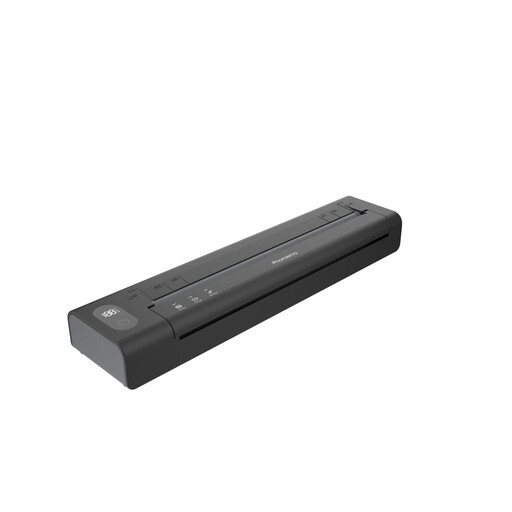 Image unavailable
Phomemo A282U Portable Wireless Printer, Black
May suit mobile printing from iOS or Android devices; images are listed as supported print media.
Bluetooth via the Phomemo app and a rechargeable battery are listed.
Joybuy
 Image unavailable
HP Smart Tank 7305 Wireless All-in-One Color Printer
May suit shared colour printing if an ink tank system and extra office features fit your studio setup.
The product name lists duplex printing, copying and scanning; the description mentions ink tanks and a 35-page automatic document feeder.
Joybuy
 Image unavailable
Canon PIXMA MG2556S Inkjet A4
May suit portraits at 10 × 15 cm or A4 if a wired USB connection works for your studio setup.
The product name lists a resolution of 4800 × 600 DPI; 10 × 15 cm, A4 and USB 2.0 are also listed.
Joybuy
 Image unavailable
Epson WorkForce Pro WF-C5390DW A4 colour printer
May suit A4 colour prints and a shared network if this model fits your intended workflow.
Wi-Fi and Ethernet are listed as connection options; the product name also mentions automatic duplex printing.
Joybuy
 Image unavailable
Mini Bluetooth Thermal Printer, 10 rolls of thermal paper
May suit small prints you want to hand out straight away, if thermal paper is suitable for the result you want.
The product name mentions Bluetooth, photo printing and 10 rolls of thermal paper. The product description warns that friction can turn the paper black.
Joybuy
Frequently asked questions
How can you avoid confusion when several people print from the same studio?
For each job, agree who will check the size, paper and settings, and choose a file submission method supported by the exact model. Epson Netherlands lists Ethernet, Wi-Fi, SD cards and USB flash drives among the connections for the ET-8500; Canon Netherlands lists Wi-Fi, USB and SD cards among the options for the SELPHY CP1500.
What should you bear in mind when setting up and maintaining a printer?
Follow the setup instructions for the exact model and allow for consumables being used from the first print. Epson states that setting up the SC-P700 uses ink and shortens the life of the maintenance box.
What warranty applies when buying in the Netherlands?
For a consumer purchase, the seller is responsible for the legal guarantee if the product doesn’t meet what the consumer can reasonably expect from it under normal use. The Netherlands Authority for Consumers and Markets’ guidance covers sales to consumers; for business use in a studio, ask about the terms that apply to your purchase.
Can you always return a printer bought online within 14 days?
No, not always: according to the Netherlands Authority for Consumers and Markets, consumers usually have a 14-day cooling-off period for online purchases, while a purchase from a physical shop doesn’t automatically come with the same right to return. Don’t assume that a business purchase for a studio is a consumer purchase.
Can a shared studio publish identifiable reunion portraits without permission?
First consider the purpose and the applicable legal basis; according to the Dutch Data Protection Authority, identifiable people in photos are personal data. If you process the images on behalf of a business or organisation, you need a legal basis. The limited exception for private or household use doesn’t automatically apply to a studio.


