
Portrait artist comparing details
You use larger prints to compare colour, shadows and facial details side by side. Factor the paper type into your colour workflow, as Canon Netherlands explains in its guidance on colour management.


Start by deciding what size you want to review your portraits at and how often the studio prints. Small individual prints, larger A3+ references and frequent printing each call for a different type of printer. Then compare compatible paper types, ink and shared-use features. The specifications listed do not prove that one model reproduces portraits better than another.
You use larger prints to compare colour, shadows and facial details side by side. Factor the paper type into your colour workflow, as Canon Netherlands explains in its guidance on colour management.
Several people print regularly, so you want to factor in refills and ongoing consumable costs. A manufacturer's yield claim is no guarantee of how much your studio will use.
You want to share prints with colleagues. First decide whether small individual photos will do, or whether the studio also needs to scan and copy documents.
Choose this if: you want larger references and a choice of supported photo paper types. The Canon PIXMA PRO-200S supports A3+ and uses eight dye-based inks.
Bear in mind: cartridge and paper costs. A3+ support alone does not prove that a printer will reproduce portraits in a particular way.
Choose this if: you want to make larger references on different paper types and carefully configure your print workflow. The Canon imagePROGRAF PRO-310 supports A3+ and has ten individual pigment ink cartridges.
Bear in mind: the cartridges and media you’ll need. The type of ink does not prove a quality advantage for your portraits.
Choose this if: the studio prints photos regularly and refillable tanks matter to you. The Epson EcoTank ET-8550 supports A3+ and, according to Epson, has six inks, multiple paper feeds and Ethernet.
Bear in mind: the stated photo yield is a manufacturer claim based on its own test conditions, not a guaranteed yield or cost per portrait.
Choose this if: small individual portraits are enough for quick reference. The Canon SELPHY CP1500 supports sizes including 100 × 148 mm.
Bear in mind: it is not a substitute for an A4 or A3+ reference and requires compatible paper and ink.
Choose this if: alongside references, the studio needs to print, scan and copy documents. According to HP, the HP Smart Tank 7305 offers these features and is designed for teams of up to three users.
Bear in mind: check the photo size you need and the media supported. The features listed do not prove better portrait reproduction than specialist photo printers.
| What to consider | What to check before buying | Who should pay particular attention? |
|---|---|---|
| Size and paper | Decide on your preferred print size and check which paper types and feeds the exact model supports. | If I want to compare colour, shadows and facial details on a larger reference, size and compatible paper matter most to me. Around 36% of consumers give size and portrait details top priority. |
| Ink and print frequency | Compare ink, paper and any maintenance supplies for the same size and expected frequency of use. | If I print often, I want to know how ink and paper affect running costs. If I print occasionally, I also consider maintenance. Around 29% of consumers prioritise print volume and consumable costs. |
| Shared use | Check network connections, supported devices and whether colleagues can use the same paper and colour settings. | If several people use the printer, I want the connection and workflow to suit the team. Extra document features are only necessary if we need them for our work. Around 21% of consumers give shared access and workflow top priority. |
| Small individual prints | Check whether 100 × 148 mm is sufficient and which paper-and-ink pack is compatible with the exact model. | For quick, small individual references, I don’t automatically need to choose a large-format printer. Around 14% of consumers put small prints first. |
A manufacturer's figure applies under its own test conditions. Historical Consumentenbond research into other inkjet models shows that cleaning ink can be a cost factor with occasional use, but it does not give a cost figure for these models.
Compare ink and paper for the same portrait size and paper type. Treat yield claims separately from your own usage.
The Canon SELPHY CP1500 supports sizes including 100 × 148 mm, while the Pro and EcoTank models discussed support A3+.
First decide on the finished size you want, then compare printers and media that support it.
The official specifications describe different ink systems, but they are not an independent portrait test. Paper and colour settings also affect the print workflow.
Consider size, paper and colour management together, and don’t treat manufacturer claims as a head-to-head test winner.
The Canon models listed range from A3+ photo printers to a compact printer for small individual photos.
The EcoTank ET-8550 is an A3+ photo printer with refillable tanks. The SureColor SC-P700 is a separate photo range that uses UltraChrome Pro 10 ink.
The Smart Tank 7305 is worth considering for a shared studio that needs scanning and copying as well as printing.
This selection includes portable printers for small prints and A4 colour printers for shared use. Check that each model’s size and media are suitable for your portrait references.
 No image available
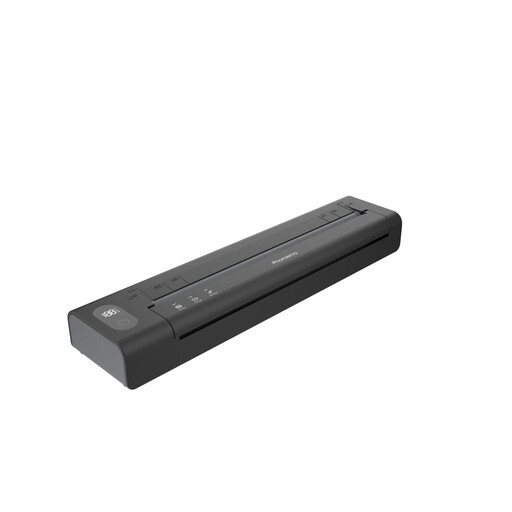
The product name mentions photo prints and the set includes 10 rolls of thermal paper. Thermal paper can turn black through friction.
 No image available
A portable option for printing images from iOS and Android devices via Bluetooth.
The product description mentions a rechargeable battery.
 No image available
Suitable for a shared workflow that needs scanning and copying as well as printing.
The product specifications list A4 and photo paper sizes such as 4 × 6, 5 × 7 and 8 × 10 inches, wireless connectivity and refillable ink.
The product name mentions duplex printing.
 No image available
An A4 colour inkjet printer with Wi-Fi and Ethernet, according to the product listing. Check that it supports the photo media you need.
The product description states that it weighs more than 15 kg and recommends lifting it with two people.
 No image available
An option for shared printing, scanning and copying. Check that the features suit your studio’s needs.
The product specifications list A4, photo paper sizes such as 4 × 6, 5 × 7 and 8 × 10 inches, wireless connectivity and refillable ink.
The product name mentions duplex printing.
Match the paper, printer settings and ICC colour profile. Canon describes colour management as part of the print workflow. Paper cannot look exactly like a luminous screen.
Check which ink, photo paper types and any maintenance supplies are compatible with the size you want and how often you print. Don’t treat a manufacturer's photo yield as the cost of printing your own portrait without taking the test conditions into account.
According to Epson’s maintenance instructions, clean the print head when print quality declines, and run a nozzle check first. Follow the instructions for the exact model; this Epson guidance does not automatically apply to other brands.
When you buy as a consumer, you’re entitled to a product that meets the standards you can reasonably expect. The Government of the Netherlands states that the country has no fixed statutory warranty period. If something is wrong, contact the seller. If you’re buying for business, check the terms that apply to your purchase.
Don’t assume you can use them without restriction: according to the Dutch Data Protection Authority, identifiable people in photographs are personal data. The rules that apply depend, among other things, on who processes the images and why. Printing a photo for internal use and publishing it are different activities.