
Artist with a small desk
You want to keep portraits beside you while you work and be able to put the printer away between uses. Both the print size and the space the printer needs while printing matter.


Start by choosing the smallest print size that lets you assess facial details clearly. A compact printer may be enough for small references, while A4 gives you more room for the image but takes up more space. Measure the room needed for paper input and output when the printer is in use. Then compare paper, ink or film based on how often you plan to print; a larger model isn’t automatically a better fit.
You want to keep portraits beside you while you work and be able to put the printer away between uses. Both the print size and the space the printer needs while printing matter.
You want to study facial features on a larger sheet and have room for an A4 printer with accessible paper input.
You regularly print new images and want to weigh the cost of consumables against the space needed for the printer, photo paper and maintenance.
First decide what print size gives you enough detail, then measure the workspace required. After that, compare consumables based on how often you print.
| What to consider | What to look for | Who it matters to |
|---|---|---|
| Workspace while printing | Measure the space with the necessary paper trays open; check whether paper feeds from the front or the back. | If you use the printer on a crowded desk, you’ll want to know how much room the open trays take up. Around 36% of consumers prioritise having clear desk space. |
| Print size and visible detail | Assess a full-size test print. The Canon SELPHY CP1500 supports 100 × 148 mm; A4 printers offer a larger sheet. | If you want to see eyes, shadows and proportions clearly, choose a size that shows the details you need for your work. Around 29% of consumers prioritise how useful the portrait print size is. |
| Consumables for regular printing | Compare the compatible paper and ink, film or dye sets for the same print size and the number of prints you expect to make. | If you regularly print a series of references, you’ll want to know which consumables they require. Around 21% of consumers prioritise the cost of repeated printing. |
| Portrait tones and shadows | Check which photo paper is supported and, if possible, print a test using your own image. | If subtle tones and dark areas matter, assess them in a print of your own; an ink specification alone doesn’t prove colour accuracy. Around 14% of consumers prioritise this assessment. |
The stated storage dimensions may not include the space needed for open trays and paper input or output.
Measure the printer where you plan to use it, with the trays you need open.
You may need to clear extra desk space or move the printer every time you print.
A small image area may not be suitable for assessing subtle proportions or shadows. An instax mini print has an image area of 46 × 62 mm; the Canon SELPHY CP1500 supports postcard size at 100 × 148 mm.
First print a full-size test and check whether the details you need are clearly visible.
If the image area turns out to be too small, you may need a larger print or a different printer.
A manufacturer’s stated number of photos isn’t a cost estimate for your files, choice of paper and usage.
Compare consumables for the same size and the print volume you expect; if you’re using an inkjet printer, factor in maintenance too.
Allow for photo paper, compatible cartridges or film, and any inkjet printer maintenance.
Canon offers compact postcard printers and A4 photo models with cartridges or refillable tanks.
Epson offers A4 photo models with individual cartridges and models with refillable tanks; the ET-8550 also supports A3+.
The instax mini Link 3 is a portable option for very small smartphone prints, not an A4 portrait reference.
This selection includes portable printers for printing on the go and A4 colour printers. Check that the print size and printing technology suit the details you want to see in a portrait reference.
 No image available
A portable option if you mainly want to print on the go; the product name also mentions photo prints.
The bundle includes 10 rolls of thermal paper.
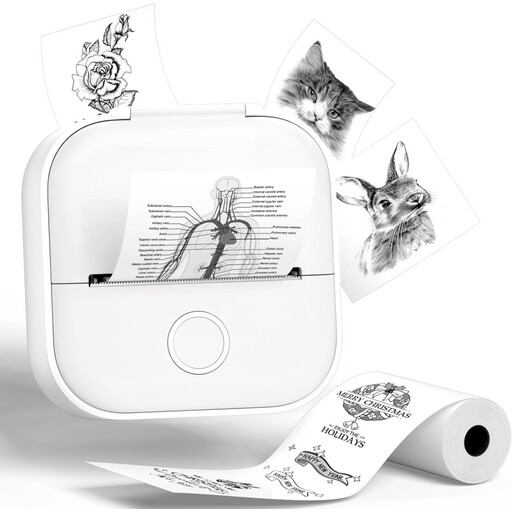 No image available
A portable mini printer for study notes and stickers, as indicated by the product name.
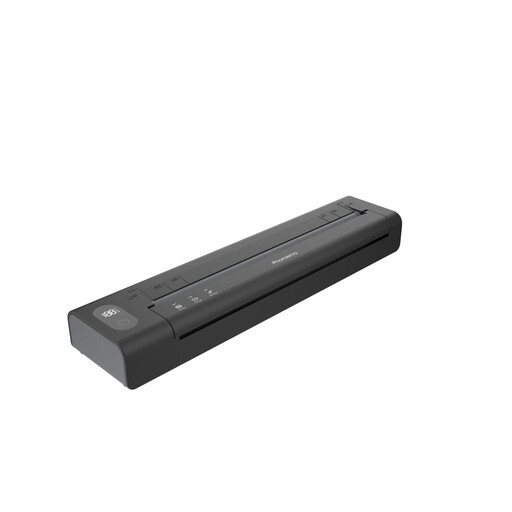 No image available
A portable printer for home or on the go, according to the product name.
 No image available
A colour printer for anyone also looking for scanning and copying functions, as stated in the product name.
The product name mentions duplex printing, a scanner and a copying function.
 No image available
An A4 model to consider if you’re looking for a larger print size.
The product name lists a resolution of 4800 × 600 dpi.
No, not necessarily. First check whether a 100 × 148 mm test print shows the details you need; choose A4 if it doesn’t. This is a practical choice, not a legal or technical minimum requirement.
Measure the setup with the paper trays you plan to use open. The Epson Expression Photo XP-8700 has, among other things, a rear feed and a motorised output tray. The stated dimensions of the Canon SELPHY CP1500 with the trays retracted don’t indicate the full amount of space needed to use it.
Follow the instructions for your model. For applicable EcoTank and Expression models, Epson recommends checking the nozzles first when these symptoms occur, then cleaning the print head if necessary. This advice doesn’t automatically apply to dye-sublimation or film printers.
When you buy from a business at a distance, you generally have a 14-day cooling-off period, with some exceptions. You’re also entitled to a product that is fit for purpose. According to the Dutch Government, the Netherlands has no fixed statutory guarantee period; if there’s a fault, contact the seller to find a solution.
When you buy a new, similar appliance, the shop must take back your old one free of charge under the Dutch take-back scheme. The Dutch Government also lists collection points and your local council recycling centre.