
Teacher discussing details on A4
Wants to compare light, texture and composition in still-life studies on a larger sheet. Canon and Epson specify photo printing up to A4 for the PIXMA G650 and EcoTank ET-8500 models reviewed.


First, decide what size prints your pupils need to compare details, then work out how many copies you’ll print per lesson. A compact dye-sublimation printer is designed for small individual photos, while refillable-tank photo inkjet printers are a better fit for A4 studies or repeated print runs. A cartridge all-in-one can also print documents and scan work, but check the paper, connections and consumables costs for each model.
Wants to compare light, texture and composition in still-life studies on a larger sheet. Canon and Epson specify photo printing up to A4 for the PIXMA G650 and EcoTank ET-8500 models reviewed.
Often prints several copies, so wants to factor in refill ink, photo paper and maintenance as well as the purchase price. The Dutch Consumers’ Association highlights usage, photo prints and ink costs as relevant factors when choosing.
Wants to print individual small photos during lessons and is happy with a smaller format. Canon says the SELPHY CP1500 supports prints including 100 × 148 mm.
First decide whether your class needs small individual prints, A4 or A3+. Then compare the expected number of prints, the space available and the features you need for other classroom tasks.
Choose this option: if you want to hand out small individual photos and don’t need A4. Canon lists 100 × 148 mm among the formats supported by the SELPHY CP1500.
Bear in mind: it uses a matching combination of paper and ink cassette, and this format won’t replace an A4 study.
Choose this option: if you regularly print A4 studies or several smaller photos. Canon and Epson specify A4 photo printing and scanning for the G650 and ET-8500 models reviewed.
Bear in mind: compare ink, photo paper and maintenance for your printing needs. Ink colour specifications alone don’t prove that one printer produces better prints.
Choose this option: if you want to print lesson documents or scan work as well as photos. HP lists a photo tray, borderless printing, scanning and copying for the Envy Photo 7934.
Bear in mind: check the price of compatible replacement cartridges and compare independent photo tests before judging colour reproduction.
Choose this option: if A4 is too small for group discussions. Epson specifies A3+ photo printing for the ET-18100.
Bear in mind: larger paper needs suitable storage and workspace. Also check whether you’ll need a separate scanner.
| Consideration | What should you look for? | Who will this matter most to? |
|---|---|---|
| Format and visible detail | Decide in advance whether you need 100 × 148 mm, A4 or A3+. Check which photo paper and borderless printing the exact model supports; Canon and Epson specify different maximum formats for the models reviewed. | If pupils need to look at light, texture and composition together, I want a print that’s large enough to discuss the details. Around 36% of consumers prioritise format and visible detail. |
| Costs for repeat printing | For the same format, compare the right ink as well as the photo paper. Treat stated photo yields as manufacturer specifications, not as a guaranteed number of prints in the classroom. | If I hand out several copies per lesson, I also want to factor in the recurring supplies. Around 29% of consumers prioritise the cost of print runs. |
| Space and classroom workflow | Check the space available for the printer and paper feed, how it connects to classroom devices, and whether you need scanning. Canon lists the SELPHY CP1500 as measuring 182,2 × 133 × 57,6 mm with its trays retracted. | With limited desk space, I want to be able to hand out small prints without setting up a large device. Around 21% of consumers prioritise this compact classroom workflow. |
| Photos and other classroom work | Check the photo tray, scanning function and compatible cartridges. The Dutch Consumers’ Association treats photo prints and ink costs as separate points of comparison. | If I only print photos occasionally but also want to create documents and scan work, I’m looking for one device for mixed classroom use. Around 14% of consumers prioritise this combination. |
For repeated print runs, you also need to consider ink, photo paper and maintenance. Canon says the PIXMA G650 has a replaceable maintenance cartridge.
Compare the supplies needed for the same print format and a realistic number of copies per lesson. Don’t treat manufacturer yields as guaranteed classroom results.
Tank ink, cartridges, photo paper and possibly a maintenance cartridge are different consumables to include in your usage plans.
The Canon SELPHY CP1500 supports formats including 100 × 148 mm, while Canon and Epson specify photo printing up to A4 for the G650 and ET-8500 models reviewed.
First choose the format your pupils need to discuss the still-life study, then compare portability or device size.
Product specifications and manufacturer claims aren’t independent measurements of how your files will print on your paper.
Compare independent photo-print results and, if possible, test your own files and chosen paper before printing a large batch.
The PIXMA G650 reviewed is designed for A4 photos with refillable tanks, while the SELPHY CP1500 is aimed at compact prints for individual photos.
The EcoTank ET-8500 reviewed is an A4 option, while the ET-18100 is designed for A3+ photos.
The Envy Photo 7934 reviewed is a cartridge all-in-one for printing photos alongside documents and scans.
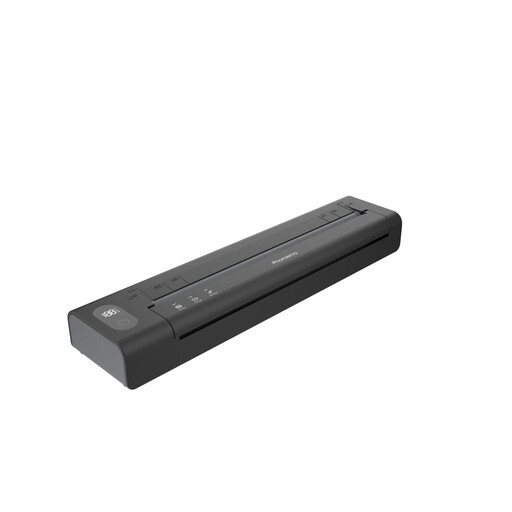
This Joybuy selection includes mobile printers and all-in-ones for mixed classroom use. Check that each model supports the paper formats, photo features and connections you need for your class.
 No image available
The product information describes mobile document printing. Check separately which paper and file types are suitable for your classroom materials.
Bluetooth; rechargeable battery; up to 150 sheets per charge according to the product description; stated weight 600 g.
 No image available
Suitable for mixed classroom use, with printing, scanning and copying. Check which paper formats and photo features the model supports for still-life prints.
Refillable ink tank system; automatic double-sided printing; 35-sheet document feeder.
Keep ink bottles out of children’s reach; ink can be harmful if swallowed.
 No image available
An all-in-one for mixed classroom use; the product information lists printing, scanning and copying. Check that the connection is compatible with classroom devices.
A4 and 10 × 15 cm paper; USB 2.0; stated resolution 4800 × 600 dpi.
 No image available
The product information lists printing, scanning and copying. For still-life studies, check that the paper format and printer features suit your needs.
A4 and 10 × 15 cm paper; EcoTank system; Wi-Fi Direct and Apple AirPrint; stated dimensions 346 × 375 × 347 mm.
Keep cartridges out of children’s reach.
 No image available
An all-in-one for mixed classroom use, with printing, scanning and copying. Check separately that the paper formats and photo features suit still-life studies.
Refillable ink tank system; wireless; double-sided printing; stated dimensions 427,5 × 364 × 198,6 mm.
It can be, if small prints are sufficient. Canon specifies postcard-size prints including 100 × 148 mm for the SELPHY CP1500. If pupils need to assess details on a larger sheet, choose A4 or A3+ first, as this compact format won’t replace larger study prints.
Before buying, check that the exact model’s connection is compatible with classroom devices; Canon and Epson list Wi-Fi for the PIXMA G650 and EcoTank ET-8500 models reviewed. For faded prints or streaks on compatible EcoTank and Expression models, Epson recommends checking the nozzles first and then cleaning the print head if necessary. Also check the ink level.
Factor photo paper, compatible ink or paper with an ink cassette, and any maintenance into your comparison. According to the Government of the Netherlands, statutory guarantees in the Netherlands have no fixed legal duration; for eligible online distance purchases, there is usually a 14-day cooling-off period. Check the terms separately if the school, rather than an individual consumer, is the buyer.
For identifiable pupil photos that a school wants to publish, the Dutch Data Protection Authority highlights the need for consent and secure handling of images. For pupils under 16, parental consent is required; from the age of 16, the school must ask the pupil for consent. This applies to publishing images of pupils and isn’t a general requirement for printing still lifes only.