
Creator of larger wall photos
You want to display photos in A3 or A3+ and first need to decide which paper size and finish you need.


Start by choosing the print size and deciding how many photos you need. A3+ wall prints require a suitable inkjet printer, while compact dye-sublimation printers are designed for smaller prints. Then compare ink tanks and cartridges based on your print volume and choice of paper, and check that you have enough room for the printer and paper path.
You want to display photos in A3 or A3+ and first need to decide which paper size and finish you need.
You print several photos repeatedly and want to plan ink, paper and maintenance for each print run.
You display smaller photos and need to consider the space required for the printer, paper input and output.
Choose this option: if you want to print a few larger photos on compatible glossy, lustre or matte paper. Canon Netherlands lists these media for the PIXMA PRO-200S.
Bear in mind: the PRO-200S uses eight individual dye cartridges, which involves a different set of considerations from a refillable tank system.
Choose this option: if you regularly print several larger photos. Epson Netherlands lists the EcoTank ET-8550 as an A3+ printer with refillable tanks.
Bear in mind: compare ink use for the same photo size and paper type. Epson's yield claims are not an independent measure of your printing costs.
Choose this option: if fine art paper and a specific print workflow matter to you. Canon Netherlands lists these media for the imagePROGRAF PRO-310.
Bear in mind: check that your chosen fine art paper is compatible with the printer and suits the way you work.
Choose this option: if smaller photos are sufficient. Canon lists 100 × 148 mm postcard media for the SELPHY CP1500.
Bear in mind: the CP1500 cannot produce A3+ wall prints using the media listed. For the DNP DP-DS620, also check the required roll media and ribbons, as well as software compatibility.
| Point to consider | What to look for when buying | Who is this important for? |
|---|---|---|
| Photo size | First choose your preferred print size and check that the printer supports that paper size. Also allow for the space needed for paper input and output. | If I want to display large photos on the wall, I decide on the size before choosing a printer. Around 36% of consumers put print size first. |
| Ink use over multiple print runs | Compare ink, paper and any maintenance for the same photo size and paper type. Don't convert a yield claim for 10 × 15 cm into a cost for A3+. | When I print several photos for regular exhibitions, I want to be able to plan ink use. Around 29% of consumers prioritise print volume and the related choice of consumables. |
| Colour and paper | Check that your chosen paper is supported and, for colour management, use the appropriate profile for the printer and paper. Print a test before the exhibition. | If a particular paper finish or colour reproduction matters to me, I check that the printer and paper work well together. Around 21% of consumers prioritise colour and finish. |
| Space and operation | Measure the available space, including the paper path, and decide whether smaller prints will be sufficient. For a professional printer, also check software compatibility. | In a small classroom, I want the printer to take up as little workspace as possible, and smaller photos may be enough. This is the main priority for around 14% of consumers. |
The media listed for the Canon SELPHY CP1500 measure 100 × 148 mm, while the inkjet printers discussed support A3+. A printer for postcard-sized photos is therefore not suitable for an exhibition that requires larger wall prints.
Decide on your preferred exhibition print size first, then check the supported paper sizes and media.
A yield figure for 10 × 15 cm photos doesn't tell you how much an A3+ print will cost. Epson recommends cleaning the print head only when print quality declines; cleaning can use ink.
Compare ink use for the same size and paper, and follow the maintenance instructions for your chosen model.
For the Epson EcoTank ET-18100, the information from Joybuy and Epson Netherlands differs on ink colours and photo yield.
Before choosing, check the full model details, compatible media and consumables against the manufacturer's information for that specific model.
A relevant option for A3+ inkjet prints with the PIXMA PRO-200S or imagePROGRAF PRO-310, and for small dye-sublimation prints with the SELPHY CP1500.
A relevant option for repeated A3+ photo printing with the EcoTank ET-8550 or ET-18100.
The DP-DS620 is an option for printing large numbers of small photos on site, not for A3+ wall prints.
This selection includes portable printers and models that support a range of paper sizes. Check that each model's print size and colour output suit your exhibition. The Epson EcoTank ET-M16680 is suitable only if black-and-white prints are sufficient.
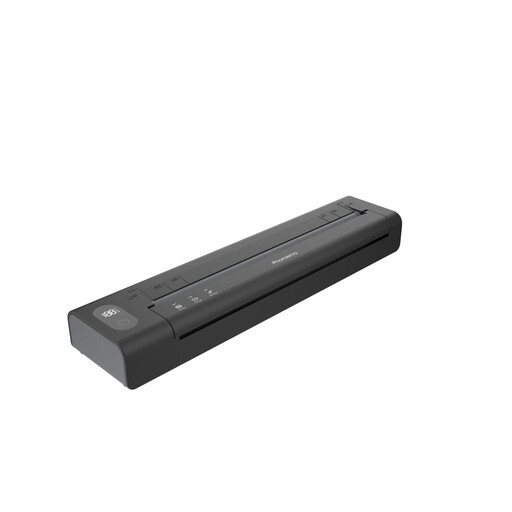 No image available
For anyone looking for a portable printer to print text and images.
The description lists a weight of 600 g, a rechargeable battery and inkless printing technology.
According to the description, Bluetooth printing is available through the Phomemo app for iOS and Android.
 No image available
For regular colour printing where a refillable ink system suits your needs.
The product description lists included ink bottles, duplex printing, an automatic document feeder and wireless connectivity.
Check that the supported media are suitable for the size and finish you want for your exhibition photos.
 No image available
For smaller prints when A4 is the largest size you need. Its stated support up to A4 means this is not an A3+ option.
The product information lists printing, scanning and copying, paper sizes including 10 × 15 cm, and a resolution of 4800 × 600 dpi.
The description lists a 60-sheet paper tray and a USB 2.0 connection.
 No image available
For smaller colour photos and regular printing when A4 is sufficient.
The specifications list a refillable ink system, glossy and matte paper, and photo sizes such as 4 × 6, 5 × 7 and 8 × 10 inches.
The stated maximum paper size is A4. Check that your preferred exhibition print sizes fit within this limit.
 No image available
For A3 prints when black and white is sufficient. This model is not suitable if your exhibition requires colour prints.
The description lists an inkjet printer for business use, A3 printing and a refillable ink bottle system.
The product information also lists wireless printing and an automatic document feeder.
Match the printer, ink and paper, and use the corresponding ICC profile. Print a test and assess it under lighting similar to that at the exhibition venue. Canon Netherlands explains that an image on paper will not look exactly the same as it does on screen.
Compare the printer, paper, ink or dye-sublimation media, and any maintenance, for the same print size and paper type. Epson's yield claim is based on its own test conditions and is not an independent cost measure for your exhibition prints.
Measure the space needed for both the printer and paper input and output. Arboportaal highlights the importance of ventilation in workplaces and notes that office equipment can be a source of emissions. This is not a model-specific emissions test or a set minimum distance for these printers.
For identifiable images of pupils, the Dutch Data Protection Authority highlights consent and security as points to consider. In its guidance, updated in September 2026, it says that parental consent is needed for pupils under 16, while pupils aged 16 and over must give their own consent. Check that any existing consent also covers the planned exhibition. This does not apply in the same way to photos in which nobody is identifiable.
Not every exhibition automatically qualifies for a copyright exception. Auteursrecht.nl explains that an education exception is subject to conditions, including those relating to the curriculum and educational institution. For third-party photos, check whether you need permission or whether an applicable exception applies.