For occasionally sharing a link or an update with a small group, a suitable phone hotspot may be enough. For more simultaneous connections or a longer journey, a separate MiFi device is worth considering. Before choosing, check the number of devices, power supply, data allowance and mobile coverage along the route: a higher stated capacity does not guarantee Wi-Fi or mobile coverage at every seat.
Who is this for?
Tour leader travelling with a group
Wants to share an itinerary and updates with several devices, so compares the number of connections and coverage during the journey. TP-Link lists the device limits for the M7350 and M7450 V3; KPN points out that movement can affect mobile coverage.
Organiser of a long journey
May need a separate connection for an extended period and checks the stated battery life and whether the device can be charged on the way. Battery life varies by model and conditions of use.
Organiser of a cross-border trip
Wants to know whether the data allowance can be used along the entire route and which roaming terms apply. ACM ConsuWijzer and the European Union’s Your Europe explain that a fair use limit may apply to data within the EU.
What should you consider when choosing?
Start by checking whether your phone, plan and battery are suitable for sharing a connection occasionally. Only then choose a separate router, based on the number of devices connecting at once, journey length, data allowance and coverage along the route.
| What to consider |
What should you look for? |
Who is this important for? |
| Coverage on the way |
Check the chosen provider’s coverage information for the route and, where possible, test the connection on the coach. |
If I want to share updates in real time, I need to know whether there’ll be a connection along the way. Around 36% of consumers put reliable coverage at the top of their list when choosing. |
| Number of devices |
Count how many devices need to be online at the same time and check both the stated limit and Wi-Fi coverage at different seats. |
If several passengers need to view the itinerary at the same time, I want enough connections without assuming that Wi-Fi will reach every seat equally well. Around 29% of consumers prioritise group capacity. |
| Power during the journey |
Compare the journey length with the stated battery life and check whether charging is possible on the coach. |
On a long journey, I want to avoid the connection dropping out before I can share an update. Around 21% of consumers focus on battery life and power supply. |
| SIM card and data allowance |
Check the SIM card requirements, expected data use, countries along the route and any roaming limits. |
If I want to use the router across a border, I need to know in advance which data allowance and terms apply. Around 14% of consumers prioritise data allowances and cross-border use. |
Common mistakes
-
Assuming a router’s maximum speed guarantees internet on the coach
Coverage and speed can vary depending on factors such as location, network traffic and vehicle movement. A higher stated maximum won’t make up for a lack of mobile coverage.
Check the route with the provider and test the connection where possible. Make sure essential itinerary information is available even when there’s no live connection.
-
Forgetting about the SIM card and data allowance
The TP-Link M7350 requires an activated SIM card. For a cross-border trip, roaming terms and data limits may also be important.
Before buying, check which SIM card size and plan are compatible with your chosen router, and review the terms for every country on the route.
-
Mixing up specifications for different versions
The D-Link DWR-932 has several revisions; the stated battery life here applies to revision F. TP-Link gives a maximum of 8 hours for the M7350, while a retailer’s product description may contain conflicting information.
Check the exact hardware version, and don’t automatically rely on the longest battery life quoted in a product description when planning your journey.
Brands to compare
TP-Link
The M7350 and M7450 V3 are 4G MiFi models with different device limits stated by the manufacturer.
- TP-Link lists a maximum of 10 devices for the M7350 and up to 32 for the M7450 V3. The manufacturer gives the M7350 a maximum battery life of 8 hours and the M7450 V3 a maximum of 15 hours. These are model-specific figures, not measurements taken during a coach journey.
- Check the exact version, SIM card and charging options. Device limits alone say nothing about Wi-Fi coverage at every seat or mobile coverage on the way.
D-Link
The DWR-932 is a compact 4G hotspot to compare if portability is important.
- For revision F, D-Link lists a battery life of up to 5 hours and WPA/WPA2 security.
- Check which revision is being sold. The stated battery life doesn’t indicate how long the hotspot will last on a specific journey.
Huawei
The 4G Mobile WiFi 5 is a product family to compare if you’re considering a compact mobile hotspot.
- Huawei lists a maximum of 16 users, a micro-SIM slot, USB-C and a 1500 mAh battery on its global specifications page.
- Check the exact regional version and whether it supports the networks and bands needed for your route.
Joybuy products
This selection includes mobile routers and MiFi models for use on the go, as well as travel routers. Before buying, check the internet source they need and whether they suit your intended use.
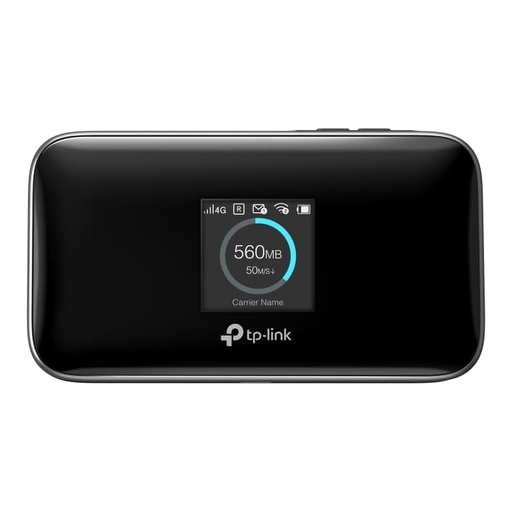 Image unavailable
TP-Link M7750 mobile network router
The product name identifies this model as a mobile network router. Before buying, check that the version is suitable for your provider and route.
View at Joybuy
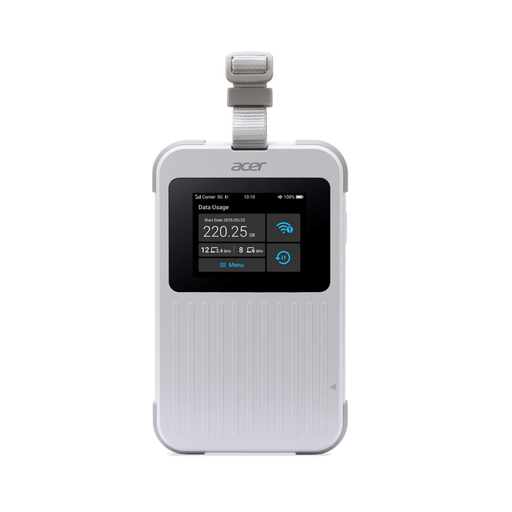 Image unavailable
Acer Connect M6E 5G MiFi router, Wi-Fi 6E
Worth considering if several devices need to connect at the same time; the product title states a maximum of 32 devices.
The title mentions 5G, Wi-Fi 6E, a nano-SIM card and 1 GB included. Check the terms for the stated data allowance and compatibility with your route.
View at Joybuy
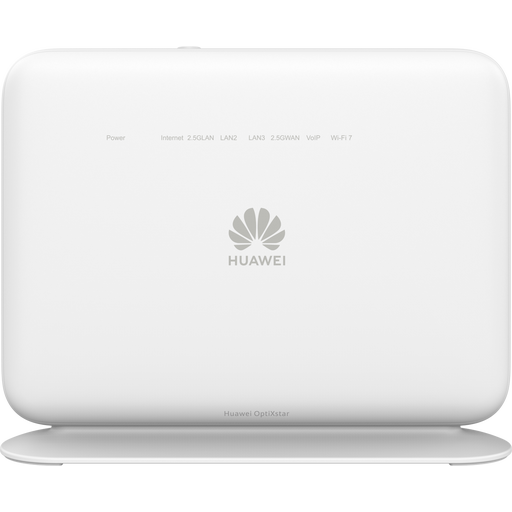 Image unavailable
Huawei eKit OptiX LG8245B7N BE3600 dual-band Wi-Fi 7 router with 4G dongle function
The product information describes 4G as a backup if a fixed broadband connection fails. Check whether this setup is suitable for a coach journey; don’t assume it provides a standalone mobile connection without checking first.
View at Joybuy
 Image unavailable
TP-Link TL-WR1502X Wi-Fi 6 dual-band travel router
A travel router to compare if you’ve already chosen your internet source for the journey. Check that it works with the way you plan to use the router.
The product title states 1500 Mbps and dual-band operation at 2.4 GHz and 5 GHz. These stated features don’t guarantee coverage or speed on the coach.
View at Joybuy
 Image unavailable
TP-Link M7350 4G MiFi with colour display
Worth comparing for a small group: TP-Link lists a maximum of 10 connected devices, and an activated SIM card is required.
The product title states a 2000 mAh battery and up to 8 hours of use. Check whether you’ll need to charge it during your planned journey; the stated battery life isn’t a measurement from your trip.
View at Joybuy
Frequently asked questions
Does a maximum of 32 connected devices mean you can promise Wi-Fi across an entire coach?
No. TP-Link lists a maximum of 32 simultaneous connections for the M7450 V3, but that doesn’t tell you how strong the Wi-Fi signal will be at every seat or what speed each device will get. Test the setup and mobile connection where possible.
What should I check before setting off?
Check that the router connects, your intended devices can connect to it, the SIM card and data allowance are suitable, and charging is possible. The TP-Link M7350 requires an activated SIM card.
What roaming terms apply to a Dutch data allowance when travelling by coach within the EU?
Roaming within the EU is generally charged at domestic rates, but providers may set a fair use limit for data and charge extra above that limit. The European Union’s Your Europe explains these terms; check the conditions for the SIM card in your router. Different rates may apply in countries outside the relevant area.
Does a mobile router sold in the Netherlands need to have a CE mark?
Radio equipment placed on the European market must meet the applicable requirements and carry a CE mark, according to the Dutch Authority for Digital Infrastructure. Check the conformity information for the exact version; a model listing doesn’t confirm that every individual product offered complies.


