
Vandaag of morgen in huis

Kwaliteit gegarandeerd

Welkomstaanbiedingen ontgrendelen: GRATIS bezorging | Tot 80% korting | Gratis 30 dagen JoyPlus-proefperiode
Download de app
Modern smartphones record remarkable 4K video, yet capturing fluid, cinematic footage while walking or tracking moving subjects remains challenging when holding a handset bare-handed. Electronic image stabilisation inside phones often crops the frame or introduces awkward digital artefacts during low-light pans. A dedicated three-axis smartphone gimbal counteracts physical hand tremor and abrupt footsteps through precision brushless motors, transforming routine mobile clips into polished, professional-grade footage without requiring cumbersome camera rigs.
Selecting the right stabiliser involves balancing mechanical performance with real-world portability and workflow integration. Today's mobile stabilisers have advanced beyond simple motorised handles, incorporating telescopic extension rods, deployable tripod feet, fill lights, and artificial intelligence algorithms that follow subjects automatically. Whether you are producing social media clips in Amsterdam, recording family holidays across Europe, or conducting live video streams from a home studio, understanding key specifications will ensure you invest in the right gear for your handset.
A frequent pitfall is presuming all gimbal tracking and physical control buttons operate identically across every software application. Many stabilisers require proprietary companion apps to unlock advanced facial tracking or gesture controls, which can restrict quick shooting directly from your phone's default camera interface or live broadcasting inside social networks. Checking whether a device supports native operating system frameworks like Apple DockKit or universal tracking protocols prevents frustrating workflow bottlenecks when switching between standard recording and third-party streaming programs.
Manufacturers specify maximum payload thresholds, but buyers frequently calculate weight based on bare smartphones without accounting for rugged protective cases, magnetic wallets, or clip-on lenses. Exceeding motor torque ratings or throwing off physical balance causes gimbal motors to overheat, vibrate intermittently, or enter sleep mode mid-shoot. Always factor in an extra thirty to fifty grams for everyday phone protection and inspect clamp clearances to guarantee your handset sits securely against the motorised cradle without pinching side buttons.
Purchasing a minimal motorised gimbal often forces content creators to pack separate screw-on tripod bases, detachable selfie sticks, auxiliary lights, and spare power banks. This accumulation of gear adds substantial clutter to travel bags and slows down setup times in dynamic environments. Choosing a unit engineered with built-in folding tripod legs, an integrated telescopic extension wand, and pass-through device charging minimises kit weight and lets you transition from handheld tracking to stationary framing in seconds.
Effective video stabilisation relies on robust three-axis mechanical control combined with responsive vision algorithms that track movement reliably.
The physical construction dictates how quickly you can deploy your gear across varying indoor and outdoor shooting angles.
Sustained mobile shooting demands versatile connectivity and uninterrupted power supply throughout busy filming days.
Review our carefully chosen stabilisers tailored to distinct mobile videography needs, from narrative storytelling to rapid travel filming.
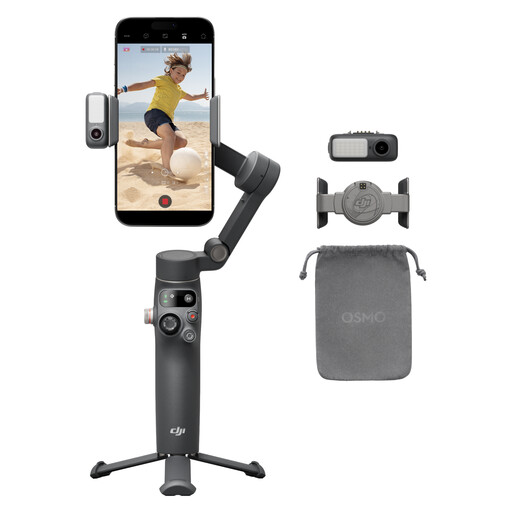
Why This Fits Their Persona: With ActiveTrack 7.0 technology, integrated auxiliary lighting, and a swift quick-launch setup, this three-axis stabiliser keeps dynamic footage sharply composed. Its built-in extension rod and fold-out tripod feet let solo storytellers capture fluid high-angle reveals and steady piece-to-camera presentations effortlessly.
It resolves the nuisance of carrying disparate accessories by combining a deployable tripod, extension rod, and built-in fill light directly into the primary handle.
Offers an extensive operating runtime of up to ten hours along with integrated phone charging capability to maintain camera power during prolonged filming sessions.
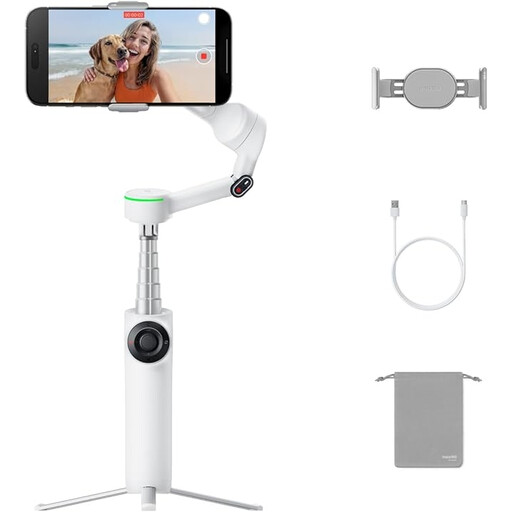
Why This Fits Their Persona: This comprehensive bundle integrates Apple DockKit tracking across more than two hundred third-party applications, providing seamless full 360-degree panoramic subject following without confining users to a proprietary camera tool. The package includes an auxiliary spotlight, a wireless remote control, and a built-in selfie wand.
Eliminates third-party app restrictions by enabling smooth tracking inside native camera interfaces and live social broadcasting platforms directly via DockKit.
Features full 360-degree continuous tracking rotation paired with a dedicated spotlight and remote shutter for completely autonomous multi-platform streaming.
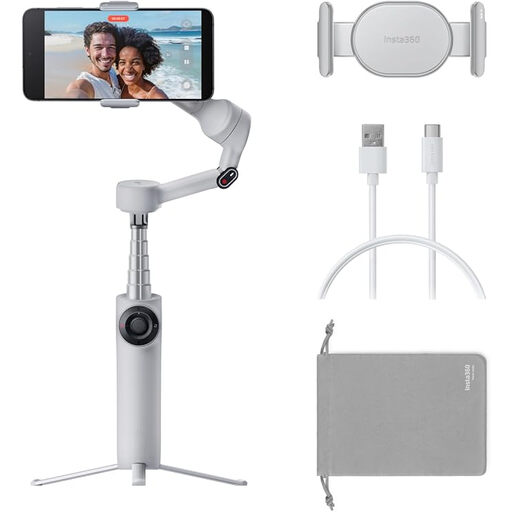
Why This Fits Their Persona: Designed with an exceptionally compact, foldable footprint, this stabiliser easily slips into commuter bags or jacket pockets while offering multi-person artificial intelligence tracking and dedicated 15x zoom optimisation for modern smartphone arrays. Built-in tripod legs and an internal selfie stick supply immediate versatility outdoors.
Prevents the common frustration of dead phone batteries in remote areas by housing an integrated power bank directly within its lightweight travel chassis.
Combines intelligent multi-person tracking algorithms with a built-in power bank and all-in-one fold-out tripod inside a portable, space-saving format.
If your mobile recording setup involves heavy action cameras, mirrorless lenses, or specialist modular cages, explore our wider catalogue of video stands, clamps, and grip accessories.
Yes, modern gimbals pair with your smartphone via standard Bluetooth to trigger the shutter and start recording directly inside native camera software. However, advanced artificial intelligence tracking, automated panoramic panning, and gesture controls frequently require either a dedicated companion app or specific operating system integrations like Apple DockKit.
Integrated hardware removes the need to carry separate screw-on accessories that add weight and take valuable time to assemble. Built-in telescopic rods let you capture elevated crane-style perspectives or wider group compositions instantly, while fold-out tripod legs allow immediate hands-free recording on flat surfaces without packing extra mounts.
Most three-axis gimbals comfortably accommodate standard protective cases, provided the total combined weight remains within the rated motor payload. However, excessively thick cases, wallet attachments, or uneven pop-out grips can shift the centre of gravity or prevent the mounting clamp from gripping flush, so using a slim, flat-backed case is recommended.
