
Vandaag of morgen in huis

Kwaliteit gegarandeerd

Welkomstaanbiedingen ontgrendelen: GRATIS bezorging | Tot 80% korting | Gratis 30 dagen JoyPlus-proefperiode
Download de app
Flossing: we all know we should do it, but it's often an awkward and time-consuming chore. For many, the hassle of fiddling with floss—especially with sensitive gums or braces—is enough to skip it altogether. A water flosser, also known as an oral irrigator, might sound like the ideal solution. However, not every device is equally effective.
Before you make a choice, it's important to understand the common pitfalls. Many users encounter the same problems:
A good water flosser should not only clean powerfully but also fit seamlessly into your daily routine. Let's look at the specifications that truly matter.
To avoid making the wrong choice, there are a few technical features that distinguish a gadget from a serious tool for your oral hygiene.
The effectiveness of an oral irrigator depends on how it distributes water. A single, harsh jet can be uncomfortable and miss spots. Newer models use more advanced techniques.
For example, the Philips Sonicare Power Flosser 3000 uses Quad Stream technology. Its nozzle has a unique X-shaped tip that splits the water flow into four jets. This ensures a larger area between the teeth and along the gumline is cleaned at once. According to Philips, the device removes up to 99.9% of plaque in treated areas. This makes the process of electric flossing not only faster but also more thorough.
A cordless water flosser offers freedom of movement, but it's only practical if the battery and water reservoir are up to the task.
Everyone's teeth are different. If you have sensitive gums, braces, or implants, it's crucial that you can adjust the intensity. The Power Flosser 3000 offers two modes (Clean for daily cleaning and Deep Clean for extra thoroughness) and three intensity levels. This allows you to tailor the water pressure to what feels comfortable for you, which is essential for maintaining healthy gums. Furthermore, the Deep Clean mode uses pulses to guide you from tooth to tooth.
Based on objective specifications that address the most common pitfalls, we have selected a product that meets the needs of users looking for a modern alternative to dental floss.
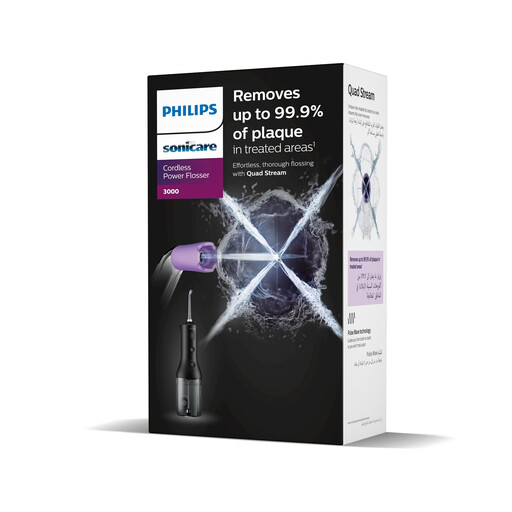
Why it's a match: Ideal for anyone who finds traditional flossing tedious or painful. This device makes cleaning between teeth faster and more comfortable, making it an excellent water flosser for braces, implants, or sensitive gums.
The Quad Stream technology addresses the 'weak cleaning' problem by creating a wider, more effective cleaning surface. The 250 ml reservoir and long battery life prevent the 'inconvenient' hassle of constant refilling and recharging.
Two modes and three intensity levels for a personalised clean. The Pulse Wave technology guides you for a systematic and complete cleaning.
We have compiled a complete, up-to-date list of products that meet these strict selection criteria and safety standards.
According to Philips' specifications, a fully charged battery lasts up to 14 days with normal use. This means you don't have to charge the device daily, which is convenient for use at home and while travelling.
This depends on the intensity level used. The Power Flosser 3000 is equipped with three different intensity levels. It is advisable to start on the lowest setting to allow your gums to get used to it. This makes the device suitable for people with sensitive gums.
Yes, a water flosser is often recommended for people with braces, implants, or bridges. The water jet can effectively remove food debris and plaque from areas that are difficult to reach with dental floss, such as around brackets and wires. The various settings help you adapt the cleaning to your specific situation.
