
Vandaag of morgen in huis

Kwaliteit gegarandeerd

Welkomstaanbiedingen ontgrendelen: GRATIS bezorging | Tot 80% korting | Gratis 30 dagen JoyPlus-proefperiode
Download de app
A wrinkled blouse just before you need to leave? Or a suitcase full of clothes that look like they've been crumpled up for a week? A garment steamer seems like the ideal solution: fast, compact, and no need for an ironing board. But the market is flooded with models that promise more than they deliver. Before you invest in a new garment steamer, it's crucial to understand the common pitfalls.
Many users encounter the same issues: a device that leaks water as soon as you tilt it, a water tank that's empty after just one garment, or steam that's too weak to remove stubborn creases. These are the typical flaws of poorly designed models. We'll outline the most important factors to consider, so you can make an informed decision.
Marketing terms say little about actual performance. Instead, focus on objective specifications that determine whether a garment steamer does its job effectively.
The wattage (W) indicates how much power a device consumes, not necessarily how powerful the steam is. A much better indicator is the steam output, expressed in grams per minute (g/min). This number tells you how much steam the device actually emits.
A handheld steamer should be practical. Pay attention to the following two points:
A fast heat-up time is convenient, but note the difference between "heated up" and "ready for effective use." Most models are hot within 30 to 60 seconds, but it may take slightly longer for the steam output to become stable and powerful. An indicator light that shows when the device is truly ready for steaming clothes, is a useful feature.
Based on these criteria, we have selected several popular choices that suit different user profiles.
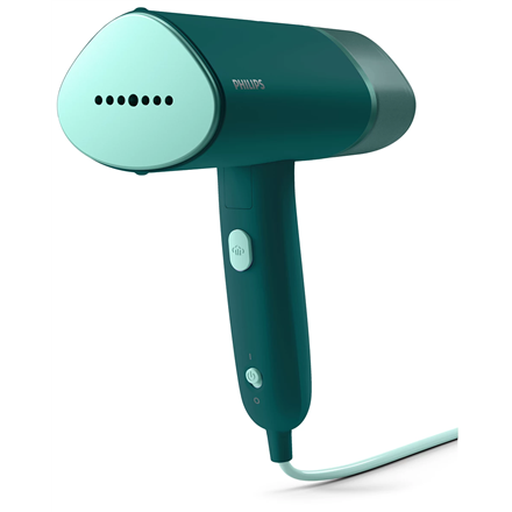
Why This Fits Their Persona: Ideal for those who are often on the go, whether for work or a weekend getaway. This model is specifically designed to fit in a suitcase or travel bag without taking up much space.
The foldable design and included storage pouch tackle the problem of bulky, awkward devices. The detachable 120 ml water tank strikes a good balance between compactness and usage time.
Advantage: Very compact and foldable. Pro: Ready to use in 30 seconds and comes with a travel pouch.
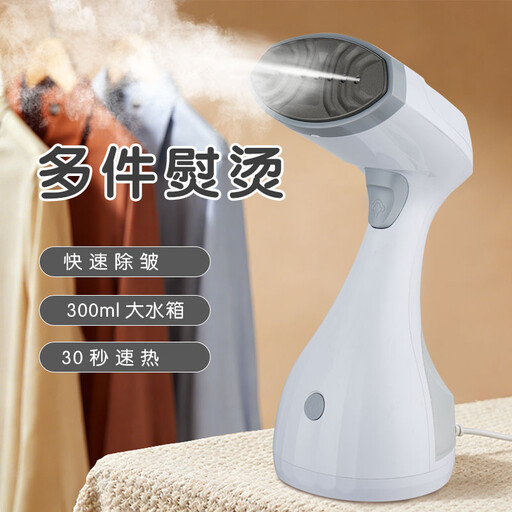
Why This Fits Their Persona: For those who want to quickly refresh multiple garments at home without constant refilling. Suitable for the weekly routine of making shirts, dresses, and trousers wrinkle-free.
With a 300 ml water tank, this model addresses the 'constant refilling' problem. The higher 1500W power ensures a more powerful steam output, making it more effective on tougher fabrics.
Advantage: Large water capacity (300 ml) for longer steaming sessions. Pro: According to the manufacturer, the device is designed to prevent leaks, even when used horizontally.
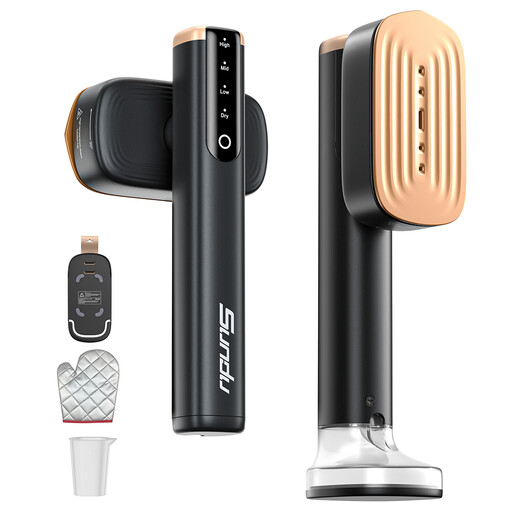
Why This Fits Their Persona: For those seeking the flexibility of both vertical steaming and horizontal ironing in one compact device. Useful for creating sharp creases or treating difficult areas.
This model is explicitly designed for 2-in-1 use, minimizing the risk of leaks during horizontal use. The ceramic soleplate and temperature control offer more precision than a standard steamer.
Advantage: Combines steaming and ironing with a 90° rotating head. Pro: Dual water tank (280 ml total) and smart temperature control for different fabrics.
We have compiled a complete, up-to-date list of products that meet these strict selection criteria and relevant safety standards.
That depends on your needs. For quickly refreshing clothes and removing most wrinkles from delicate fabrics, a garment steamer is often better and faster. For creating sharp, crisp creases in cotton shirts or trousers, a traditional iron typically yields a better result. Think of a garment steamer as a powerful supplement to, and in many cases a replacement for, your iron.
Steaming is generally safer than ironing, especially for delicate materials like silk, wool, cashmere, and polyester, as there is no direct, hot contact. However, always check the garment's care label. Materials such as suede, leather, or waxed clothing should not be steamed.
