
Vandaag of morgen in huis

Kwaliteit gegarandeerd

Welkomstaanbiedingen ontgrendelen: GRATIS bezorging | Tot 80% korting | Gratis 30 dagen JoyPlus-proefperiode
Download de app
Choosing a new ceiling light seems simple until you get tangled in a web of marketing jargon and features you might never use. Especially with a Philips ceiling light with remote control, it's tempting to go for the model with the most options. But more isn't always better. Many people make choices they later regret. Let's look at the most common pitfalls so you can prevent buyer's remorse.
Pitfall 1: "Smart" complexity. Many smart lights require a stable Wi-Fi connection, a separate app, and account creation. This can lead to frustration when the connection is spotty or the app is uncooperative. A simple, reliable remote control is often far more practical for daily use.
Pitfall 2: The wrong atmosphere due to a fixed colour temperature. A lamp with only cool, white light can make a living room ceiling light feel cold and uninviting. Conversely, warm, dimmed light isn't functional in a home office. Without the ability to adjust the colour, you're stuck with a single mood.
Pitfall 3: The promise of "easy installation." What looks simple on the box can turn into an afternoon of frustration with unclear manuals and clumsy mounting systems.
To avoid these pitfalls, there are a few technical specifications you should check. These determine whether a lamp is truly functional for your situation.
The colour temperature, expressed in Kelvin (K), defines the light's atmosphere. Instead of a lamp with a single fixed colour, a ceiling light with adjustable colour temperature offers the flexibility you need.
A dimmable ceiling light is a must-have for controlling the atmosphere. Pay attention to the technology here. Some lamps only dim in brightness. Models with technology like Philips WarmGlow become warmer in colour as you dim them further, mimicking the effect of a traditional incandescent bulb. The actual brightness is measured in Lumen (lm), not in Watts. More lumens means more light.
A round LED ceiling light is a popular and timeless choice. Note the diameter and height. An ultra-slim model is barely noticeable and sits flush against the ceiling, while a black ceiling light can add a modern and industrial accent to your interior.
Based on these criteria, we have selected several Philips ceiling lights that suit different needs and interior styles.
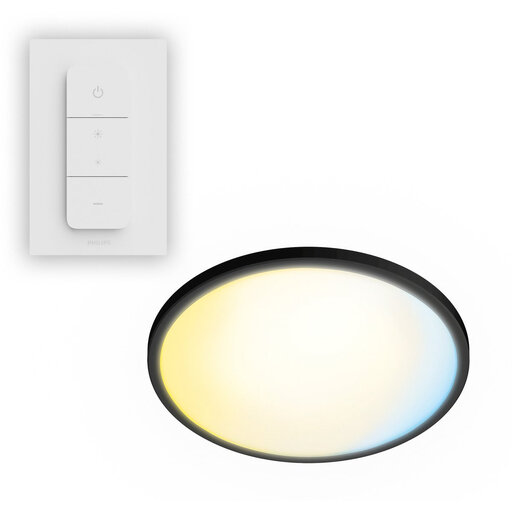
Why This Fits Their Persona: Ideal for those who want to create instant ambiance without the hassle. Perfect for the living room or bedroom where you can switch between functional light and a warm, cosy atmosphere at the touch of a button.
This lamp bypasses the "smart complexity" with an intuitive remote control. The wide colour temperature range (2200K-6500K) prevents you from being stuck with the wrong atmosphere.
The WarmGlow technology ensures the light gets warmer as it dims. Its extra-slim design (2.4 cm high) integrates seamlessly into almost any ceiling.
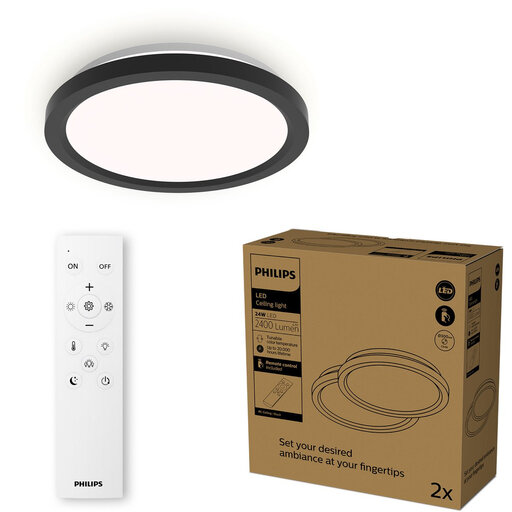
Why This Fits Their Persona: For those looking to light multiple spaces in a consistent style or equip a larger room with powerful light. This duo-pack offers a cost-effective and uniform solution.
The simple installation with a base plate and quick-connect terminals prevents mounting frustration. The Philips SceneSwitch technology offers pre-programmed scenes, so you don't have to manually find the perfect setting every time.
Excellent value for money due to the 2-pack. The high light output of 2400 lumen per lamp makes them highly suitable for functional spaces like a kitchen or home office.
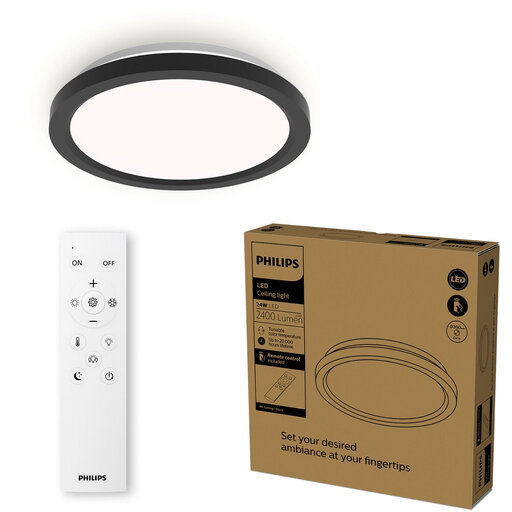
Why This Fits Their Persona: For those seeking a sleek, functional design that blends into a modern interior. This lamp provides a powerful, central light source without unnecessary frills.
Its functionality is direct and purposeful: control via remote or wall switch with SceneSwitch. No superfluous features, just pure performance in a minimalist package.
Combines a sleek, minimalist design with a powerful light output of 24W / 2400 lumen. The SceneSwitch technology offers three pre-programmed light settings for convenience.
We have compiled a complete, up-to-date list of products that meet these strict selection criteria and UK/EU safety standards.
Yes, many models, especially those with Philips SceneSwitch technology, can also be operated with a standard wall switch. By quickly flicking the switch off and on, you can cycle through different pre-programmed light scenes. The remote control typically offers more precise control over dimming and colour temperature.
Integrated LED lamps from Philips are designed for a long lifespan. The specifications often state a lifespan of 15,000 to 25,000 operating hours. With an average use of three hours per day, this can amount to more than 15 years. Always check the product details for the exact lifespan of a specific model.
Most Philips ceiling lights are designed for a relatively simple installation. The process usually involves mounting a base plate to the ceiling, connecting the wiring (often with convenient quick-connect terminals), and then clicking or twisting the lamp onto the base. However, it is always crucial to turn off the power at the breaker box before you begin the installation.
