
Vandaag of morgen in huis

Kwaliteit gegarandeerd

Welkomstaanbiedingen ontgrendelen: GRATIS bezorging | Tot 80% korting | Gratis 30 dagen JoyPlus-proefperiode
Download de app
More and more home cooks are making the conscious choice to avoid pans with traditional non-stick coatings, which can contain PFAS. However, the search for a durable and versatile healthy wok can be overwhelming. There is a wide array of materials and technologies, from ceramic to carbon steel.
As a Joybuy Product Recommendation Officer, I'm here to help you navigate the options. This article serves as a practical guide to help you find a pfas-free wok that suits your cooking style and needs, without the marketing jargon.
Before we dive into the recommendations, here are a few practical points to consider when choosing a new wok.
The decision to buy a Teflon-free wok often leads to three popular materials, each with its own unique characteristics:
stainless steel wok does not have a chemical non-stick coating. It requires a specific cooking technique—preheating the pan properly with oil—to prevent food from sticking.carbon steel wok must be seasoned to create a natural non-stick layer. Once properly seasoned, the pan performs exceptionally well at high temperatures and will last a lifetime.Not every wok works on every cooktop. If you are looking for an induction wok, a flat bottom is essential for proper contact with the heating element. Traditional round-bottomed woks are primarily suited for gas stoves equipped with a wok ring. Always check the manufacturer's specifications to ensure the pan is compatible with your heat source.
A 30 to 32 cm wok is typically large enough for a family of 3 to 6 people. A wok with a lid is a useful addition. The lid helps to retain heat and moisture, which is ideal for simmering, steaming, or keeping dishes warm.
Below is a selection of woks that stand out for their material properties and functionality.
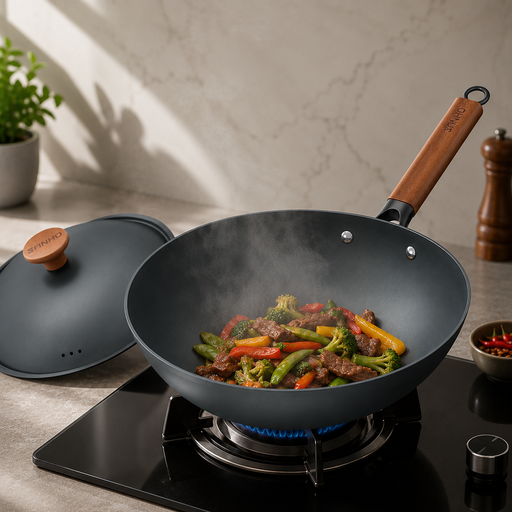
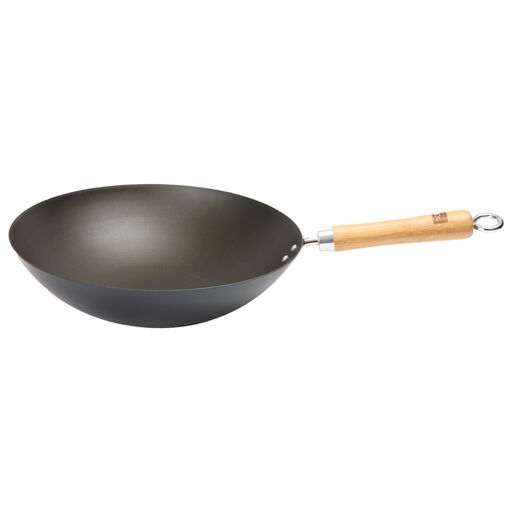
carbon steel wok, developed in collaboration with the London-based School of Wok culinary school. It comes pre-seasoned, allowing you to skip the initial seasoning process.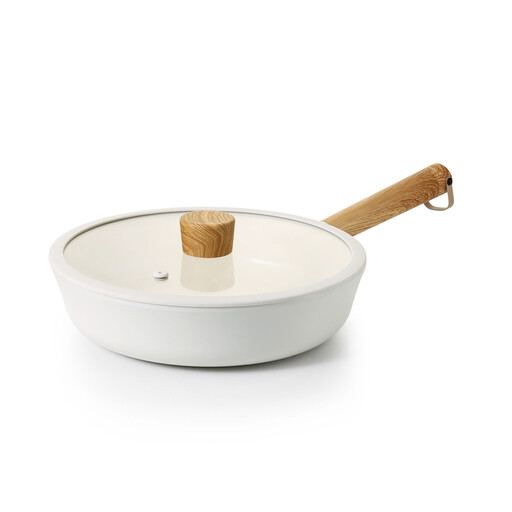
ceramic wok. The manufacturer emphasizes that its ceramic coating is free of PTFE, PFAS, cadmium, and lead.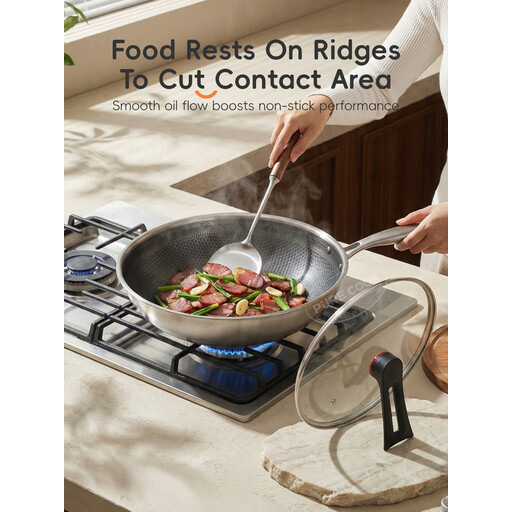
stainless steel wok combines the durability of stainless steel with a unique honeycomb texture on the interior. This pattern creates a physical barrier that reduces contact between food and the pan, helping to prevent sticking without a chemical layer.The right wok is a personal choice. For example, if you cook specifically on a gas stove and are looking for a model perfectly suited for it, there are many more options available.
-> Explore our wider range of gas wok pans for more choices.
Teflon is a brand name for the chemical PTFE, which is a type of PFAS. A pan described as "Teflon-free" is a good first step. A pan labelled "PFAS-free" provides the broader assurance that it is free from the entire group of these chemicals.
A carbon steel wok must be seasoned before its first use to build up a natural non-stick surface. After each use, wash it with hot water (without soap), dry it completely on the stove, and rub it with a thin layer of oil. A stainless steel wok does not require seasoning, but it is important to preheat the pan properly with oil before adding ingredients to minimise sticking.
A ceramic wok is an excellent PFAS-free alternative with good non-stick properties. However, the ceramic layer can be less durable than steel. To extend its lifespan, it is advisable to use wooden or silicone utensils and to avoid overheating the pan while empty.
