
Vandaag of morgen in huis

Kwaliteit gegarandeerd

Welkomstaanbiedingen ontgrendelen: GRATIS bezorging | Tot 80% korting | Gratis 30 dagen JoyPlus-proefperiode
Download de app
As a Joybuy Product Recommendation Officer, I see daily how challenging it can be to make the right choices. The cookware market is filled with promises, especially when it comes to a healthy frying pan. You're looking for a PFAS-free induction frying pan, but often end up with a product that doesn't meet your expectations. Let's expose the most common pitfalls so your next purchase is a perfect match.
Many pans are promoted as the perfect, healthy choice. Yet, there are a few persistent issues that often only come to light after the purchase.
To avoid the problems above, it's important to look beyond the marketing slogans. Pay attention to the following three technical specifications before making a decision.
A PFAS-free pan usually has a ceramic coating. But as mentioned, not all ceramic layers are created equal. Look for pans that specify the coating is reinforced.
For an induction frying pan, the base is everything. An induction hob works by creating a magnetic field that directly heats the base of the pan.
The handle determines not only ease of use but also whether the pan is truly versatile.
Based on these criteria, we have selected a number of products that suit different user profiles.
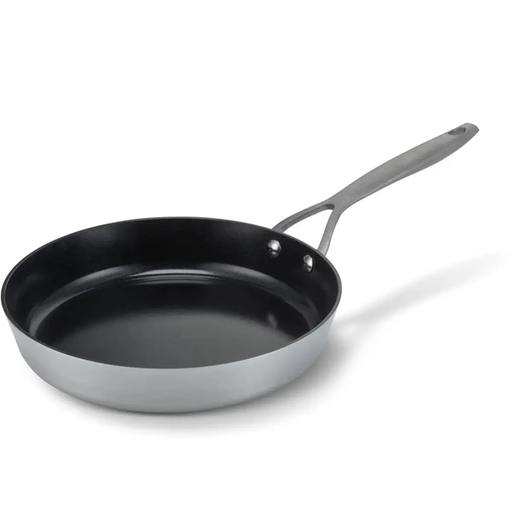
Why This Fits Their Persona: Ideal for those seeking a reliable, PFAS-free pan without paying a premium. The 24 cm size is perfect for daily meals for 1 to 3 people, from a fried egg to a piece of fish.
The stainless steel handle is riveted (securely attached) and makes the pan oven-safe up to 200°C, thus avoiding the pitfall of a melting handle.
Made from 100% recycled aluminium (RCS-certified) with a double ceramic non-stick coating. A responsible choice from a well-known brand.
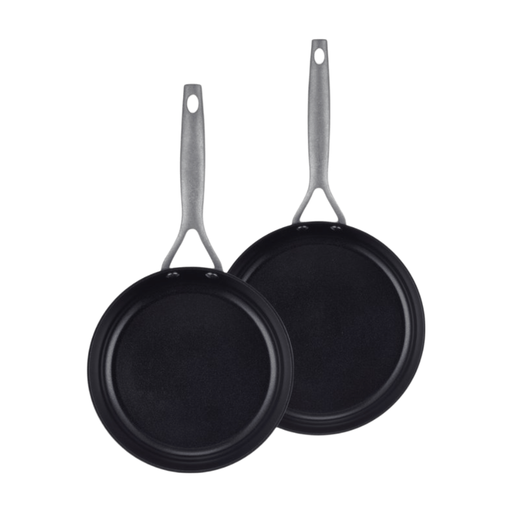
Why This Fits Their Persona: For families who need flexibility. This frying pan set offers two popular sizes for everything from pancakes to a quick stir-fry. One purchase and you're set for most daily cooking tasks.
The forged aluminium construction ensures fast and even heating, tackling the pitfall of a "dancing" pan with poor heat distribution.
Two pans with the same reliable quality: PFAS-free, oven-safe up to 200°C, and suitable for all heat sources, including induction. Efficient and practical.
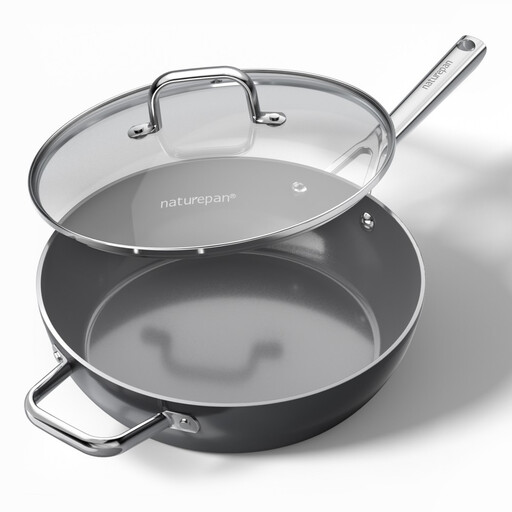
Why This Fits Their Persona: For the chef who invests in durability and versatility. This pan is not only large but also deep and comes with a lid, making it suitable for stews or sauces.
The ceramic coating is reinforced with diamond and titanium particles, which directly addresses the pitfall of a quickly deteriorating layer. Furthermore, the pan is oven-safe up to 260°C, offering maximum flexibility.
The combination of a reinforced coating, high oven resistance, and a deep shape with a lid makes this a highly versatile piece of cookware for intensive use.
We have compiled a complete, up-to-date list of products that fully meet these strict selection criteria and safety regulations.
The lifespan of a ceramic frying pan depends heavily on the quality of the coating and its maintenance. A pan with a reinforced coating that is washed by hand and used with non-metal utensils can last for several years. Cheaper models with a basic coating may lose their non-stick properties after just one year.
Many manufacturers advertise their pans as dishwasher-safe. However, almost all of them recommend washing the pan by hand. Harsh dishwasher detergents and high temperatures can degrade the ceramic non-stick pan over time. A quick hand wash with a soft sponge is the recommended method to maximise its lifespan.
This is usually due to a problem with the base. The pan must have a perfectly flat, magnetic base that is large enough for the cooking zone you are using. If the base is not flat, it makes poor contact, and heat is not transferred efficiently. Always check that the base of the induction frying pan is sturdy and thick.
