
Livraison le jour même et le lendemain

Qualité garantie

Débloquez vos offres de bienvenue: Livraison GRATUITE | Jusqu'à -80 % | 30 jours d'essai gratuits à JoyPlus
Téléchargez l'application
A good frying pan is an essential tool in any kitchen. Whether you're frying an egg, stir-frying vegetables, or searing a piece of fish, the pan you use affects both the result and your enjoyment of cooking. Driven by health and environmental concerns, more and more people are consciously choosing a PFAS-free frying pan. But the market is flooded with options, and not every pan that claims to be "PFAS-free" is a worthwhile purchase.
As a Joybuy Product Recommendation Officer, I'm here to help you see through the marketing claims. Here are the three most common pitfalls when choosing a new frying pan and how to avoid them.
Many pans are promoted with a ceramic non-stick coating as a PFAS-free alternative. While this is a positive development, the quality of these coatings varies enormously. A cheap, thin ceramic frying pan can lose its non-stick properties after just a few months, even with careful use. You'll end up with a pan where everything sticks, forcing you to buy a replacement far too soon.
Almost every new pan today is labelled "induction compatible." However, this only means the base is magnetic. It says nothing about its performance. An induction frying pan with a base that is too thin or poorly designed will heat unevenly. The centre becomes scorching hot while the edges remain lukewarm. This not only leads to burnt food but can also cause the pan to warp over time, making it unstable on your hob.
"Scratch-resistant" and "durable" are terms you see everywhere, but they mean little without context. A pan that shows scratches after being used with a wooden or silicone spatula isn't worth your money. The lifespan of a non-stick frying pan heavily depends on the hardness and construction of its coating.
To avoid a bad purchase, focus on the objective product features. These are the three most important specifications to check.
A healthy frying pan starts with a reliable coating. Ceramic coatings are a popular PFAS-free alternative. Look for specifications like "dual-layer" or "mineral-reinforced," which can indicate a more robust construction. Regardless of the coating, never use metal utensils and preferably wash the pan by hand to maximise its lifespan. Another option is a stainless steel frying pan without a coating. These last a lifetime but require a different cooking technique involving oil and temperature control.
For those who cook on induction, the base is crucial. Look for pans with a thick, multi-layered base (often called a 'sandwich' base with aluminium between layers of stainless steel). This ensures fast and, most importantly, even heat distribution. A pan that heats up quickly and evenly gives you more control during cooking and consumes less energy.
The right size is both practical and efficient. A 28 cm frying pan is a versatile size, ideal for family meals or for cooking multiple pieces of meat or fish. If you usually cook for one or two people, a 20 or 24 cm pan is often sufficient and also heats up faster. Think about what you cook most often and choose the diameter accordingly.
Based on these objective criteria, we have selected a number of pans that suit different user profiles.
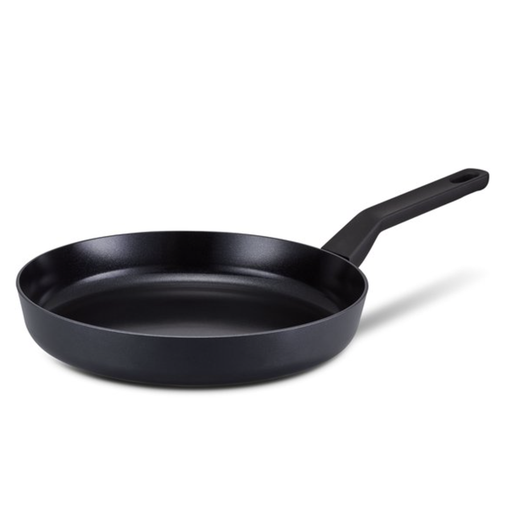
Why This Fits Their Persona: Ideal for one or two-person households wanting a reliable, healthy, and affordable start. This Brabantia frying pan is compact, works on all heat sources including induction, and is made with the environment in mind.
The specifications are clear: a dual-layer ceramic non-stick coating described as extra scratch-resistant, which addresses the pitfall of rapid wear and tear.
Made from 100% recycled aluminium, which ensures rapid heating and makes it an eco-conscious choice. Suitable for all heat sources.
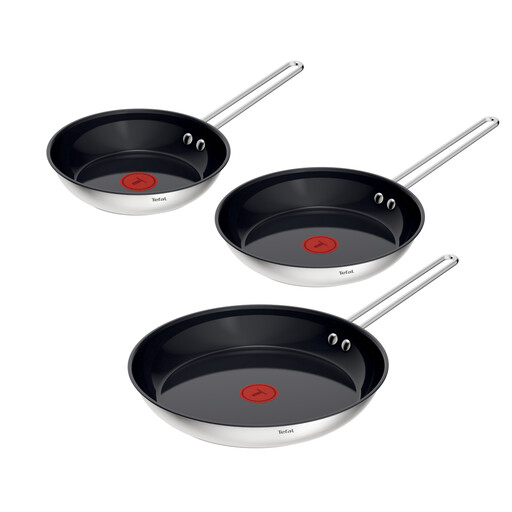
Why This Fits Their Persona: For those who want a complete, high-quality set all at once. This induction pan set from Tefal combines a durable stainless steel body with the convenience of a ceramic non-stick coating.
The thick 3-layer base is specifically designed for optimal heat distribution on induction, preventing the pitfall of 'hotspots' and warping. Tefal offers a 10-year warranty on the stainless steel.
A complete set (20, 24, and 28 cm) made of recycled stainless steel. Tefal's Thermo-Signal technology indicates when the pan has reached the ideal cooking temperature.
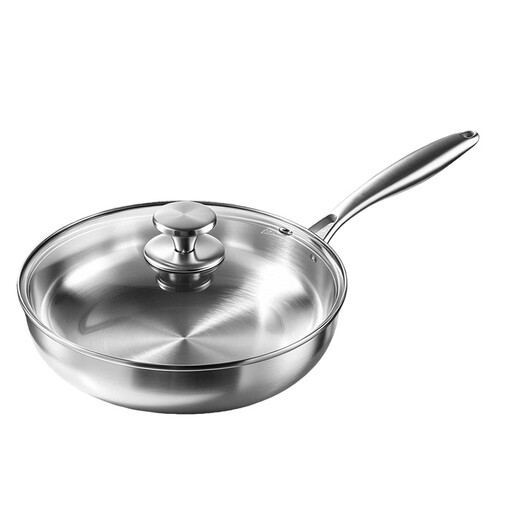
Why This Fits Their Persona: For the chef who wants complete control and prefers to avoid non-stick coatings altogether. This stainless steel frying pan is indestructible and perfect for searing meat at high temperatures.
This pan completely bypasses the pitfall of wearing out coatings. Since there is no coating, there is nothing to damage or lose its effectiveness. A purchase for life.
The Tri-Ply construction (stainless steel-aluminium-stainless steel) provides excellent and even heat conduction, which is essential for cooking on stainless steel. Completely free of chemicals.
We've compiled a complete, up-to-date list of products that fully meet these strict selection criteria.
You can significantly extend the life of a ceramic coating with proper maintenance. Always let the pan cool down before cleaning it to prevent thermal shock. Wash it by hand with a soft sponge and mild washing-up liquid. Although many pans are sold as "dishwasher-safe," the aggressive cleaning cycle in a dishwasher can degrade the non-stick layer over time. Finally, only use wooden or silicone utensils.
Absolutely. A stainless steel frying pan contains no chemical coating and is therefore naturally PFAS-free. They are extremely durable and can withstand high temperatures, making them ideal for searing meat. However, it does require a different cooking technique: preheat the pan properly, then add oil and let it come to temperature before adding your ingredients. This creates a natural non-stick surface.
