
当日/次日达

品质保障

开启新人专享福利: 全场免邮 | 低至 2 折 | 免费试用 30 天 JoyPlus 会员
下载 Joybuy
A good frying pan is an essential tool in any kitchen. But the search for a new, healthy frying pan can feel like navigating a maze. Especially now, with growing awareness around PFAS, alternatives are popping up everywhere. Unfortunately, not all of these promises hold up.
As a Joybuy Product Recommendation Officer, I sift through product information daily to help you make an informed choice. Let's look at the three most common pitfalls so you don't waste money on a pan that needs replacing after just a few months.
To avoid a bad purchase, it's important to look beyond the marketing buzzwords. Pay attention to the following three concrete specifications.
The term pfas-free pan refers to the non-stick coating. Traditional pans often use PTFE (known as Teflon), a type of PFAS. The alternative you're looking for is a ceramic frying pan. These coatings are made from natural materials (sand and clay) and contain no PFAS, PFOA, or PTFE. They are hard, smooth, and can withstand high temperatures without releasing harmful fumes. Look for pans that explicitly state they are 100% PFAS-free.
Do you cook on an induction hob? Then an induction frying pan with the right base is crucial. The pan must have a ferromagnetic base, meaning it is magnetic. A thick, multi-layered base (often with aluminium and stainless steel) ensures fast and, most importantly, even heat distribution. This prevents the dreaded hot spots and ensures consistent cooking results, every single time.
A modern pan should be practical. Check if the pan is oven-safe and up to what temperature. An oven-safe frying pan up to 200°C or higher gives you the flexibility to start a dish on the hob and finish it in the oven. The handle is the deciding factor here: stainless steel handles can usually go in the oven, while bakelite or plastic handles often cannot. Although many PFAS-free pans are sold as dishwasher-safe, hand washing is almost always recommended to maximise the lifespan of the ceramic coating.
Based on these objective criteria, we have selected a number of pans that suit different user profiles.
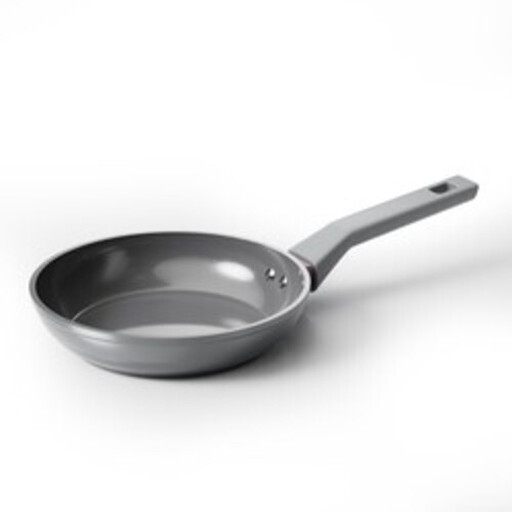
Why This Fits Their Persona: Ideal for one or two-person households. This compact pan offers a safe, toxin-free start for those switching to PFAS-free cooking without making a large initial investment. Perfect for an egg or an omelette.
The product information is specific: the pan is free of PFAS, PFOA, lead, and cadmium. No vague claims. The multi-layer base is designed for even heat on induction, tackling the 'hot spot' pitfall.
The bakelite handle with a wood-look finish stays cool during cooking. The smooth surface is very easy to clean; often, a simple rinse is sufficient.
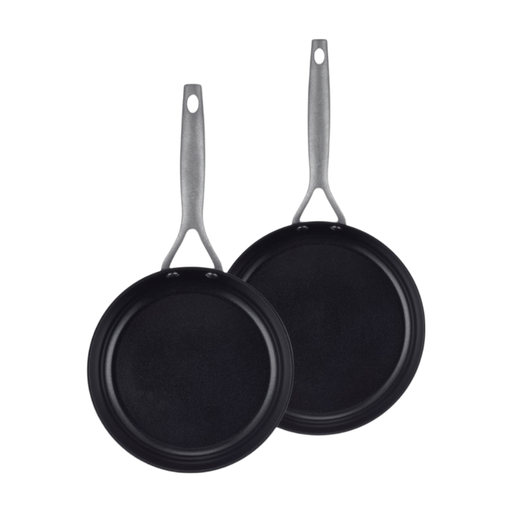
Why This Fits Their Persona: This PFAS-free frying pan set offers two versatile sizes for daily meals. The pans are lightweight yet robust, and the fact that they are from a well-known brand and made from recycled material appeals to families who value sustainability and reliability.
The sustainability claim is concrete: the pans are made from 100% recycled aluminium with an official RCS certification. The riveted stainless steel handles and oven-safe design (up to 200°C) demonstrate a robust construction that goes beyond a simple marketing promise.
A complete set for various dishes. Suitable for all heat sources, including the oven, which provides extra cooking options.
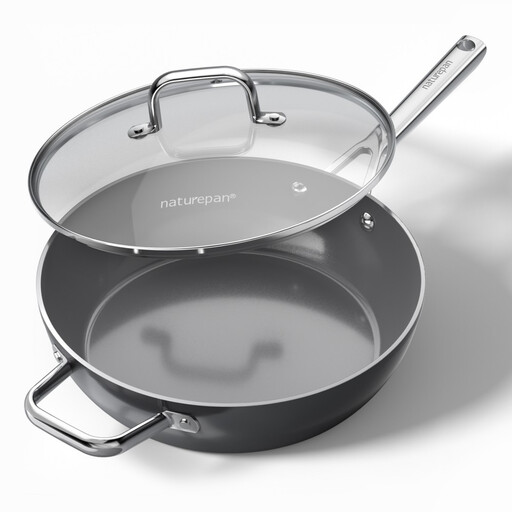
Why This Fits Their Persona: This is more than just a frying pan. Its large, deep design with a lid makes it a versatile workhorse for searing, stewing, and one-pan meals. The high oven-safe temperature (260°C) enables advanced cooking techniques.
The diamond and titanium-reinforced coating is a specific claim that suggests higher durability than a standard "scratch-proof" promise. Being oven-safe up to 260°C is a clear, high-end specification that inspires confidence.
The high sides and included lid make the pan multifunctional, usable as a sauté pan or even a casserole dish. The coating is designed for a longer lifespan under intensive use.
The lifespan of a ceramic frying pan depends heavily on use and care. With daily use and careful maintenance (hand washing, no metal utensils), you can expect a lifespan of 2 to 5 years. As soon as you notice food starting to stick, the non-stick coating is worn out.
Many manufacturers state that their pans are dishwasher-safe. However, the aggressive detergents and high temperatures in a dishwasher can degrade the ceramic coating over the long term. To maximise the lifespan of your durable frying pan, hand washing with a soft sponge and mild dish soap is the recommended method.
No pan is 100% unscratchable. A scratch-proof frying pan is more of a marketing term. Ceramic coatings, especially those reinforced with materials like diamond or titanium, are highly scratch-resistant. They are much harder than traditional PTFE coatings but can still be damaged by sharp objects like knives or metal spatulas. Therefore, always use wooden, silicone, or plastic utensils.
