
Vandaag of morgen in huis

Kwaliteit gegarandeerd

Welkomstaanbiedingen ontgrendelen: GRATIS bezorging | Tot 80% korting | Gratis 30 dagen JoyPlus-proefperiode
Download de app
You're looking for a new frying pan. You want to replace your old one with its traditional non-stick coating (Teflon) with a healthier alternative. A PFAS-free frying pan for induction is at the top of your list. But the search is proving more difficult than you expected. The market is flooded with promises, but many pans disappoint after just a few months.
As a Joybuy Product Recommendation Officer, I'm here to help you cut through the marketing jargon. We'll look at what really matters, so you can choose a pan that suits your cooking style and won't end up gathering dust in the cupboard after just a few uses.
Before you make a decision, it's important to be aware of the most common pitfalls. Many pans look great in the shop but quickly show their flaws at home.
A good pan is an investment in your cooking enjoyment. Therefore, pay close attention to the following three technical specifications. They will determine whether you're buying a pan for a few months or for years to come.
For an induction hob, the base of the pan is the most critical component. It must be, and remain, completely flat and be made of a ferromagnetic material.
The term 'ceramic coating' is used to describe a wide range of qualities. A durable frying pan has more than just a standard layer.
The details make all the difference in daily use.
Based on these criteria, we have selected a number of products that suit different user profiles.
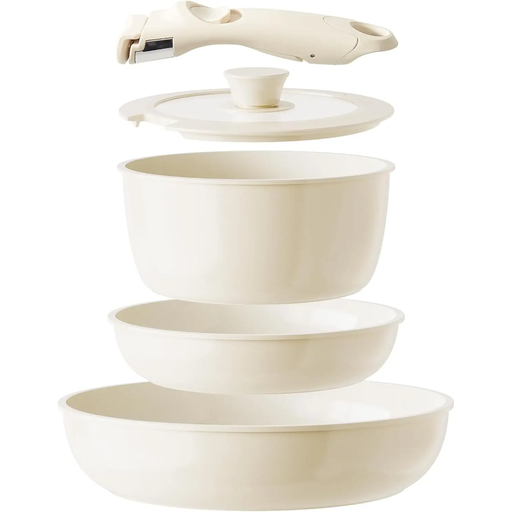
Why This Fits Their Persona: Ideal for those living in small spaces, such as a student flat or an apartment. This set provides the essentials (two frying pans, one saucepan with a lid) without taking up much cupboard space.
The pans are stackable, and the detachable handle saves up to 75% more space. The set is designed for all heat sources, including induction, and can also be used in the oven thanks to the removable handle.
Extreme space-saving and versatility. The pans can go from the hob straight into the oven or be used as a serving dish on the table.
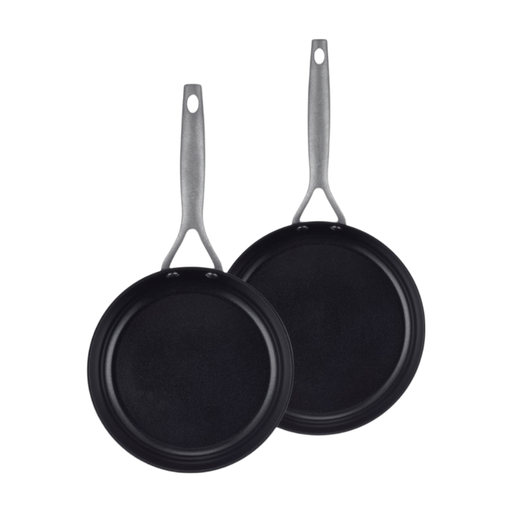
Why This Fits Their Persona: For the everyday cook who seeks reliability and convenience. This set, featuring two popular sizes, is perfect for everything from frying an egg to preparing a meal for a small family.
Made from strong, 100% recycled forged aluminium that heats up quickly and evenly without warping. The dual-layer ceramic non-stick coating is extra scratch-resistant for a longer lifespan.
A sustainable choice due to the recycled material (RCS certified). The pans are oven-safe up to 200°C and feature a sturdy, riveted stainless steel handle.
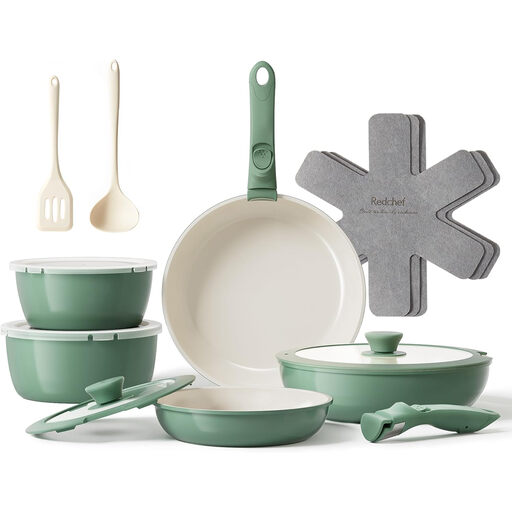
Why This Fits Their Persona: For those looking to replace their entire old cookware collection with a complete, matching, and PFAS-free cookware set. Ideal for outfitting a new kitchen or for a major upgrade.
This is a complete, coordinated system. The pans are designed to stack perfectly, preventing clutter and storage issues. The coating is a triple-layer ceramic for enhanced performance.
A comprehensive set that takes up extremely little space. The pans are oven-safe to a high temperature (450°C) and suitable for all heat sources.
We have compiled a complete, up-to-date list of products that fully meet these strict selection criteria and local safety regulations.
The lifespan of a ceramic frying pan depends heavily on the quality of the coating and its maintenance. With proper care (no metal utensils, no overheating, preferably hand-washed), a pan with a reinforced, multi-layer coating can last for several years. A cheaper pan with a simple coating can lose its non-stick properties after just a few months.
This is usually due to the base. If the pan wobbles, the base has likely warped from the heat, preventing it from making proper contact with the hob. It could also be that the ferromagnetic layer in the base is too thin or doesn't cover the entire surface, leading to 'hot spots' or slow heating. Always choose a pan with a thick, guaranteed flat base specifically designed for induction.
Not necessarily. A higher price might be due to a brand name or a specific design. It's wiser to focus on the specifications: the thickness and material of the base, the type and layers of the coating, and the handle construction. A mid-range pan with the right specifications can be a better purchase than an expensive designer pan with a thin base.
