
Vandaag of morgen in huis

Kwaliteit gegarandeerd

Welkomstaanbiedingen ontgrendelen: GRATIS bezorging | Tot 80% korting | Gratis 30 dagen JoyPlus-proefperiode
Download de app
The search for a good PFAS-free frying pan can feel like navigating a maze. You want to make a healthier choice but are flooded with marketing jargon and promises. The result? Sometimes, a pan that stops performing as advertised after just a few months. As a Joybuy Product Recommendation Officer, I'll help you cut through the noise so you can choose a pan that truly fits your cooking style.
Before we look at the options, let's first discuss the most common pitfalls:
To avoid buyer's remorse, it's wise to pay attention to a few concrete specifications. These features determine the performance and longevity of your pan.
The core of a PFAS-free frying pan is its coating. The most common option is a ceramic frying pan. These layers are made using a Sol-Gel process (sand and water) and contain no harmful chemicals. However, the quality and durability can vary greatly. Some manufacturers reinforce their ceramic coatings with particles like titanium or diamond to extend their lifespan. Another option is stainless steel (SS), which has no coating by nature and also yields excellent cooking results with proper use.
Good heat distribution is essential. A pan with a thick, multi-layered base (often a 'sandwich bottom' of aluminum and stainless steel) distributes heat evenly and retains it better. This is crucial for an induction frying pan, as it prevents 'hotspots' and ensures your dish cooks evenly throughout. Check if the pan is explicitly described as "suitable for all heat sources" and note the thickness of the base.
Think about what you'll be using the pan for most often. A 28 cm frying pan is a popular and versatile size, ideal for most households. Do you often make one-pan meals or stews? Then a sauté pan with higher sides and a frying pan with a lid is a practical choice. If you like to finish dishes in the oven, an oven-safe frying pan is a must. Always check the maximum temperature the pan (and its handle) can withstand.
Based on these criteria, we have selected a number of pans that suit different cooking styles and needs.
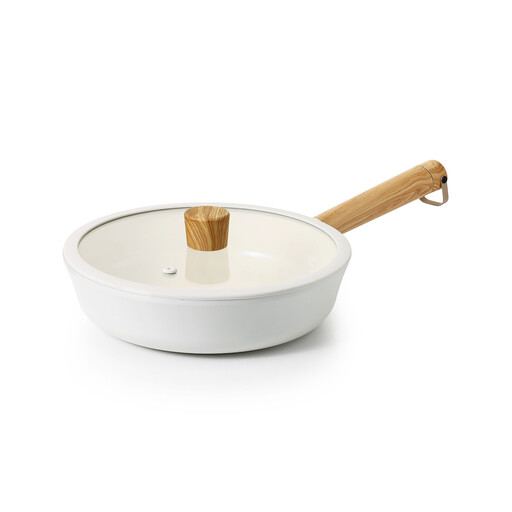
Why This Fits Their Persona: Ideal for those seeking a reliable, PFAS-free pan for daily use without a major investment. The 24 cm size is perfect for one or two-person households, and the included lid adds to its versatility.
This pan has a clear specification: a ceramic coating on an aluminum body with a stainless steel base, ensuring reliable performance on all heat sources, including induction.
Comes with a glass lid, allowing the pan to double as a compact sauté pan. The magnetic stainless steel base ensures excellent heat distribution.
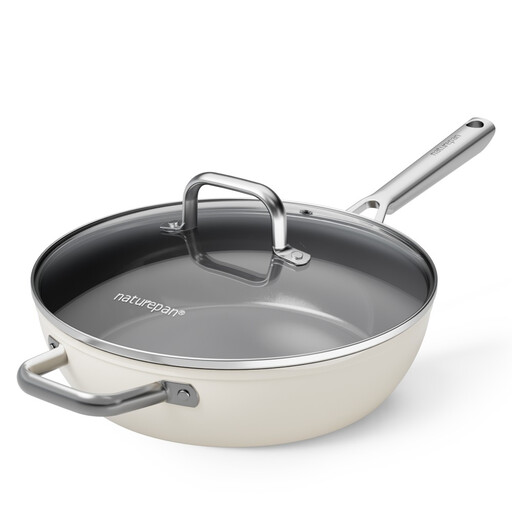
Why This Fits Their Persona: For the chef who is frequently in the kitchen and invests in durability and versatility. This pan is not only a workhorse on the stovetop but can also go into the oven to finish dishes.
According to the manufacturer, the ceramic coating is reinforced with diamond and titanium particles for a longer lifespan. Its oven-safe rating up to 260°C is a concrete, verifiable specification that underscores its durability.
Fully oven-safe frying pan (up to 260°C) for maximum flexibility. The high sides and lid make it a multi-functional sauté pan.
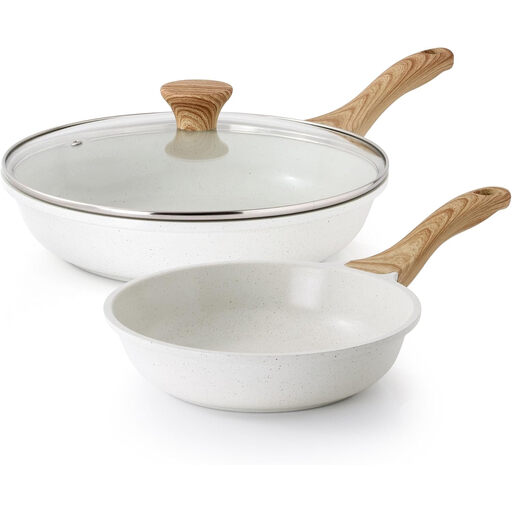
Why This Fits Their Persona: This set immediately provides two popular sizes: a small pan for an egg and a large 11-inch (approx. 28 cm) pan with a lid for family meals. Efficiency and convenience are paramount.
Instead of one pan that isn't suitable for everything, this set offers a solution for various cooking tasks. Both pans feature a stainless steel base for excellent performance on induction.
A complete starter set with two pans (20 cm and 28 cm) and a lid for the larger pan. The Bakelite handles stay cool during stovetop cooking.
We have compiled a complete, up-to-date list of products that meet these selection criteria and local regulations.
The lifespan of a ceramic frying pan depends heavily on the quality of the coating and its maintenance. On average, you can expect 1 to 3 years with regular use. To maximize its lifespan, it's best to cook on low to medium heat, use wooden or silicone utensils, and wash the pan by hand after it has cooled down.
PFAS is a collective term for a group of chemical substances linked to health risks. A PFAS-free pan avoids the use of these specific substances in its non-stick coating. By opting for materials like ceramic or stainless steel, you are choosing an alternative without these chemicals.
It is generally not recommended to use metal objects in a pan with a ceramic PFAS-free non-stick coating. Metal can cause scratches, which can compromise the non-stick function and shorten the pan's lifespan. It's best to use utensils made of wood, bamboo, silicone, or heat-resistant plastic.
