
Vandaag of morgen in huis

Kwaliteit gegarandeerd

Welkomstaanbiedingen ontgrendelen: GRATIS bezorging | Tot 80% korting | Gratis 30 dagen JoyPlus-proefperiode
Download de app
A good frying pan is essential in any kitchen. But with growing awareness around PFAS, the search for a healthier alternative is becoming increasingly important. However, the market for the PFAS-free frying pan is filled with marketing claims that make it difficult to make an informed choice. Many pans promise the world, only to lose their non-stick properties after just a few months.
As a Joybuy Product Recommendation Officer, I'm here to help you cut through the noise. We'll focus on the facts so you can choose a pan that truly suits your needs, without falling for the common pitfalls.
Before you invest in a new pan, it's wise to know what often goes wrong. Many disappointments can be avoided by paying attention to the following points:
To avoid buyer's remorse, focus on a few concrete features. These specifications determine the quality and longevity of your pan.
Most PFAS-free pans with a non-stick function have a ceramic coating. This is essentially a layer based on sand (silicon) that hardens to form a smooth surface. However, its durability varies enormously.
A pan is more than just its coating. The body and base are crucial for performance, especially on an induction hob.
Based on objective specifications, we have selected a number of pans that suit different cooking styles and households.
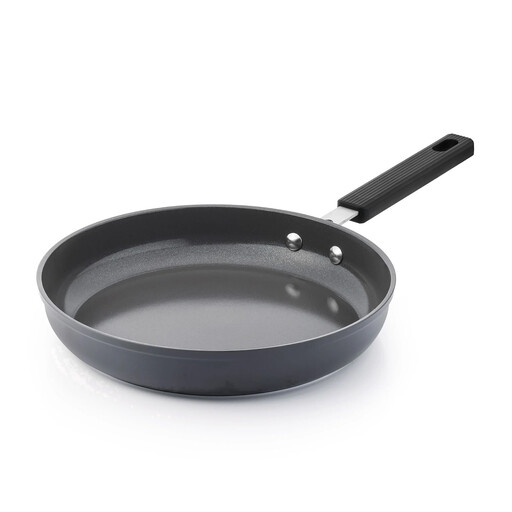
Why This Fits Their Persona: Perfect for those who need a reliable, no-fuss pan for daily tasks like frying an egg or a pancake. The 24cm size is ideal for one- or two-person households.
This pan avoids vague claims by clearly specifying that its ceramic coating is free of PFAS, lead, and cadmium. Its compatibility with induction is also clearly stated.
Easy to clean and suitable for all heat sources, including induction. A practical and affordable start to PFAS-free cooking.
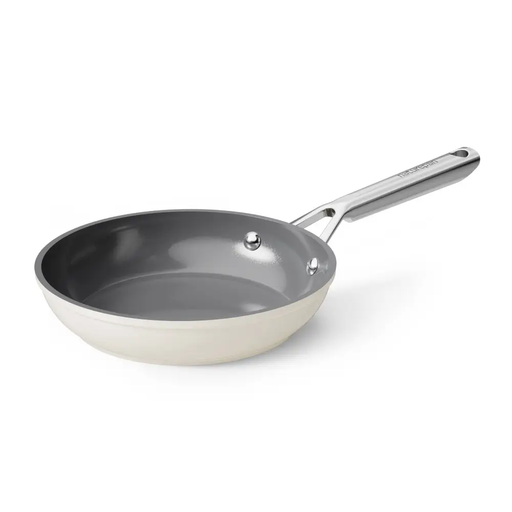
Why This Fits Their Persona: For the home cook looking for a pan that does more than just fry. Ideal for dishes that you first sear on the hob and then finish in the oven.
The diamond and titanium-reinforced coating addresses the durability problem. The stainless steel handle and oven safety up to 230°C make it truly versatile, unlike pans with limitations.
The combination of a wear-resistant coating and oven safety. Suitable for all heat sources, including induction.
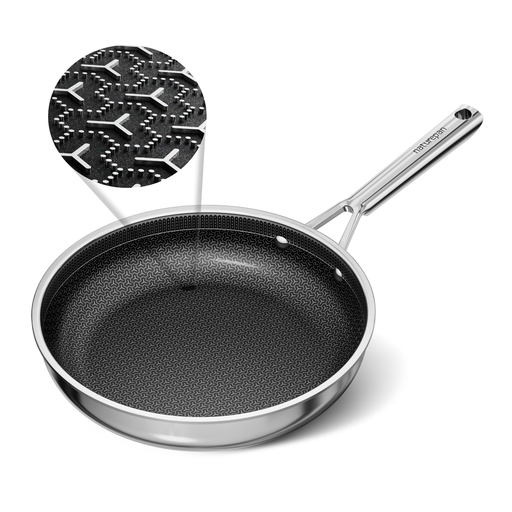
Why This Fits Their Persona: For those who want the best of both worlds: the non-stick properties of ceramic and the searing performance of stainless steel. The large 28cm size is perfect for family meals.
The hybrid construction with a hexagonal pattern of stainless steel and ceramic is designed for superior durability, preventing the rapid wear seen in standard ceramic layers. It is oven-safe to a high temperature (260°C).
Combines high-temperature searing with the convenience of a non-stick surface. The 5-layer construction ensures excellent heat distribution.
The lifespan of a PFAS-free frying pan depends heavily on the quality of the coating and its maintenance. A basic ceramic pan often lasts 1 to 2 years with daily use. A pan with a reinforced coating (such as with diamond or titanium) can last significantly longer, sometimes 3 to 5 years or more, if properly maintained.
Proper maintenance is crucial to keep the non-stick coating in good condition.
A ceramic frying pan is considered a healthier alternative because its coating does not contain PFAS. Traditional non-stick coatings (like Teflon) contain PTFE, a type of PFAS. Although these substances are considered safe under normal use, they can release harmful fumes when overheated (above 260°C). A PFAS-free frying pan gives you the peace of mind that you are avoiding these risks, which is a reassuring thought for many people.
