
Livraison le jour même et le lendemain

Qualité garantie

Débloquez vos offres de bienvenue: Livraison GRATUITE | Jusqu'à -80 % | 30 jours d'essai gratuits à JoyPlus
Téléchargez l'application
As a Joybuy Product Recommendation Officer, I see daily how challenging it can be to make the right choices. The frying pan market is full of promises about healthy and sustainable cooking, but what do these claims really mean? A PFAS-free frying pan is high on the wish list for many home cooks, but the search often leads to frustration. Before you buy a new frying pan, it's important to recognise the common pitfalls.
Many pans wear out unexpectedly fast or turn out to be not as "healthy" as advertised. Here are the three most common problems:
To avoid a bad purchase, it's helpful to focus on a few specific features. These characteristics determine the quality, safety, and lifespan of your new frying pan.
A truly healthy frying pan is completely free of all per- and polyfluoroalkyl substances (PFAS). So don't just look for the PFOA-free pan claim, but search for pans that explicitly state they are 100% PFAS-free. Ceramic coatings are a popular choice for this. The quality depends on the composition and the number of layers. Some coatings are reinforced with materials like diamond or titanium for extra scratch resistance and a longer lifespan.
For those who cook on induction, the base of the pan is crucial. It must be perfectly flat and made of a ferromagnetic material (like steel) to create a good connection with the hob. A sturdy, thick base prevents warping at high temperatures and ensures even heat distribution. Aluminium pans often have an inlaid steel base to make them suitable for induction.
Besides the coating and the base, other factors determine ease of use. An oven-safe frying pan offers more flexibility for dishes that you first sear and then finish in the oven. Check the temperature to which the pan (and its handle) is heat-resistant. A securely riveted or screwed handle is safer than a glued one. Although many pans are sold as dishwasher-safe, hand washing almost always extends the life of the non-stick coating.
Based on these criteria, we have selected a number of pans that suit different types of home cooks.
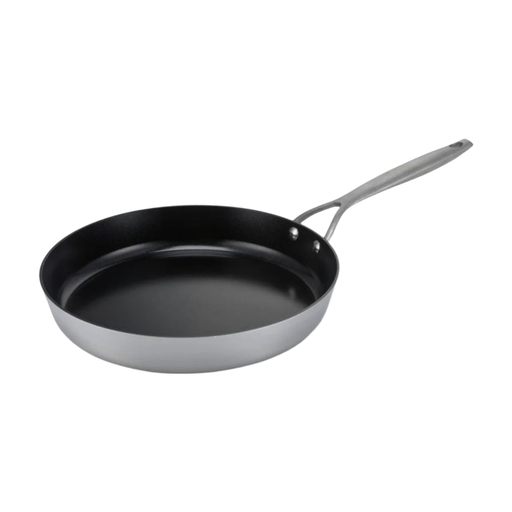
Why This Fits Their Persona: This pan is a reliable all-rounder. The 28 cm size is ideal for family meals, and the pan is versatile enough for daily use, from frying an egg to preparing a complete meal.
This Brabantia frying pan is guaranteed 100% PFAS-free and features a scratch-resistant, dual-layer ceramic non-stick coating. The sturdy construction of recycled aluminium with a steel induction base prevents warping and poor heat distribution.
Made from 100% recycled aluminium (RCS certified). Oven-safe up to 200°C, which offers additional cooking possibilities.
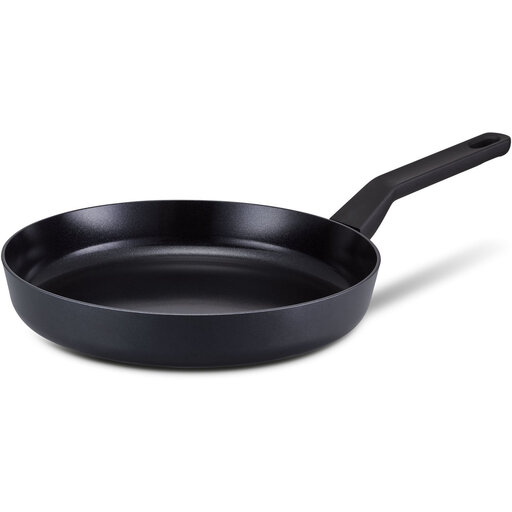
Why This Fits Their Persona: Perfect for those seeking an affordable and reliable PFAS-free pan without overspending. The 24 cm size is ideal for one or two-person households and quick, daily meals.
This pan offers a clear 100% PFAS-free promise at an accessible price. The lightweight aluminium body heats up quickly, saving energy and ensuring proper function on induction, thus avoiding the pitfall of poor heat distribution.
Heat-resistant Bakelite handle for a secure grip. Suitable for all heat sources, including induction.
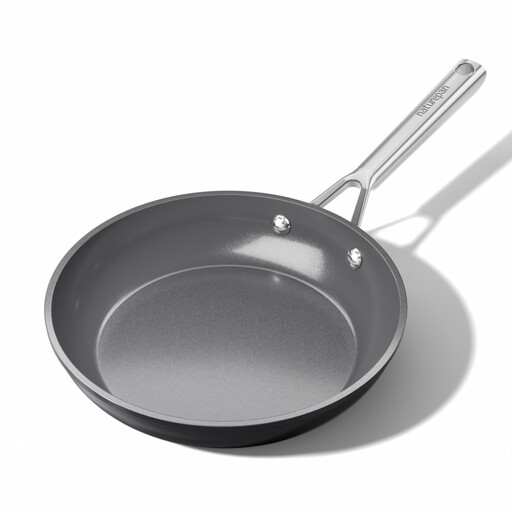
Why This Fits Their Persona: For the serious home cook who invests in durability and performance. This pan is designed for intensive use and offers superior non-stick properties and heat resistance.
The ceramic coating is reinforced with diamond and titanium particles, directly addressing the pitfall of a fragile layer. This ensures an extremely durable surface. The pan is oven-safe up to a high temperature of 260°C.
Exceptionally durable non-stick coating and oven-safe up to 260°C. The stainless steel handle stays cool on the stovetop.
We have compiled a complete, up-to-date list of products that fully meet these strict selection criteria and Dutch safety regulations.
The lifespan of a ceramic frying pan heavily depends on the quality of the coating and its maintenance. A high-quality pan can last for several years with proper use (avoiding metal utensils, not overheating, hand washing). Cheaper models can lose their non-stick coating within a year.
Yes, a pan guaranteed to be free of the entire PFAS group is considered a safer choice. When traditional pans with PTFE (a type of PFAS) are overheated, harmful fumes can be released. A pan without PFAS eliminates this risk, contributing to a healthier cooking environment.
Although many manufacturers state that their pans are dishwasher-safe, hand washing is strongly recommended. The harsh detergents and high temperatures in a dishwasher can degrade the ceramic non-stick coating over time, significantly shortening the pan's lifespan. A quick wash with a soft sponge and warm water is usually sufficient.
