
Same-day & Next-day Delivery

Quality Guaranteed

Unlock Your Welcome Offers: FREE Delivery | Up to 80% OFF | Free 30-day JoyPlus trial
Download the APP
A good frying pan is an essential tool in any kitchen. But the search for a new one, specifically a PFAS-free frying pan, can feel like navigating a minefield. Manufacturers make lofty claims, but in reality, you often end up with a pan that starts sticking or warps on your induction hob after just a few months.
As a Product Recommendation Officer at Joybuy, I see the issues consumers face every day. To help you avoid a bad purchase, we've outlined the most common pitfalls and the key factors to consider.
Before you make a purchase, watch out for these common marketing traps:
oven-safe frying pan, but the fine print reveals a maximum temperature of 150°C. That's barely enough to keep a dish warm, let alone finish cooking it. The plastic or Bakelite handle is often the limiting factor here.To find a pan that's worth your money, focus on the specifications that truly matter.
A PFAS-free frying pan typically features a ceramic non-stick coating. This is an excellent alternative to traditional coatings. However, quality and durability can vary enormously. Pay attention to the following:
The base is the foundation of your pan. A good base is:
Consider your cooking habits:
Based on these objective criteria, we have selected a number of pans that suit different user profiles.

Why This Fits Their Persona: A reliable all-rounder from a well-known brand. Ideal for those who cook daily and are looking for a durable, no-nonsense pan. Suitable for everything from a fried egg to a piece of salmon.
The forged aluminium construction provides a stable, warp-resistant base that won't deform easily. The stainless steel handle is riveted for extra durability, and its oven-safe rating up to 200°C is clear and practical.
Made from 100% recycled aluminium (RCS-certified) with a dual-layer ceramic coating that the manufacturer claims is extra scratch-resistant.
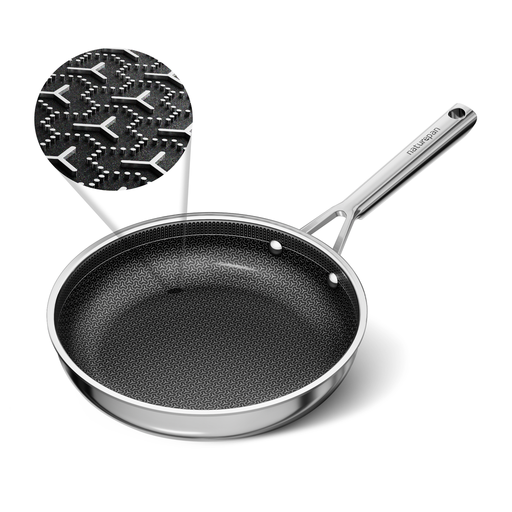
Why This Fits Their Persona: For those who invest in high-performance cookware. The hybrid structure is designed for perfectly searing meat while retaining non-stick convenience. Ideal for the ambitious home cook.
The 5-layer construction with a stainless steel core is highly resistant to warping. The pan is oven-safe up to an impressive 260°C, completely bypassing the pitfall of a limited oven temperature.
Unique hybrid surface featuring a hexagonal stainless steel pattern for searing and a ceramic layer for non-stick convenience. The coating is reinforced with diamond and titanium.
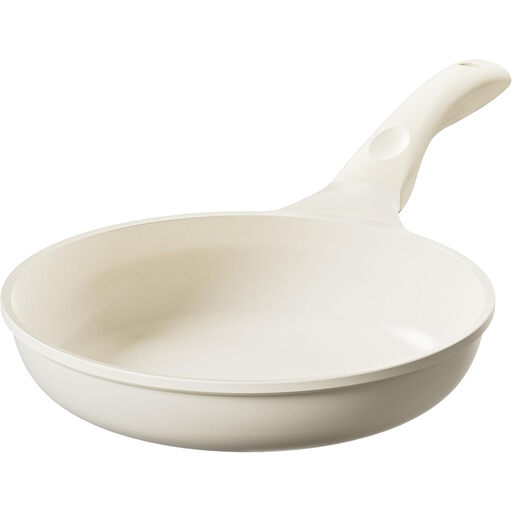
Why This Fits Their Persona: A functional and accessible choice for those looking to switch to PFAS-free cooking without a major investment. Perfect for a student flat, a first home, or for anyone wanting to try the benefits of ceramic.
This pan doesn't make exaggerated claims. It focuses on the essentials: a guaranteed PFAS-free ceramic coating and a heat-resistant Bakelite handle that stays cool on the stovetop. It's clear and honest about its function.
According to the manufacturer, the pan is very easy to clean (often, just wiping it with a cloth is enough). The thickened base ensures fast and even heat distribution.
We have compiled a complete, up-to-date list of products that meet these strict selection criteria and safety standards.
This depends heavily on the quality and maintenance. A basic coating can wear out after 1 to 2 years of daily use. Coatings reinforced with materials like diamond or titanium often have a longer lifespan. Using wooden or silicone utensils, washing by hand, and avoiding overheating will significantly extend its life.
Pans with a ceramic non-stick coating do not contain PFAS (like PFOA and PTFE) by definition. These substances can potentially be released from traditional non-stick pans at very high temperatures. A PFAS-free frying pan is therefore seen as a precautionary measure for those who want to make conscious choices in the kitchen.
Sticking is often caused by an invisible layer of burnt-on protein or fat residue. Try to deep-clean the pan: let it cool completely, fill it with warm water and a spoonful of baking soda, and let it simmer gently on low heat. Then, clean it with a soft sponge. For best results, always use a small amount of oil or butter when cooking.
