
Vandaag of morgen in huis

Kwaliteit gegarandeerd

Welkomstaanbiedingen ontgrendelen: GRATIS bezorging | Tot 80% korting | Gratis 30 dagen JoyPlus-proefperiode
Download de app
As a Joybuy Product Recommendation Officer, I'm here to help you make an informed decision. You've likely heard the discussion about PFAS in consumer products, including cookware. As a result, many people are searching for an alternative to the traditional non-stick pan. But where do you start? The market is filled with options and promises.
This article is designed to guide you. We will examine the specifications and practical features of several popular PFAS-free frying pans. This way, you can make a well-informed choice that suits your cooking style.
Before we dive into the products, here are a few key points to help you with your selection.
When you're looking for a PFAS-free pan, you'll quickly discover the ceramic frying pan. These pans feature a non-stick coating based on a derivative of sand (silicon), which is produced without the controversial PFAS chemicals. A frying pan with a ceramic non-stick coating offers a smooth surface that prevents food from sticking, allowing you to cook with less oil or butter. It's a widely chosen alternative for those seeking a PFOA-free pan.
For most households, a 24 cm frying pan is sufficient. This size is versatile enough for frying an egg, a piece of fish, or a one-pan meal for two to three people. Do you cook on an induction hob? Always check if the pan is suitable for an induction frying pan cooktop. An added benefit is an oven-safe frying pan. This allows you to sear a dish on the hob and then finish cooking it in the oven.
A PFAS-free pan requires careful handling to keep its non-stick coating in good condition. Preferably, use wooden or silicone utensils to prevent scratches. Avoid overheating (don't place the empty pan on high heat) and let the pan cool down before washing. Although many pans are dishwasher-safe, hand washing often extends the life of the coating.
Below is a selection of pans that meet the demand for PFAS-free cooking, based on their specifications and functionalities.
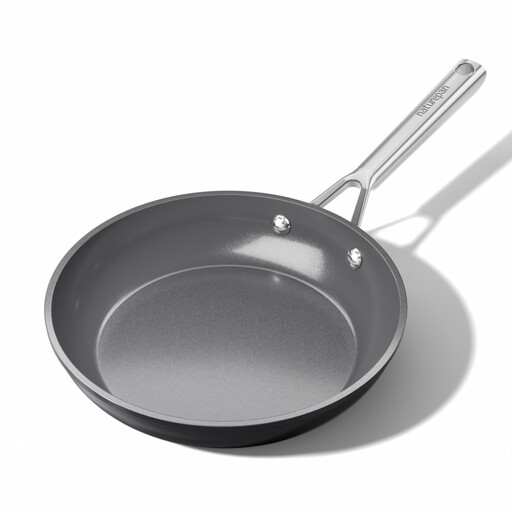
Why It Stands Out This pan from Naturepan combines a ceramic coating with diamond and titanium particles. According to the manufacturer, this creates an extra durable and wear-resistant surface. The pan is designed for versatility, with a base that ensures fast and even heat distribution and a handle that stays cool on the cooktop.
Pros
Who Is This Pan For? For the home cook who wants a robust and versatile pan for daily use. Its oven-safe feature makes it ideal for dishes prepared on both the hob and in the oven.
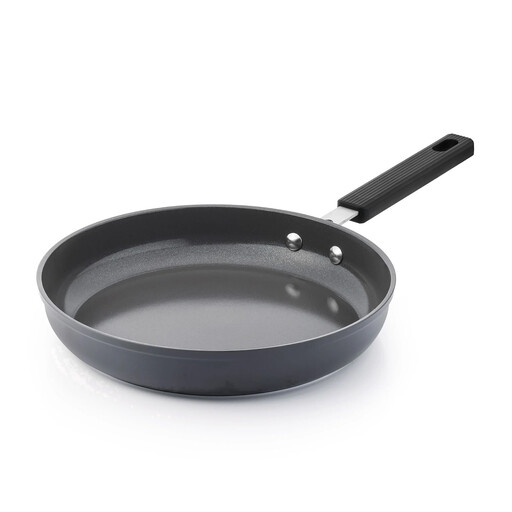
Why It Stands Out The SENSARTE pan focuses on ease of use and safety. The pan is made of aluminium, which makes it lightweight, and has a PFAS-, lead-, and cadmium-free ceramic coating. The manufacturer emphasizes that the pan is extremely easy to clean. The anti-scald handle is designed to prevent burns.
Pros
Who Is This Pan For? Ideal for anyone looking for a straightforward, lightweight pan for quick, daily meals like an omelette or pancakes. The ease of cleaning is a major advantage here.
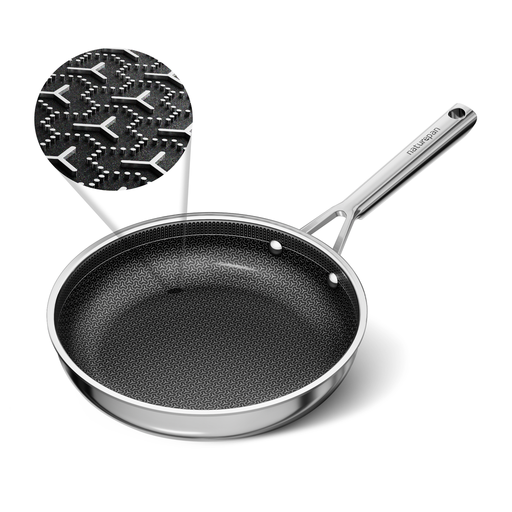
Why It Stands Out This pan from naturepan uses a hybrid technology. The cooking surface features a hexagonal pattern with raised stainless steel ridges and a ceramic non-stick coating in the valleys. This design combines the searing capability of stainless steel with the convenience of a non-stick surface. The 5-layer construction is designed for durability and even heat distribution.
Pros
Who Is This Pan For? For the ambitious home cook who wants to combine the benefits of stainless steel (excellent searing) with a non-stick pan. Perfect for cooking a steak, but also for a delicate piece of fish.
A ceramic coating is a popular PFAS-free choice, but it's not the only one. If you're looking for a pan that will last for generations and is naturally PFAS-free, another material might be a great option.
For those considering another durable, PFAS-free option, an enamelled frying pan is an excellent choice. View our range of Enamelled Frying Pan here.
PFAS is an umbrella term for a large group of thousands of chemical substances. PFOA and PTFE are two well-known substances from this group. PTFE is the chemical name for the coating often referred to by the brand name Teflon. A PFAS-free frying pan is free from the entire group of these substances, and therefore also free from PFOA and PTFE.
The term 'healthy frying pan' can be interpreted in several ways. A ceramic frying pan is often seen as a conscious choice because its non-stick coating is produced without PFAS chemicals. Additionally, the smooth surface allows for cooking with less fat, which can contribute to a lighter meal.
To maximize the lifespan of your frying pan with a ceramic non-stick coating, there are a few simple guidelines. Use utensils made of wood, bamboo, or silicone. Heat the pan gradually and avoid the highest setting, especially when the pan is empty. Let the pan cool completely before cleaning it with a soft sponge and warm water. Hand washing is often recommended, even if the pan is labelled as dishwasher-safe.
