
Livraison le jour même et le lendemain

Qualité garantie

Débloquez vos offres de bienvenue: Livraison GRATUITE | Jusqu'à -80 % | 30 jours d'essai gratuits à JoyPlus
Téléchargez l'application
A good frying pan is an essential tool in any kitchen. But with growing concerns about PFAS in traditional non-stick coatings, more and more people are looking for a healthier alternative. The market for the PFAS-free frying pan is huge, but how can you be sure you're making a smart buy? Many pans overpromise and underdeliver.
As a Joybuy Product Recommendation Officer, I'll help you cut through the marketing claims. We'll look at the facts so you can choose a pan that is not only safe but also a joy to cook with and built to last. Let's discuss the most common pitfalls that can cost you money and cooking enjoyment.
Before you purchase a new pan, it's important to know what to look for. Many pans look great in the store but turn out to be a purchase you'll regret in practice.
healthy frying pan, look for a product that is explicitly 100% PFAS-free.ceramic frying pan is a popular PFAS-free alternative. Unfortunately, there are many cheap variants on the market whose non-stick coating loses its effectiveness after just a few months. This is often due to a coating that is too thin or of lower quality, unable to withstand daily use or accidental high temperatures.induction frying pan with a thin or incomplete magnetic base will heat up slowly and unevenly. The result: part of your dish is burnt while the rest is still undercooked. This leads to frustration and wasted energy.To avoid the pitfalls above, focus on a few concrete specifications. These determine the quality and lifespan of your new pan.
Most PFAS-free pans use a ceramic coating, the quality of which varies enormously. Pay attention to the following points:
A good base ensures efficiency and cooking pleasure. For an induction frying pan, this is the most important feature.
A well-known brand isn't a guarantee, but manufacturers like Tefal and Brabantia have a reputation to uphold. They often invest in sustainability, both in the product's lifespan and in their use of materials. The Tefal Renew series is a good example of this, made from 100% recycled aluminium. This is not only better for the environment, but the material is also known for its excellent heat conduction.
Based on these criteria, we have selected a number of PFAS-free pans that suit different user profiles.
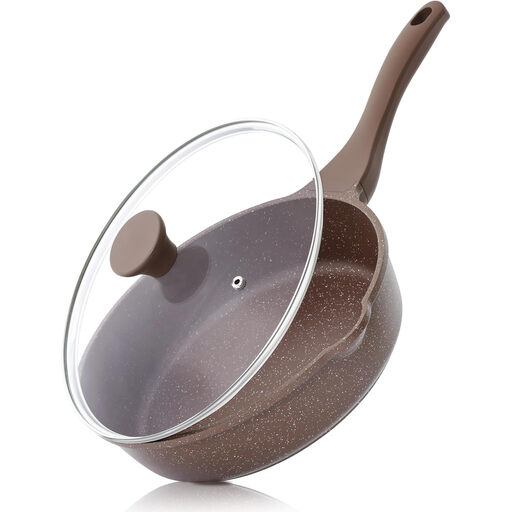
Why This Fits Their Persona: An affordable and versatile pan for daily use. Ideal for those new to induction cooking or setting up their first home, who need a reliable, healthy pan without a major investment.
This pan is explicitly free of PFOA, PFOS, lead, and cadmium. The granite coating is a robust alternative to simple ceramic layers that wear out quickly.
Its deep shape makes it suitable for frying, sautéing, and even deep-frying. The handle stays cool during cooking.
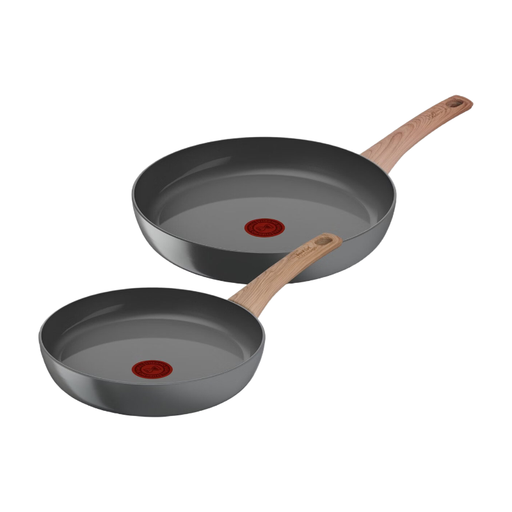
Why This Fits Their Persona: Perfect for the home chef who cooks daily and values convenience and reliability. This Tefal frying pan set offers two common sizes (24 and 28 cm) for a variety of dishes.
This pan is 100% PFAS-free. The Thermo-Signal helps prevent overheating (and thus rapid wear), and the base is designed for fast, even heating on induction.
The Thermo-Signal dot turns solid red when the ideal cooking temperature is reached. The pan is made from 100% recycled aluminium.
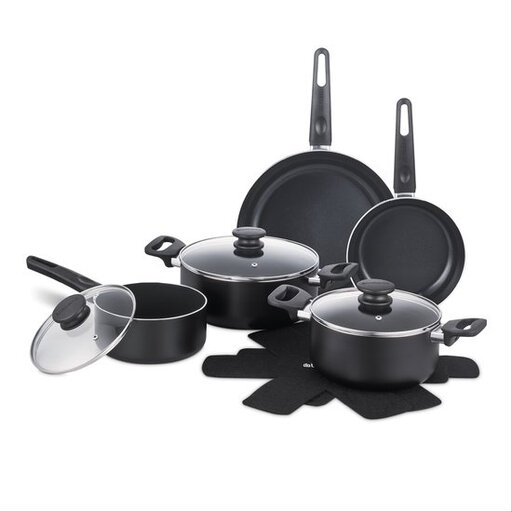
Why This Fits Their Persona: For those who want an all-in-one solution with a complete, high-quality, and fully PFAS-free cookware set. This is a durable investment for years of cooking enjoyment from a trusted brand.
This set is guaranteed 100% PFAS-free and made from forged aluminium for superior, even heat distribution. This improves the lifespan of the ceramic coating.
A very complete set with frying pans and saucepans with lids. The Bakelite handles stay cool on the stovetop for added safety.
We have compiled a complete, up-to-date list of products that fully meet these strict selection criteria.
The lifespan depends heavily on quality and maintenance. A high-quality pan can last 2 to 5 years with proper use. The most important tips for a long lifespan are:
Yes, a ceramic frying pan is considered a healthy frying pan because it is guaranteed to be free of PFAS. According to various health authorities, potentially harmful fumes can be released when traditional pans with a PTFE coating (like Teflon) are overheated. With a ceramic pan, you do not run this risk.
No, not automatically. A pan must have a magnetisable (ferromagnetic) base to work on an induction hob. Always check if the product is specifically marked as 'suitable for induction'. This is usually indicated with a symbol (a coil) on the bottom of the pan or on the packaging.
