
Vandaag of morgen in huis

Kwaliteit gegarandeerd

Welkomstaanbiedingen ontgrendelen: GRATIS bezorging | Tot 80% korting | Gratis 30 dagen JoyPlus-proefperiode
Download de app
A frying pan may seem like a simple purchase, but differences in material, base and coating can make a big difference to how enjoyable it is to cook with. A pan that works well on gas may heat less evenly on an induction hob. A non-stick coating can also wear more quickly if you use metal utensils or heat the pan too much.
So don’t just look for a low price or claims such as “healthy”, “wear-resistant” or “suitable for all hobs”. Always check the product specifications. The ACM says that product claims must be clear and verifiable.
An induction frying pan needs a magnetisable base. If the product description only says that the pan is suitable for gas and electric hobs, induction compatibility isn’t guaranteed. Also check that your hob works with the diameter of the base; the rim of a pan may be wider than the actual heated area.
According to the product information, a PFAS-free frying pan contains no PFAS in the specified coating or materials. That doesn’t mean every pan without a chemical coating will cook in exactly the same way. A ceramic coating may have different care requirements from a smooth stainless steel interior.
Pay attention to the wording, too. “Made without intentionally added PFAS” is more specific than a general claim such as “non-toxic”. If in doubt, check the materials listed and the manufacturer’s information.
A dishwasher-safe frying pan can be cleaned in the dishwasher according to the product description, but high temperatures and harsh detergents can cause a coating to wear more quickly. Hand washing is recommended for various models to help extend their lifespan. Let a hot pan cool down first and avoid moving it suddenly from hot to cold water.
A ceramic frying pan usually has a non-stick coating over an aluminium or steel base. It can be handy for eggs, pancakes and dishes you want to cook with little oil. Use wooden or silicone utensils to help prevent scratches.
A stainless steel frying pan generally doesn’t have a traditional non-stick coating. A three-layer construction with an aluminium core can improve heat distribution. However, steel requires the right temperature and enough fat to help prevent food from sticking. The PURECOOK models made with 304 stainless steel and an aluminium middle layer are examples of this construction.
With aluminium, the base is particularly important. A magnetic base makes an aluminium pan suitable for induction. Also check whether the handle and coating are suitable for oven use.
A large pan won’t always fit well on a small induction zone. A pan that’s too small may heat unevenly on a large zone.
Check whether the pan comes with a lid, whether the handle is oven-safe and whether the pan is dishwasher-safe. A frying pan with a lid is useful for simmering, slow cooking and keeping food warm. A removable silicone sleeve can provide extra grip, but it should be cared for according to the instructions.
Look out for conflicting information in the product description, too. For example, a product may be described as “oven-safe” even though the handle has a lower temperature limit. Always follow the lowest stated limit.
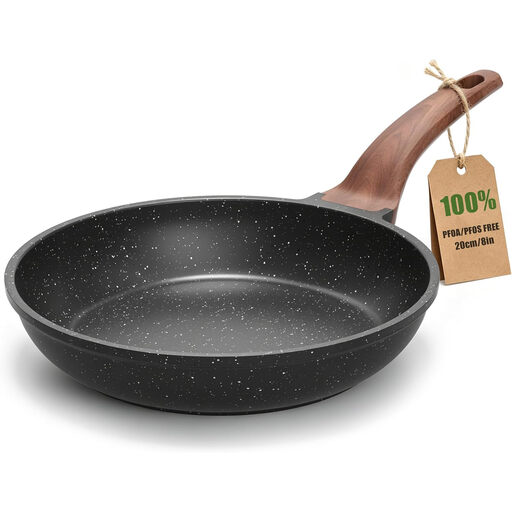
Why it suits this profile: Its compact size is ideal for single portions, eggs and omelettes. According to the product information, this pan works on induction, gas, electric and ceramic hobs.
The specifications explicitly state that it is PTFE-free and PFAS-free, and recommend hand washing. This makes it clear that dishwasher convenience isn’t part of the appeal.
20 cm size, magnetic base for induction and a handle with a hanging hole. The manufacturer states a maximum heat resistance of 250 °C.
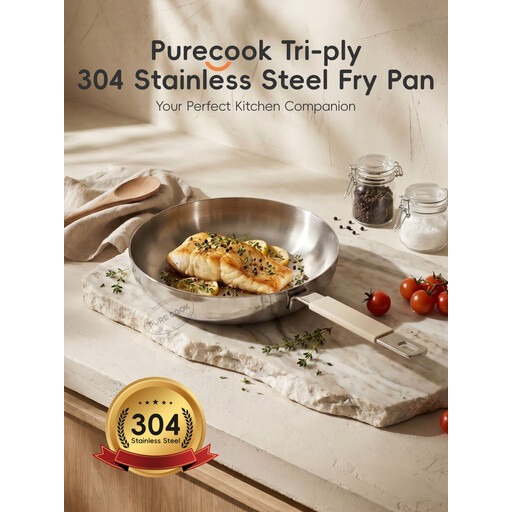
Why it suits this profile: This pan is designed for anyone looking for a coating-free interior and a three-layer construction for regular cooking on gas or induction.
The product information specifies food-grade 304 stainless steel and an interior without a chemical coating. It’s a clear alternative if you don’t want a traditional non-stick coating.
22 cm diameter, three-layer construction and a heat-insulating silicone sleeve. The manufacturer states that it’s compatible with gas and induction hobs.

Why it suits this profile: The two sizes suit households that cook both small portions and meals for several people. According to the product information, the pans are suitable for induction, gas, electric, ceramic and halogen hobs.
The sizes, PFAS-free ceramic coating and oven limit of 200 °C are clearly stated. The pans are dishwasher-safe, but hand washing is recommended to help extend their lifespan.
Set of 20 and 24 cm pans, 100% recycled forged aluminium according to the product information, and a two-layer ceramic coating.
We’ve put together a complete, up-to-date list of products that meet these strict selection criteria and the applicable European safety requirements.
A 20 cm pan is often handy for one person. A 24 cm pan is a good fit for everyday meals for one or two people. Choose 28 cm when you’re cooking larger portions or several ingredients at once. Always check that the base fits the cooking zone properly.
No. PFAS-free describes a feature of the materials or coating. A pan may have a PFAS-free ceramic coating, but stainless steel pans without a non-stick coating are also available. So check both the material and the type of surface.
Its lifespan depends on how you use it, the temperature and how well you care for it. Avoid preheating it empty on a high setting, using metal utensils and cleaning it with abrasive products. If the coating is damaged or peeling, you should stop using the pan, following the safety instructions.
