
Same-day & Next-day Delivery

Quality Guaranteed

Unlock Your Welcome Offers: FREE Delivery | Up to 80% OFF | Free 30-day JoyPlus trial
Download the APP
A good frying pan is an essential in any kitchen. But the search for a new, healthy pan can feel like a maze. Claims about "green" coatings and "indestructible" layers are thrown at you from all sides. If you're specifically looking for a PFAS-free frying pan, you want to be sure you're making a safe and durable choice.
Before you make a purchase, it's wise to know where the pitfalls lie. Many pans overpromise and underdeliver, leaving you searching for a replacement after just a few months.
To find a pan that lives up to its promises, it's helpful to focus on a few concrete specifications. This will help you cut through the marketing jargon.
The most common choice for a pan without PFAS is a ceramic frying pan. These coatings are made from a sand derivative (silicon) and naturally do not contain PFAS.
The base is the engine of your pan. A good base ensures fast and even heat distribution, which prevents food from sticking and saves energy.
Want a frying pan that can go in the oven? Then the handle material is the deciding factor.
Based on these criteria, we have selected a number of pans that suit different cooking styles and households.
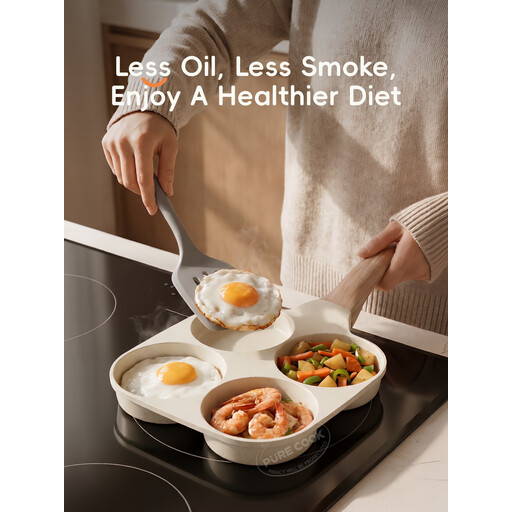
Why This Fits Their Persona: Ideal for those who want to quickly make breakfast for the family in the morning. You can fry four perfectly round eggs or small pancakes at once, saving time and washing up.
This pan has a specific purpose and doesn't pretend to be an all-rounder. The non-stick coating is designed for low-oil cooking, which is exactly what you'll use it for.
Time-saving thanks to the 4-compartment design. The aluminium body heats up quickly and is lightweight, making it easy to handle.
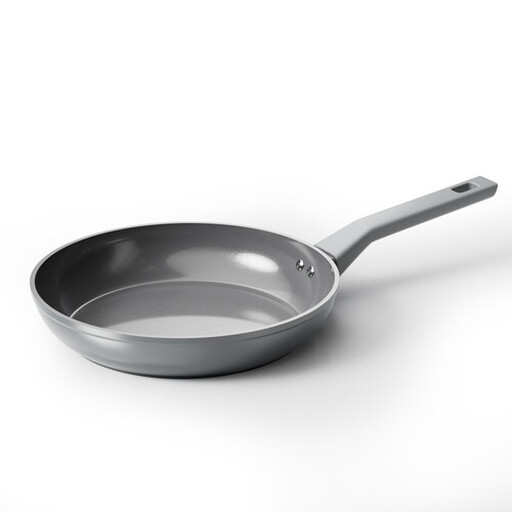
Why This Fits Their Persona: A 26cm pan is the perfect workhorse for daily meals, from a piece of fish to a stir-fry for two. This pan is designed for versatility.
The manufacturer is explicit: 100% free of PFAS, PFOA, and PTFE. This removes the ambiguity of vague "healthy" claims. The multi-layered base is designed for stable performance on all heat sources.
According to the manufacturer, the ceramic coating is reinforced with diamond and titanium for improved durability. Suitable for all heat sources, including induction.
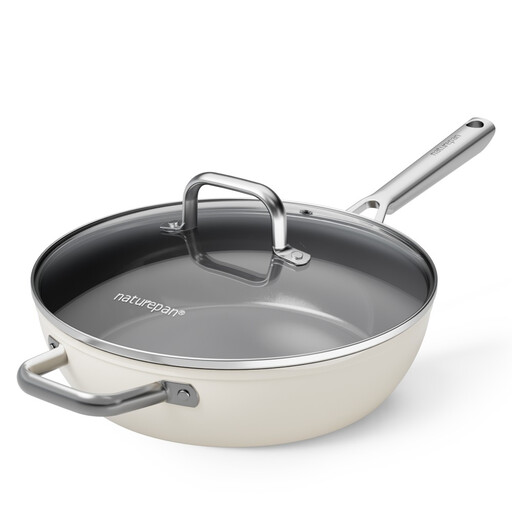
Why This Fits Their Persona: For those who enjoy making one-pan meals, stews, or larger portions. The high sides, lid, and oven-safe design make this pan extremely versatile.
The 'oven-safe' claim is backed up by a stainless steel handle and a clear temperature limit (260°C). This is a concrete specification, not a vague promise.
Functions as both a frying pan and a sauté pan. The high sides prevent splattering, and the included lid is ideal for simmering.
Besides frying pans, there are other types of cookware that are naturally PFAS-free, such as enamelled cast iron pans. These are excellent for stewing and roasting.
The lifespan of a ceramic frying pan depends heavily on use and care. With daily use and careful maintenance (hand washing, no metal utensils), you can expect it to last for several years. The non-stick properties will gradually diminish over time.
To keep the non-stick coating in good condition, a few simple steps are recommended. Wash the pan by hand with a soft sponge and mild dish soap. Avoid abrasive sponges and harsh cleaning agents. Preferably use wooden or silicone utensils to prevent scratches, and let the pan cool down before cleaning it.
A higher price often correlates with a thicker base, a more advanced (and, according to the manufacturer, more durable) coating, and higher-quality handle materials. For most home cooks, a mid-range pan offers an excellent balance of price, performance, and lifespan. The most important thing is that the pan meets the basic criteria: guaranteed PFAS-free and a construction that suits your cooktop and cooking style.
