
Vandaag of morgen in huis

Kwaliteit gegarandeerd

Welkomstaanbiedingen ontgrendelen: GRATIS bezorging | Tot 80% korting | Gratis 30 dagen JoyPlus-proefperiode
Download de app
A good frying pan is an essential tool in any kitchen. More and more people are consciously seeking a PFAS-free frying pan, and that's a wise choice. But the market is saturated with marketing jargon and promises that aren't always clear. How can you be sure you're buying a pan that is not only safe but also worth the investment and performs well?
As a Product Recommendation Officer at Joybuy, I'll filter the information for you. In this guide, we'll discuss the most common pitfalls and the specifications you really need to pay attention to, so you can make an informed decision.
Before you purchase a new pan, it's good to be aware of a few common mistakes. This will help you avoid a purchase you'll later regret.
To avoid the pitfalls mentioned above, you can focus on a few specific product features. These specifications provide an objective view of its quality and performance.
The non-stick coating is the most important part of a healthy frying pan.
Do you cook on an induction hob? Then the base of the pan is crucial. An induction hob works by creating a magnetic field, so the pan must have a ferromagnetic base.
Based on clear, PFAS-free specifications and a good price-to-quality ratio, we have selected a number of PFAS-free pans that suit different users.

Why This Fits Their Persona: Ideal for anyone seeking a reliable, all-round pan without committing to a full set. The 24cm size is perfect for daily meals for 1 to 3 people, from frying an egg to searing a piece of fish.
This pan is explicitly 100% PFAS-free, not just PFOA-free. The body is made from forged aluminium, which ensures fast and even heating, including on induction hobs.
Made from 100% recycled aluminium (RCS certified) and suitable for all hobs. The riveted stainless steel handle provides extra durability.

Why This Fits Their Persona: For those who cook regularly and want flexibility. This set, featuring the two most common sizes (20 and 24 cm), covers nearly all daily cooking tasks, from making an omelette to sautéing vegetables for the whole family.
This set offers the assurance of a reputable brand with a clear 100% PFAS-free claim. The riveted handles are more durable than the screwed-on versions found on cheaper pans.
Two versatile sizes in one purchase. The pans are lightweight, oven-safe up to 200°C, and made from 100% recycled aluminium.
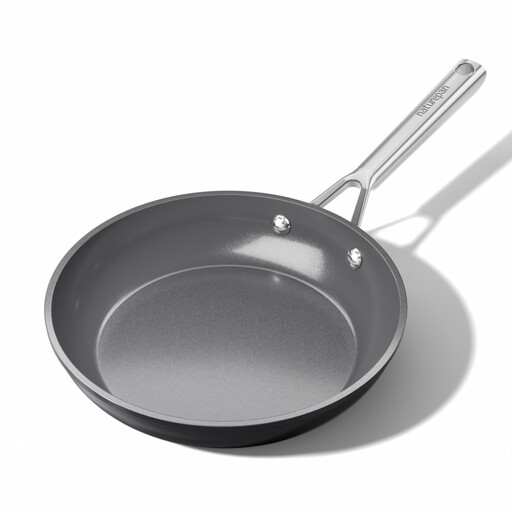
Why This Fits Their Persona: For the chef who invests in durability and versatility. This pan is not only PFAS-free but also oven-safe to a high temperature, making it ideal for dishes that you sear on the hob and then finish in the oven.
This pan tackles the 'fragile ceramic layer' pitfall. According to the manufacturer, the coating is reinforced with diamond and titanium particles for superior scratch resistance and a longer lifespan.
Highly versatile: suitable for all hobs and oven-safe up to 260°C. The stainless steel handle is designed to stay cool on the stovetop.
We have compiled a complete, up-to-date list of products that fully meet these strict selection criteria and safety standards.
The lifespan heavily depends on the quality of the ceramic coating and its maintenance. A high-quality pan can last for several years with careful use (hand washing, no metal utensils, avoiding overheating). Cheaper models may need to be replaced after just a year as the non-stick layer wears out.
A ceramic pan works slightly differently from a traditional one. Always use a small amount of oil or butter. Allow the pan to heat up gently over medium heat before adding food. Avoid the highest heat setting, as extreme temperatures can damage the coating and actually cause food to stick.
No, this is not a given. A pan must have a magnetisable base to work on an induction hob. Always check the product description or packaging for the induction logo (a coil symbol) or the text "suitable for all hobs". The pans we recommend here have all been verified as induction-compatible.
