
Vandaag of morgen in huis

Kwaliteit gegarandeerd

Welkomstaanbiedingen ontgrendelen: GRATIS bezorging | Tot 80% korting | Gratis 30 dagen JoyPlus-proefperiode
Download de app
A PFAS-free ceramic frying pan may seem easy to choose on paper. In practice, pans vary considerably in heat distribution, care requirements, hob compatibility and lifespan. An attractive coating or the words ‘healthy cooking’ alone say little about everyday use.
For households in the Netherlands, three pitfalls are particularly relevant:
Below, I explain which specifications to check before you buy. You’ll then find our recommendations for different user profiles.
PFAS is a collective term for poly- and perfluoroalkyl substances. PTFE and PFOA are often mentioned separately in product information, but they are not exactly the same as PFAS as an umbrella term. If you are looking for a PFAS-free pan, PTFE-free frying pan or PFOA-free pan, it is therefore worth checking the full product specification.
For the models below, the manufacturer or product description states that the ceramic coating is free from PFAS, PTFE and/or PFOA. This is a product specification, not a general guarantee covering all ceramic pans. Always check the current information on the product page when buying.
A ceramic non-stick coating generally consists of a coating applied to a metal pan body, often aluminium or stainless steel. The pan is therefore not made entirely from ceramic. Aluminium can conduct heat quickly, while a suitable base is needed to absorb heat from an induction hob.
If you have an induction hob, specifically look for induction frying pan or ‘suitable for induction’. Don’t rely solely on the description ‘suitable for all heat sources’. Also check whether the base diameter matches the cooking zone. A base that is too small may heat less efficiently.
One example of the wrong choice is the Tefal Easy Cook & Clean in 28 or 32 cm: according to the product information, these models are suitable for gas, electric and ceramic hobs, but not for induction. For a household with an induction hob, this pan is therefore unsuitable, even if its other features are appealing.
A 24 cm frying pan is practical for one to three people, eggs, vegetables or a small portion of meat. A 28 cm frying pan offers more space for a family meal, but also requires a larger cooking zone and more storage space.
Also consider the shape. A ceramic wok often has higher sides and is useful for stir-fries, noodles and vegetables. A sauté pan with a lid is better suited to sauces, stews and one-pan meals.
Check separately whether the pan:
A dishwasher-safe pan may still wear out more quickly after frequent dishwasher cycles than if it is washed by hand. Manufacturers therefore often recommend cleaning it with a soft sponge and mild washing-up liquid. Allow the pan to cool first and avoid sudden temperature changes.
With an oven-safe pan, you need to consider the weakest link: the handle, lid or fastening material. With models featuring a removable handle, you will often need to remove it before putting the pan in the oven.
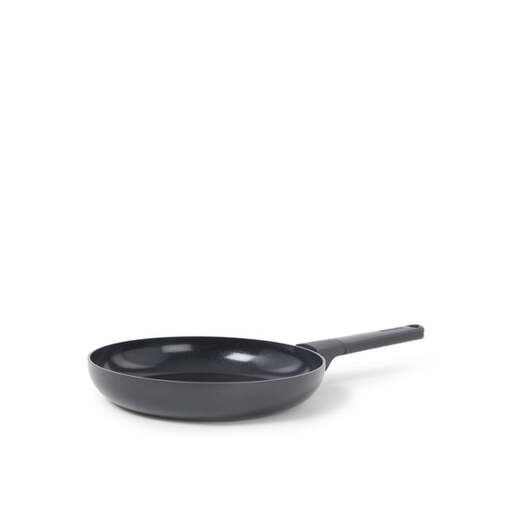
Why it suits this profile: The 24 cm size is manageable for everyday cooking and suitable for electric, gas, ceramic and induction hobs.
The product information states that it has a PFAS-free ceramic coating, is compatible with induction and can be used in the dishwasher.
24 cm diameter, aluminium body, ceramic coating and a 3-year manufacturer’s warranty according to the product description.
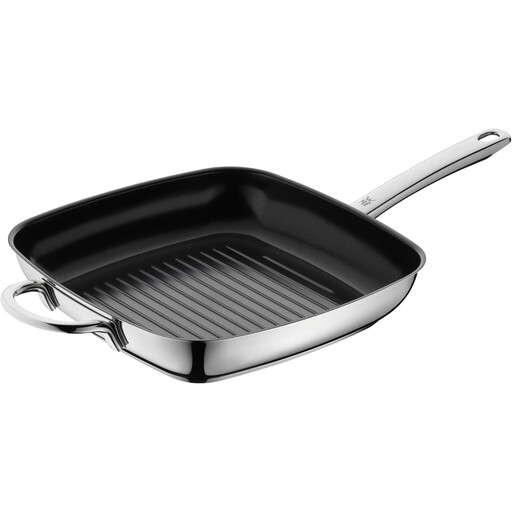
Why it suits this profile: This grill pan is designed for anyone looking for a sturdy pan with a stainless steel construction and a wide pouring rim for grilling and everyday frying.
The specifications make it clear that this pan is not dishwasher-safe. You therefore know in advance that it must be washed by hand.
28 x 28 cm, ceramic coating, Cromargan 18/10 stainless steel and suitable for all heat sources, including induction.
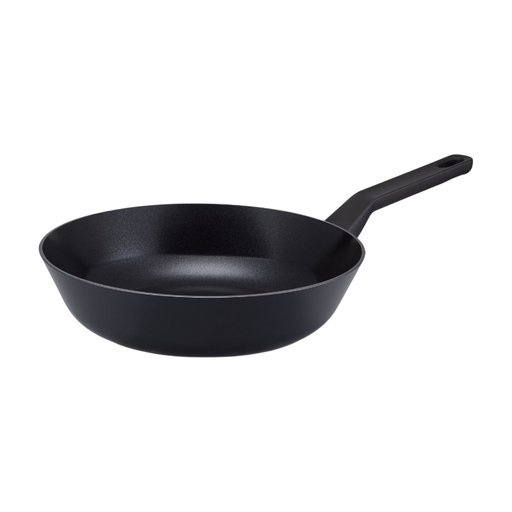
Why it suits this profile: The high-sided design is practical for stir-frying, vegetables, noodles and meals for several people.
The product information states that it has a 100% PFAS-free ceramic double non-stick coating and is suitable for induction, gas, electric and ceramic hobs.
28 cm diameter, body made from 100% recycled aluminium and dishwasher-safe; hand washing is recommended for a longer service life.
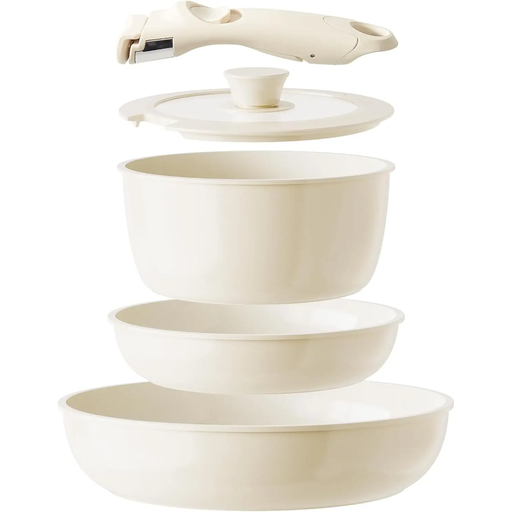
Why it suits this profile: The stackable pans and removable handle are ideal for a small kitchen, caravan or campervan.
The set states that the coating is free from PTFE, PFOA and PFAS, is compatible with induction and has a stackable design.
Includes a saucepan with lid, 20 and 26 cm pans and a removable handle; dishwasher-safe according to the product information.
We’ve put together a complete, up-to-date list of products that fully meet these strict selection criteria and the applicable European safety regulations.
A ceramic coating requires reasonably careful use. Don’t preheat an empty pan for an extended period unless the manufacturer explicitly allows it. Use wooden, silicone or plastic spatulas and avoid sliding metal utensils across the surface.
Only wash the pan once it has cooled down. Even if the pan is officially dishwasher-safe, washing it by hand with a soft sponge can put less strain on the coating. If you stack your pans, use a pan protector to prevent scratches from hard edges.
With a cookware set featuring a removable handle, check that the handle is fully locked in place before lifting the pan. Don’t place the handle under a grill or in an oven if the instructions do not permit this.
No. PFAS-free describes the coating and does not automatically refer to the base. Also look for explicit induction compatibility. The Tefal Easy Cook & Clean models mentioned in this overview, for example, are not suitable for induction.
This depends on use, heat, utensils and care. High temperatures, heating the pan while dry, metal spatulas and harsh cleaning can reduce performance more quickly. Follow the manufacturer’s care instructions and replace the pan when the coating is visibly damaged or starts to come away.
A ceramic pan may heat up quickly thanks to an aluminium base, but actual energy consumption depends on the hob, power level, pan base and cooking time. Choosing a suitable diameter and cooking at a low to medium setting are more important in practice than the type of coating alone.
