
Vandaag of morgen in huis

Kwaliteit gegarandeerd

Welkomstaanbiedingen ontgrendelen: GRATIS bezorging | Tot 80% korting | Gratis 30 dagen JoyPlus-proefperiode
Download de app
As a Joybuy Product Recommendation Officer, I see people looking for healthier ways to cook every day. Choosing a PFAS-free ceramic frying pan is a logical step. But the market is filled with pans that promise the world. Unfortunately, this often leads to disappointment: a pan that starts sticking or warps on your induction hob after just a few months.
Before you invest in a new pan, it's important to recognise the common pitfalls. This will prevent you from wasting money on a pan that doesn't meet your expectations.
Choosing a good PFAS-free frying pan is about understanding a few key specifications. These determine how the pan will perform in your kitchen and how long you'll be able to enjoy it.
For those who cook on induction, the base of the pan is crucial. A good ceramic induction pan has a thick, warp-resistant base, often with an encapsulated stainless steel plate.
The term frying pan with a ceramic non-stick coating covers various technologies. The foundation is often a Sol-Gel coating (made from sand and silicon), which is produced without harmful chemicals. Some manufacturers reinforce this layer with other materials to improve durability. While claims about "diamond" or "titanium" should be taken with a grain of salt, a multi-layer or reinforced coating can indeed offer a longer lifespan than a single, thin layer.
The body of the pan is usually made of aluminium or stainless steel.
For daily use, a cast aluminium pan with a solid, stainless steel-reinforced base is often a practical choice. This combines fast, even heating with the stability required for induction.
Based on objective specifications, we have selected several PFAS-free pans that suit different cooking styles and needs.
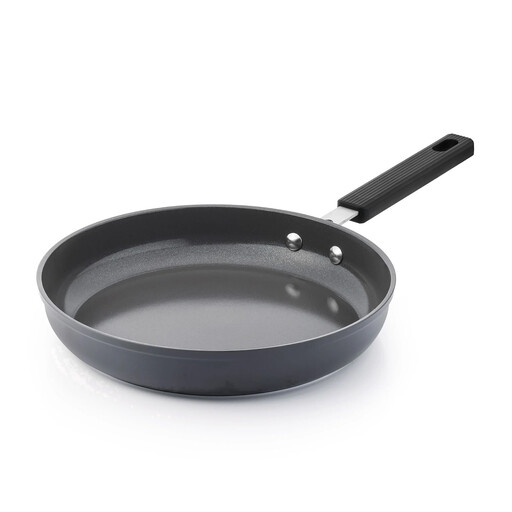
Why it's a match: Ideal for quick, daily meals like a fried egg or an omelette. The focus is on ease of use and fast cleanup, perfect for a busy household.
The product description emphasizes that cleanup is effortless ("wipe or rinse"), which sets a realistic expectation and bypasses the pitfall of exaggerated durability claims.
The combination of a PFAS-, lead-, and cadmium-free coating with a stay-cool handle makes this a practical and safe choice for daily use on all hobs, including induction.
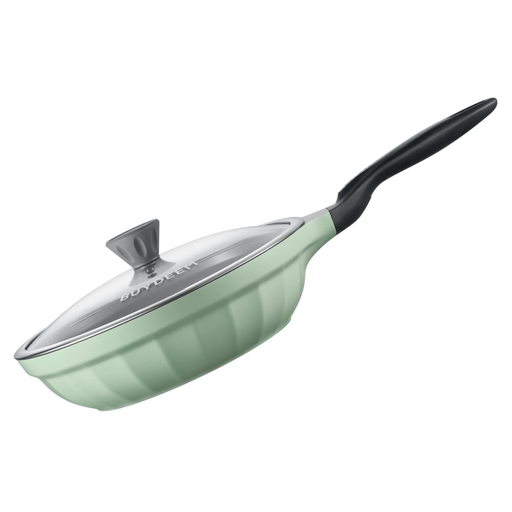
Why it's a match: With a 3.6-quart (3.4-litre) capacity, this pan is large enough for meals for 3 to 4 people. A solid choice for those who regularly cook for the family.
This pan directly addresses the pitfall of warping on induction with an extra-thick 5.5 mm base. This ensures stability and excellent, even heat distribution.
The combination of a large capacity and a heavy, stable base makes this a reliable workhorse for the daily kitchen. The Swiss ILAG ceramic coating is free of PFAS, PFOS, and PFOA.
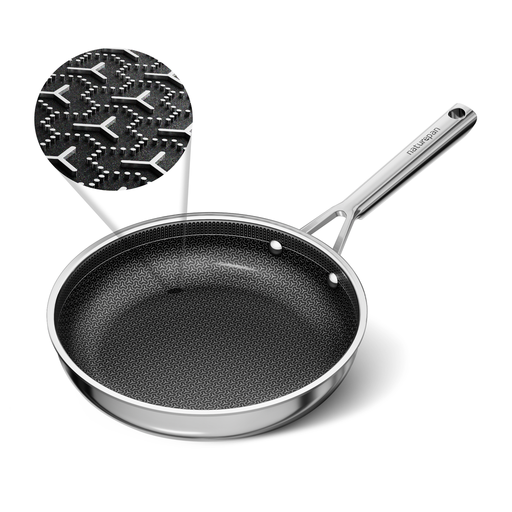
Why it's a match: For the cook who wants to do more than just fry an egg. This pan is designed for searing meat and can go straight from the hob to the oven, offering greater culinary flexibility.
This pan tackles the durability pitfall with a 5-layer hybrid construction. The laser-etched stainless steel ridges protect the ceramic layer underneath, which improves scratch resistance.
The pan is oven-safe up to 260°C, and the stainless steel handle stays cool on the hob. This combination of robustness and versatility makes it suitable for more demanding cooking techniques.
We have compiled a complete, up-to-date list of products that fully meet these strict selection criteria and safety standards.
The lifespan of a healthy frying pan with a ceramic coating depends heavily on use and maintenance. On average, you can expect it to last 1 to 3 years. To maximise its lifespan:
Although some manufacturers state that their pans are dishwasher-safe, hand washing is almost always recommended. The aggressive detergents and high temperatures in a dishwasher can damage the ceramic non-stick coating over time, causing it to lose its effectiveness more quickly.
If a ceramic pan starts to stick, it's usually due to two things: excessive heat or an invisible layer of burnt-on oil and protein residue. Try cleaning the pan thoroughly with warm water and a little baking soda to remove this residue. Then, use the pan again on a lower temperature setting to see if the problem is resolved.
