
Vandaag of morgen in huis

Kwaliteit gegarandeerd

Welkomstaanbiedingen ontgrendelen: GRATIS bezorging | Tot 80% korting | Gratis 30 dagen JoyPlus-proefperiode
Download de app
As a Joybuy Product Recommendation Officer, I see people searching for a healthy and durable frying pan every day. The term ‘PFAS-free ceramic frying pan’ is popular, and for good reason. You want a pan free from harmful substances that still offers excellent cooking performance. But the market is full of pitfalls. Many pans promise the world, only to let you down after just a few months.
Before you make a choice, it’s important to know the three most common disappointments:
This guide will help you avoid these problems and choose a pan that suits your cooking style.
Don’t be distracted by marketing jargon. Focus on three concrete features that determine whether a pan is worth its price.
A good frying pan, especially a frying pan for induction, has a thick, stable base. A thin aluminium base deforms quickly under heat and performs poorly on induction.
Look for pans with a multi-layered base, often an aluminium core encapsulated in stainless steel. This ensures:
The term ‘ceramic’ doesn’t tell the whole story. The quality and durability of the ceramic non-stick coating vary enormously. Standard coatings are often prone to scratches and quickly lose their non-stick properties.
A durable frying pan often has a reinforced coating. Manufacturers use various techniques for this:
A scratch-resistant pan remains an easy-to-clean pan for longer.
Think about how you plan to use the pan. Do you want to sear a piece of meat on the stove and then finish it in the oven? Then an oven-safe frying pan is a must.
Pay attention to two things:
Below are some popular choices, matched to different user profiles. This selection is based on objective product specifications that help avoid the pitfalls mentioned above.
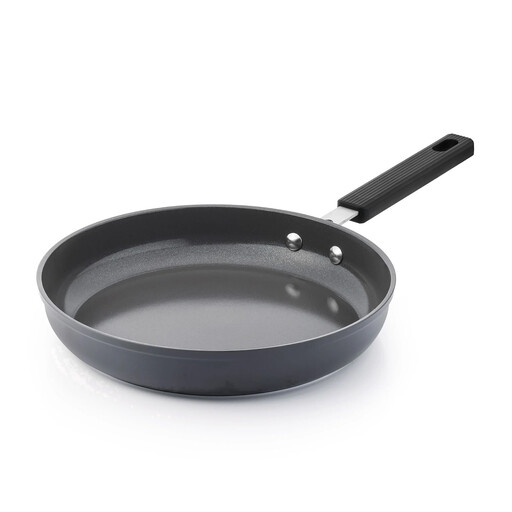
Why it's a match for the everyday cook: Ideal for those seeking a reliable, no-nonsense pan for eggs, pancakes, and quick meals. The focus is on ease of use and safety without paying for extras you won't use.
This pan is explicitly free of PFAS, lead, and cadmium, which clears up the confusion around 'PFAS-free' claims. The aluminium construction with an induction base tackles the problem of uneven heat on standard hobs.
Ease of Use: The pan is designed for easy cleaning and has a heat-resistant handle for safe use. Compatibility: Suitable for all heat sources, including induction.
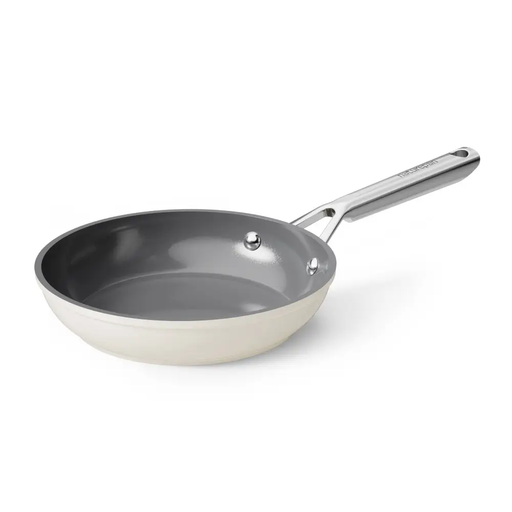
Why it's a match for the quality-conscious home cook: For those who invest in durability and performance. This pan is designed for a longer lifespan and more intensive use, ideal for searing delicate fish or preparing daily meals.
According to the manufacturer, the ceramic coating is reinforced with diamond and titanium particles. This directly addresses the pitfall of a fast-wearing non-stick layer, resulting in a more durable pan.
Reinforced Coating: The diamond and titanium-reinforced layer is designed for superior durability. Oven-Safe: Suitable for oven use up to 230°C, offering greater cooking flexibility.
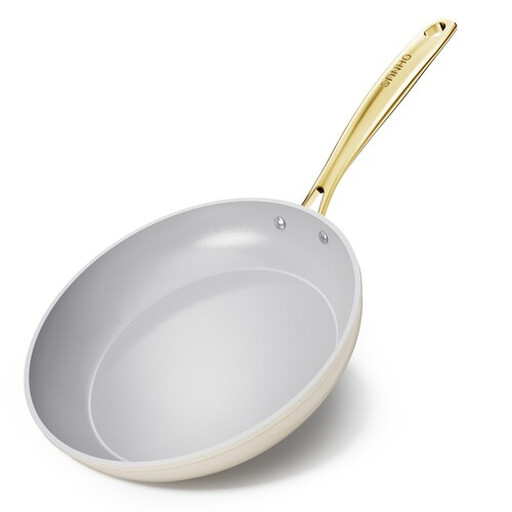
Why it's a match for the versatile cook: Perfect for those who love to switch from stove to oven. Its high heat resistance and 26 cm size make it suitable for casseroles, finishing meats, or meals for a small family.
This pan is oven-safe up to 260°C, bypassing the limitations of many ceramic pans with plastic handles. The patented diamond-titanium coating is designed for extra durability, countering susceptibility to scratches.
High Oven-Safety: Can be used in the oven up to 260°C, opening up many culinary possibilities. Durable Construction: The combination of an aluminium core and a stainless steel base ensures fast, even heating on all hobs.
We have compiled a complete, up-to-date list of products that meet these selection criteria and comply with UK & EU regulations.
The lifespan of a ceramic non-stick coating heavily depends on its quality and maintenance. A basic pan often lasts 1 to 2 years with daily use. Models with a reinforced, multi-layer coating can last significantly longer. Proper care is crucial: avoid overheating, do not use metal utensils, and preferably wash the pan by hand.
It is strongly discouraged. Although some manufacturers claim their pan is scratch-resistant, no ceramic coating is immune to scratches from metal. To maximise the life of your PFAS-free pan, it's best to use wooden, silicone, or plastic utensils.
A good ceramic pan is an easy-to-clean pan. After use, let the pan cool down first to prevent thermal shock. Usually, a cloth or a soft sponge with warm water and a little washing-up liquid is sufficient. Avoid abrasive sponges and harsh cleaning agents, as they will damage the non-stick coating. Although many pans are marketed as ‘dishwasher-safe’, hand washing can significantly extend the life of the coating.
