
Vandaag of morgen in huis

Kwaliteit gegarandeerd

Welkomstaanbiedingen ontgrendelen: GRATIS bezorging | Tot 80% korting | Gratis 30 dagen JoyPlus-proefperiode
Download de app
Choosing a new frying pan seems simple, until you realise your last purchase started sticking after just a few months. You deliberately chose a PFAS-free ceramic frying pan for healthier meals, but now your egg no longer slides out smoothly. Sound familiar?
Many pans are advertised with promises that fall short in practice. As a Joybuy Product Recommendation Officer, I see the issues consumers face every day. Let's expose the three most common pitfalls so your next pan is a perfect match.
A good PFAS-free pan is more than just a label. It's about the construction, materials, and details that determine whether you'll enjoy using it for years to come.
Before you make a choice, there are a few non-negotiable specifications that make the difference between a pan you'll love to use daily and one that ends up at the back of the cupboard.
A pan can have a great ceramic non-stick coating, but if the base is flawed, it's of little use. The core of the pan, often made of aluminium, is crucial for fast and even heat distribution. A thicker base helps retain heat better and prevents warping.
For those who cook on induction, a magnetisable base (usually stainless steel) is an absolute must. Always check if the pan is explicitly suitable for all hobs, including induction. This ensures energy is transferred efficiently and you won't suffer from those annoying hotspots.
The term "ceramic" is broad. Standard ceramic coatings are a good start, but they can be prone to wear and tear. Durability heavily depends on the composition.
Look for pans with a reinforced ceramic coating. Manufacturers often use additives like diamond or titanium particles for this. According to various brands, these particles make the layer harder and significantly more scratch-resistant. This is a key feature for a healthy frying pan that maintains its non-stick properties long-term.
Want to sear a piece of meat on the hob and then finish it in the oven? An oven-safe frying pan is essential. Pay close attention to the maximum temperature. Pans with a stainless steel handle can often withstand higher temperatures (up to 260°C) than those with a plastic or Bakelite handle (often up to 160-200°C).
A handle that stays cool on the hob isn't a luxury, but a safety feature. Stainless steel handles are often hollow to minimise heat transfer, while Bakelite handles are naturally heat-resistant.
Based on these objective criteria, we have selected a number of pans that suit different cooking styles and households.
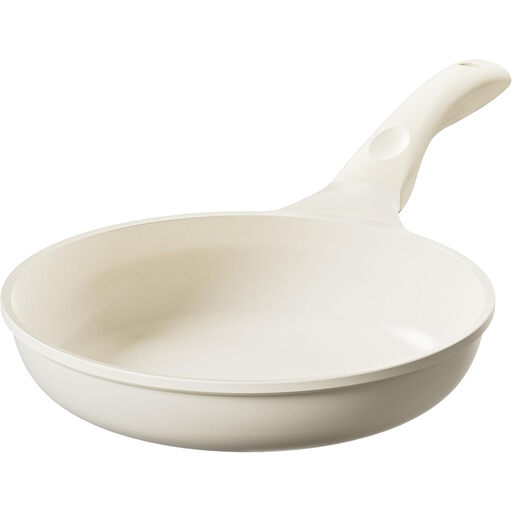
Why it's a match: Ideal for quick, everyday meals. Think fried eggs, pancakes, or reheating leftovers. The pan is lightweight, heats up quickly, and is easy to clean thanks to its simple coating. A no-nonsense choice for those who prioritise functionality.
The thickened base ensures stable, even heat distribution on all hobs, including induction. The ceramic layer is designed for effortless cleaning, reducing the risk of premature wear from harsh scrubbing.
Very easy to clean (wiping is often enough) and a heat-resistant Bakelite handle that stays cool during cooking.
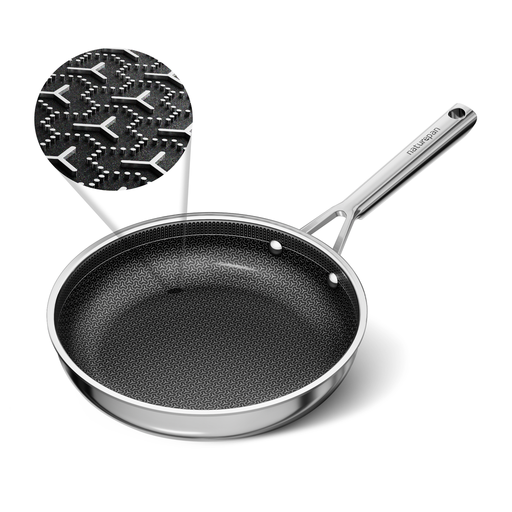
Why it's a match: For those who love to perfectly sear a steak or achieve a crispy finish. This pan combines the benefits of stainless steel (searing) with the convenience of a ceramic non-stick coating. A pan for those who expect more from their cookware.
The 5-layer hybrid construction with a laser-etched hexagonal pattern is specifically designed for durability. The stainless steel ridges protect the underlying ceramic layer, significantly increasing scratch resistance and extending its lifespan.
Combines a perfect sear with non-stick convenience. The pan is oven-safe up to a high temperature of 260°C, offering maximum versatility.
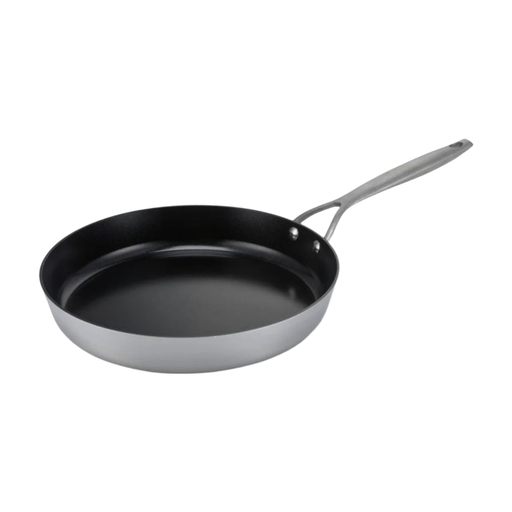
Why it's a match: With a 28 cm diameter, this pan is large enough for a family meal. Brabantia is a trusted brand in many kitchens. The pan is made from 100% recycled aluminium, a plus for the eco-conscious cook.
The forged aluminium construction ensures fast and very even heating, which counteracts the pitfall of hotspots in larger pans. According to Brabantia, the double ceramic layer is extra strong and scratch-resistant, designed for intensive use.
Large capacity (suitable for 5 people) and a sustainable choice due to the use of 100% recycled aluminium. Oven-safe up to 200°C.
We have compiled a complete, up-to-date list of products that fully meet these strict selection criteria and safety regulations.
The lifespan of a ceramic non-stick coating heavily depends on use and maintenance. On average, you can expect 1 to 3 years with daily use. Pans with a reinforced coating (like those with diamond or titanium) often last longer. Always use wooden or silicone utensils, avoid extreme temperature shocks (don't place a cold pan on high heat), and preferably wash the pan by hand to maximise its lifespan.
Although some manufacturers claim their coating is resistant to metal objects, it's advisable to avoid them. Even the strongest ceramic layer can be damaged by sharp objects. To keep the non-stick coating in good condition, it's best to opt for utensils made of wood, bamboo, or silicone.
If a PFAS-free pan starts to stick, it's usually due to two things: invisible protein residues that have bonded to the coating, or wear and tear of the coating itself. Try cleaning the pan thoroughly with a soft sponge and a bit of baking soda dissolved in water. If this doesn't help, the non-stick coating is likely worn out, and it's time to replace the pan. Regularly cooking on excessively high heat can also accelerate wear.
