
Vandaag of morgen in huis

Kwaliteit gegarandeerd

Welkomstaanbiedingen ontgrendelen: GRATIS bezorging | Tot 80% korting | Gratis 30 dagen JoyPlus-proefperiode
Download de app
A pet carrier may seem straightforward at first: choose a style you like, with enough room and an attractive price. In practice, the dimensions, ventilation and fastening options are what determine whether your dog or cat can use it comfortably and safely.
Look out for these three common pitfalls:
A dog carrier or cat carrier for everyday use is usually compact and lightweight. It’s a good choice for vet visits, short walks or public transport. For a longer car journey, camping trip or hotel stay, a larger, foldable dog crate may be more practical.
Measure your pet before you order:
With soft carriers, a little extra room can be helpful, but a carrier that’s much too big isn’t always safer. A small dog needs a different solution from a large dog. Always check the stated dimensions and recommended weight in the product information.
For a small dog carrier or a carrier for small dogs, a sturdy base and an internal safety strap are important. A carrier that sags may leave your pet with less room to move while you’re carrying them.
Choose a model with several mesh panels or large ventilation windows. Mesh also lets your pet see outside, which may help some animals feel calmer. It’s no guarantee of a particular response, though: every pet is different.
Also check:
A water-repellent surface is handy in changeable British weather, but it doesn’t mean the carrier is waterproof for extended periods. The FUNNYFUZZY carrier is described in the product information as using Dupont Paper/Tyvek, a water-resistant material. Wipe the surface with a damp cloth and follow the washing instructions for the removable inner mat.
For a dog travel carrier or cat travel carrier on a car journey, a seat belt attachment is useful. Check how the belt should be threaded through the carrier and test its stability before setting off. Don’t leave your pet unattended for long periods in a closed carrier or a hot car.
For air travel, always check the airline’s rules. Dimensions, weight, fastenings and under-seat placement can vary between airlines. The FUNNYFUZZY is described in the product information as suitable for cabin travel, but check directly with the airline concerned before you buy.
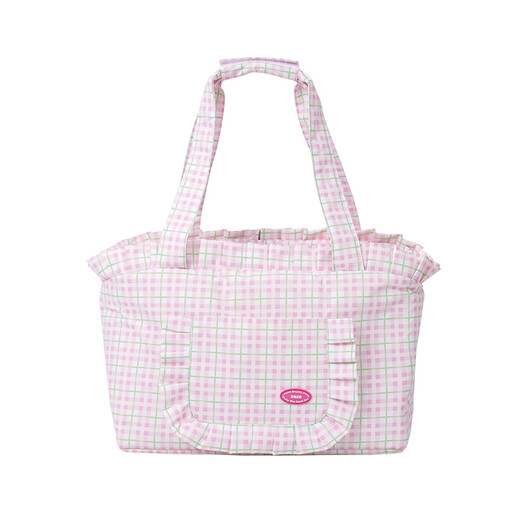
Why it suits this need: Its compact dimensions of 42 × 20 × 30 cm and shoulder strap make it a good fit for short trips with a small cat or dog.
The product information mentions a fastening, ventilation and a check of the carrying strap. Make sure the inside is the right size for your pet.
Lightweight woven material, a shoulder strap, and suitable for cats and dogs according to the product description.
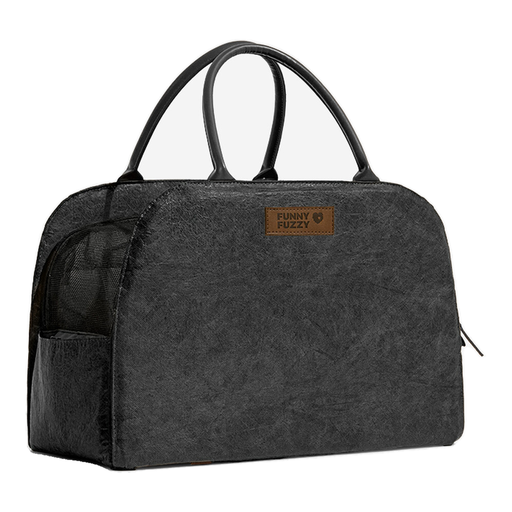
Why it suits this need: This multifunctional carrier is designed for small dogs and cats travelling by car, going on holiday or joining you on everyday outings.
The carrier has an expandable side section, an internal attachment point and a seat belt attachment underneath. Always secure it correctly.
Dimensions of 44 × 22 × 30 cm, a removable inner mat, mesh window and storage pocket.
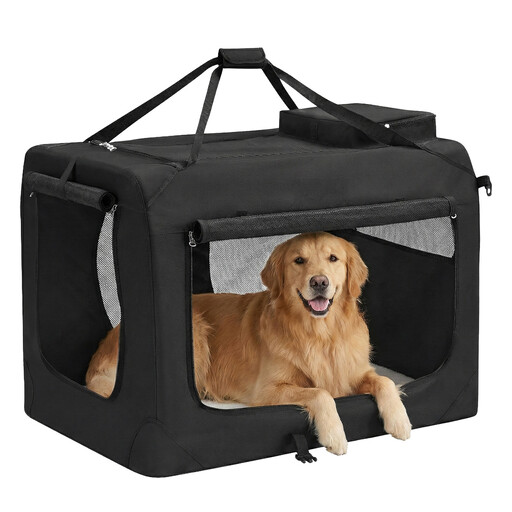
Why it suits this need: Its dimensions of 102 × 69 × 69 cm are designed for larger dogs and use on car journeys, camping trips or hotel stays.
The steel frame helps stop the crate from collapsing easily. Mesh doors and a washable mat address the key practical considerations.
Folds down to 102 × 69 × 8 cm, 600D Oxford fabric, several mesh panels and a removable mat.
Help your pet get used to the carrier well before a longer journey. Start by leaving it open at home, with a familiar blanket inside. Check the zips, straps, mesh and base before each use. Replace the carrier if you notice any damage.
Pecute models are a practical option for small pets when you need extra pockets. According to the product information, they weigh 0.7 kg and are designed for cats and small dogs weighing 2.5 to 5 kg. The firm, removable base helps the carrier keep its shape. Machine-washing the whole carrier isn’t recommended; clean it in spots with a soft, damp cloth.
Don’t automatically use a large, foldable dog crate as a permanent way to transport your pet in the car. Check that the crate is stable and whether you need additional fastening. A soft-sided crate is best used as a temporary resting or travel space, not as a substitute for every type of car restraint.
We’ve put together a full, up-to-date list of products that meet these strict selection criteria and the applicable European safety regulations.
Measure your dog or cat’s length and height, then compare these measurements with the carrier’s internal dimensions. Your pet should be able to sit, turn around and lie down. Don’t rely on a weight guide alone.
You can, provided the carrier is suitable and secured correctly. Choose a model with a seat belt attachment if this is stated in the product information. Check that it’s stable before setting off, and never leave your pet unattended.
Its lifespan depends on how it’s used, your pet’s weight and scratching or chewing habits, as well as how well it’s maintained. Check the zips, seams, base and straps regularly. Don’t keep using a carrier with damaged parts, even if the outside still looks fine.
