
Vandaag of morgen in huis

Kwaliteit gegarandeerd

Welkomstaanbiedingen ontgrendelen: GRATIS bezorging | Tot 80% korting | Gratis 30 dagen JoyPlus-proefperiode
Download de app
A new toy can sometimes look appealing thanks to bright colours, phrases like “extra strong” or promises of teeth cleaning. Yet pet toys for cats and dogs can quickly turn out to be unsuitable. A small part comes loose, a rope frays, or your cat ignores it after just two days.
So pay close attention to how it will be used, the size, and the product information you can actually check. That way, you’ll choose toys that suit your pet’s behaviour and your home situation.
A product might be advertised as sturdy, but without any mention of the materials or a warning for heavy chewers, you don’t really know what you’re buying. A dog that chews intensively needs different dog toys than a puppy that mainly fetches.
So check:
Indoor cats often benefit more from movement and hunting stimulation than from a large plush toy. An automatic spinning toy, cat balls or cat toys with feathers can be far more interesting. Dogs, on the other hand, often thrive on fetching, tug-of-war or searching for hidden treats.
A cat toy with catnip or a silvervine cat toy can grab attention, but the reaction varies from cat to cat. According to the manufacturer’s product description, certain zeze toys contain silvervine and catnip to encourage interest. See this as a product feature, not a guaranteed effect.
A rope ball or chew toy for dogs can move against the teeth during play. According to the product description from some manufacturers, a cotton rope may help remove dirt from the tooth surface or massage the gums. This is not a substitute for regular dental check-ups or veterinary care.
Also watch out for fraying. Rope fibres, stuffing and small parts must not be swallowed. Check the toy before and after use, and replace it as soon as it becomes damaged.
For tugging and fetching games, a tightly woven rope, sturdy knots and a well-shaped ball are practical features. A rope ball for dogs is not automatically suitable for every dog: with strong chewers, even a tough material can wear down quickly.
For cats, lightweight materials are usually more practical. Feathers, sisal and soft fabric make a toy easy to move around, but loose feathers or threads pose a risk if your cat chews on them. So use interactive cat toys with feathers only under supervision.
The toy must be large enough not to be swallowed in one go, but not so large that your pet can’t grip it. Pay attention to:
The HomerunPET turntable, for example, measures 17.8 × 17.8 × 8 centimetres and runs on batteries. The batteries are not included according to the product information. So check in advance which batteries are needed, and remove them when the device is not used for a long time.
A toy for daily use should be easy to clean. Some products may only be wiped with a damp cloth; others can be partially cleaned. Always let fabric dry completely before giving it back.
Supervision is especially important with:
No toy is suitable to be left unsupervised indefinitely if your pet swallows the material.
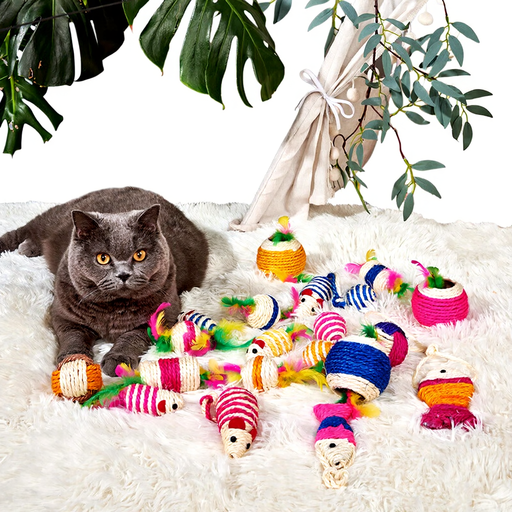
Why this fits the profile: Four lightweight balls offer variety for cats that love to bat, chase and run after toys.
The product information states a set of four, so you can rotate them. Check the feathers and sisal regularly, and replace a ball if it frays or parts come loose.
Four pieces; combination of feathers and sisal rope; suitable for batting, chasing and pouncing.
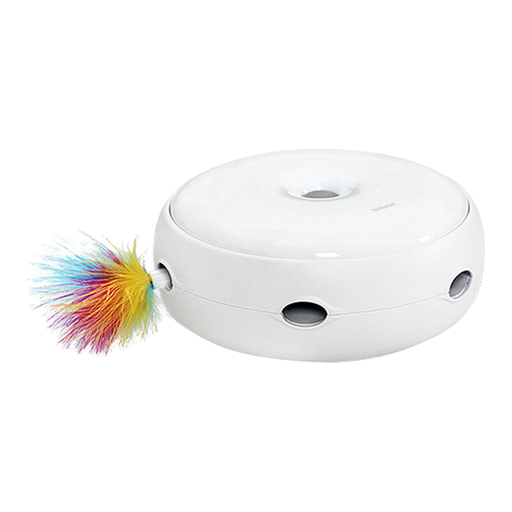
Why this fits the profile: This automatic toy is designed for indoor cats that need extra movement and variety when you’re at home.
The movement patterns are varied according to the product description. Supervise play, as feathers and small parts can come loose.
Automatic turntable; synthetic feather; compact size; battery-powered with no cord.
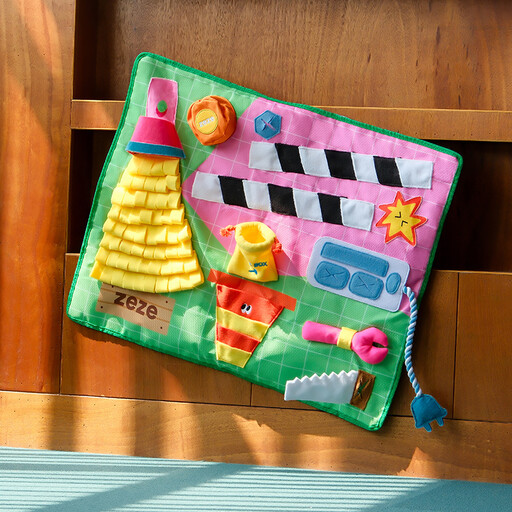
Why this fits the profile: This snuffle mat for dogs is designed for searching out dry food or treats, and suits dogs that get bored easily.
The use is clearly linked to hiding dry treats. The manufacturer warns about dogs that swallow fabric or plastic; supervision is still needed.
Dimensions of 70 × 57 cm; multiple textures and pockets; suitable for foraging and feeding games.
We’ve put together a full, up-to-date list of products that fully meet these strict selection criteria and comply with current European safety regulations.
Rotate toys rather than making them all available at once. A set of cat balls often stays more interesting if you store a few away and bring them out again later. For boredom-busting toys, a short play session usually works better than leaving them unsupervised for a long time.
With dogs, you can combine a rope ball with fetching and gentle tug-of-war. A dog toy with rope is not automatically a dog toy for teeth cleaning; follow the usage instructions and have their teeth checked if you notice any problems. Wash or wipe the material according to the label and store it dry.
Choose lightweight toys that encourage chasing, batting or pouncing. Interactive cat toys with a moving part can offer variety. Supervise play with feathers, rope and catnip toys, and remove any damaged material straight away.
That depends on the material, the play style and the dog’s chewing strength. Check a rope ball for dogs before each use. Fraying, tears, loose knots or an exposed squeaker are reasons to replace the toy.
Be cautious with that description. A toy can provide distraction, but the effect varies from animal to animal and is not a guaranteed solution. Give new toys under supervision first, and only choose a snuffle mat if your dog does not try to swallow parts or fabric.
