
Photographing playful pets
Your pet won’t sit still for long, and you want to know whether the focus and shutter speed will suit your shooting conditions. Canon Netherlands lists tracking for dogs, cats and birds on the EOS R50.


For a calm pet portrait in good light, a compact camera may be all you need. If your pet moves around a lot or you want a choice of lenses, a mirrorless camera is worth considering. Check the exact model to see which animals its autofocus recognises, which lens comes with the kit, and how to balance shutter speed with the available light. Tracking alone won’t guarantee a sharp photo.
Your pet won’t sit still for long, and you want to know whether the focus and shutter speed will suit your shooting conditions. Canon Netherlands lists tracking for dogs, cats and birds on the EOS R50.
You want to take a good portrait without having to choose from a range of lenses, and are weighing up whether you need a separate camera for the project. The Consumers’ Association describes cameras with interchangeable lenses as generally being mirrorless cameras.
You’re taking photos in low light and need to consider the lens aperture and motion blur. Canon Netherlands explains that a faster shutter speed lets in less light.
First, see whether you can use equipment you already have for the project. If you’re choosing a camera, weigh up the simplicity of a fixed lens against the choice of lenses offered by a mirrorless camera.
| What to consider | What to look for | Who is this important for? |
|---|---|---|
| Focusing on moving subjects | Check which animals the autofocus on the exact model recognises and which lens comes with the kit. | If your pet moves around, you’ll want to improve your chances of getting a sharp portrait without relying on tracking alone. Around 33% of consumers put focusing on moving animals first. |
| Simplicity for a one-off project | Check what the school project requires, what equipment is already available and exactly what the camera kit includes. | For a one-off school project, you don’t want to buy a more extensive system than you need. Around 25% of consumers prioritise simplicity and keeping purchases to a minimum. |
| Portraits in low light | Compare the aperture of the supplied lens and see whether you can change the location or lighting. | If you’ll mainly be taking photos indoors, you’ll need to consider both light and movement. Around 25% of consumers put low-light performance first. |
| Portability and framing | Compare dimensions and screen movement, and check whether the stated weight includes a lens. | For a portrait taken at your pet’s eye level, you’ll want a camera that’s easy to carry and a screen you can position to suit. Around 17% of consumers prioritise portability and framing. |
A wide zoom range doesn’t, by itself, tell you how well a camera will perform in low light. The Consumers’ Association points out that cameras with very high zoom often have small sensors, which can affect photo quality, particularly in low light.
Choose a zoom range that suits the distance to your pet. For indoor portraits, also consider the sensor and the lens’s maximum aperture.
What’s included varies by version. A camera body, standard zoom lens and accessories aren’t necessarily all included.
Read the box contents for the exact version and check which lens and accessories come with it.
Depending on the version, you may need to make extra preparations, such as buying a memory card, charger or separate lens.
Subject tracking and shutter speed address different aspects of a photo. A faster shutter speed lets in less light, as Canon Netherlands explains.
Consider autofocus alongside the lens, the available light and how quickly your pet moves.
The EOS R50 with standard zoom is an example of a mirrorless camera kit for portraits where subject selection and a vari-angle screen matter. The PowerShot SX740 HS Lite Edition is a compact camera with a fixed zoom lens.
The Z50II kit with NIKKOR Z DX 16–50mm f/3.5–6.3 VR is an example of a mirrorless camera with an interchangeable lens.
The α6400 is an APS-C mirrorless camera with an E-mount, for anyone looking to explore lens choice and handling when photographing moving subjects.
The LUMIX G100D with 12–32mm lens is a compact Micro Four Thirds mirrorless camera to consider if portability and transferring images are important.
This selection includes compact digital cameras and a mirrorless camera kit for a school project involving pet portraits. Compare the equipment and check what the project requires.
 No image available
A compact camera option to compare for a school project where ease of use is important.
The product name lists 64 MP, 18× digital zoom, autofocus and an included 32 GB memory card.
 No image available
A compact point-and-shoot camera to compare if you’re looking for something portable for your project.
The product name lists 4K, 80 MP and 18× zoom, but doesn’t specify the type of zoom.
 No image available
A pocket camera to take with you when a compact size is an important consideration for your project.
The product name lists 4K, 44 MP and 16× zoom, but doesn’t specify the type of zoom.
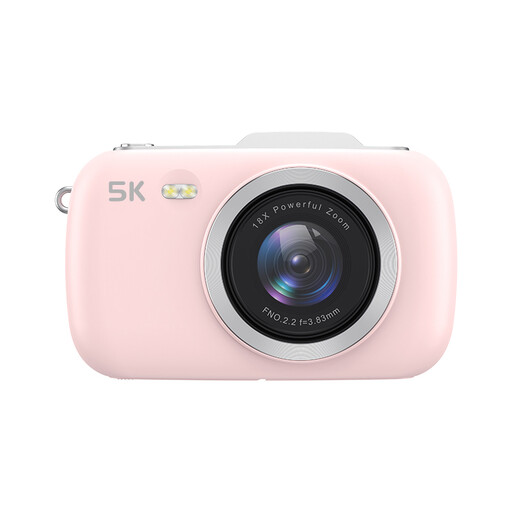 No image available
A compact point-and-shoot camera to compare for a school project involving pet portraits.
The product name lists 80 MP and 18× zoom. An SD card isn’t included, so you’ll need to buy one separately if you choose this version.
 No image available
A mirrorless camera kit to consider if you want to try different portrait compositions with the included zoom lens.
An SD card and adapter/charger aren’t included, so bear this in mind when preparing.
Not for every portrait. If your dog or cat moves around a lot, check whether the exact model supports that animal; Canon Netherlands specifies tracking for dogs and cats on the EOS R50. Focusing and enough light are important too.
Try using more available light or a faster shutter speed, then check the exposure. Canon Netherlands explains that a faster shutter speed lets in less light; a higher ISO setting may result in more image noise. Give your pet time to get used to the set-up.
Check whether the exact kit includes the lens, battery, charger and memory card. Canon Netherlands lists a battery and charger with the EOS R50 kit it reviewed; Nikon Netherlands states that the charger isn’t included with the Z50II kit it reviewed. For consumer purchases in the Netherlands, the legal guarantee applies alongside any manufacturer’s warranty. ACM ConsuWijzer points out that the legal guarantee doesn’t have a fixed two-year term and that the seller is responsible for it.
For online consumer purchases, there is generally a statutory 14-day cooling-off period after delivery. ACM ConsuWijzer lists some exceptions; the cooling-off period is also different from a remedy for a faulty product.
Not without permission. According to the Dutch Data Protection Authority, the school needs consent to take and publish identifiable images: from the pupil themselves if they are 16 or over, and from their parents if they are younger. The school must also keep the images secure. This applies to the school situation described, not to a photo showing only a pet.