For pets on the move, key things to consider include suitable animal detection, continuous autofocus and a lens that suits your distance and lighting. For calm indoor portraits, the lens’s maximum aperture matters too. Before choosing a camera for an exhibition, ask about the required print size and submission specifications: megapixel count alone won’t tell you whether a cropped file is suitable. A compact camera has a fixed lens, while a mirrorless camera offers interchangeable lenses, so check exactly what’s included in the kit.
Who is this guide for?
Photographing playful pets
Your pet won’t sit still for long, and you want to capture their eyes in focus while they’re playing or out for a walk. Compare the focusing performance for the type of animal you’re photographing, and the lens you’ll use at your chosen distance.
Creating indoor portraits
You mainly take photos at home in limited light and want to capture your pet’s expression. Consider how the lens, available lighting and depth of field work together.
Preparing photos for an exhibition
You’re selecting photos for a physical print and want to retain enough usable detail after cropping. Ask the organiser or printer about the required size and submission specifications.
What should you look for when choosing?
Compact camera with a fixed lens
A good fit if: you want a small, complete camera without having to change lenses, mainly for calm portraits.
Trade-off: the lens can’t be changed, so check that each model’s zoom range and focusing performance suit your pet.
Mirrorless camera with a standard lens
A good fit if: you want an interchangeable-lens system and would like to work out which focal length suits your portraits first.
Trade-off: for low light or a different depth of field, you may want another lens later, adding to the cost and weight you carry.
Mirrorless camera with a fast lens
A good fit if: you often take photos indoors or want more control over framing and background blur.
Trade-off: a wider aperture lets in more light, but can reduce depth of field. Check that your pet’s eyes and the parts of the muzzle you want in focus stay sharp.
| What to consider |
What to check before buying |
Who is it for? |
| Keeping eyes sharp during movement |
Check animal detection, continuous autofocus and how they work with your chosen lens. |
When my pet moves unexpectedly, I want to be able to track their eyes without relying on a single automatic feature. Around 31% of consumers put movement first. |
| Portraits in indoor light |
Compare the maximum aperture of the supplied or separately chosen lens, and take distance and lighting into account. |
For portraits at home, I want enough light for a usable shot while keeping the parts of the muzzle I want in focus sharp. Around 25% of consumers prioritise indoor lighting. |
| A file for the exhibition |
Ask about the required size and submission specifications, then assess the final file after cropping it as needed. |
For a physical exhibition, I want to know whether my chosen crop will still work at the required size. Around 25% of consumers prioritise the print. |
| A complete, easy-to-handle kit |
Check whether the offer is for a body-only model or a kit with the specified lens, and consider the weight of the combination. |
I want to know what I need for a ready-to-use setup and how easy it is to carry. Around 19% of consumers prioritise a complete kit. |
Pitfalls to avoid
-
Mistaking a body-only offer for a complete portrait kit
The lens helps determine the angle of view and how much light reaches the sensor. A camera body and a kit that includes a lens are therefore not the same package.
Check the exact product variant, included lens and lens mount before comparing kits.
-
Assuming animal detection guarantees sharp action shots
Subject detection is a focusing feature; movement, available light and camera settings still matter.
Check which animal types the model can recognise, and try continuous focusing with the lens you plan to use.
-
Assuming megapixel count guarantees a large print
Cropping reduces the number of pixels in the file. Resolution alone doesn’t tell you how much detail the lens captured or how sharp the image is.
Ask about the submission requirements and assess a proof print of the final file.
If the crop or sharpness isn’t right for the print, you may need to print it again.
Camera brands to consider
Canon
The EOS R50 is an APS-C mirrorless camera for anyone looking to choose an RF or RF-S lens for portraits of dogs, cats or birds.
- Canon specifies 24.2 effective megapixels and tracking for animals including dogs, cats and birds.
- The body doesn’t have in-body image stabilisation. Check the lens and kit contents of the exact version.
Nikon
The Z50II is a good match if you want to pair a Z system camera with a carefully chosen DX lens.
- Nikon specifies 20.9 million effective pixels and subject detection for dogs and cats.
- The kit with the NIKKOR Z DX 16–50mm f/2.8 VR has a different lens from the version with the 16–50mm f/3.5–6.3 VR. Check the exact variant.
Sony
The α6700 is an APS-C camera with an E-mount for anyone who wants to assess animal detection and lens choice separately.
- Sony specifies approximately 26.0 effective megapixels and animal recognition.
- Your subject selection and continuous focusing need to suit the shot; the feature doesn’t guarantee that every photo will be sharp.
Fujifilm
The X-S20 combines an interchangeable lens with animal detection and in-body stabilisation.
- Fujifilm specifies 26.1 megapixels, animal detection and five-axis in-body image stabilisation.
- Image stabilisation compensates for camera shake, but won’t freeze a moving pet. Consider the lens and shutter speed separately.
Joybuy products
The Joybuy options below are instant cameras that print photos straight away. Check with the organiser that the size and submission method for the version you choose are suitable for the exhibition.
 No image available
Polaroid Now+ Generation 3 - Coral
An instant camera for anyone who wants to create physical portrait prints. Check that the results meet the exhibition’s print requirements.
The product information lists autofocus, a self-timer and compatibility with i-Type and 600 film.
View at Joybuy
 No image available
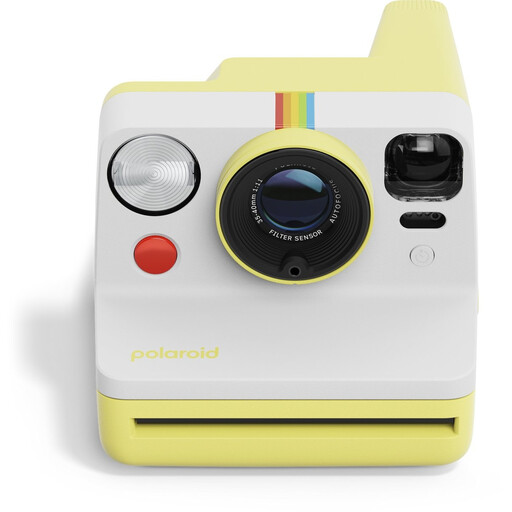
Polaroid Now Generation 3 - Yellow
An instant camera for anyone who wants physical photo prints. Check in advance that the print format meets the exhibition’s requirements.
The product information lists autofocus, a self-timer and i-Type and 600 film.
View at Joybuy
 No image available
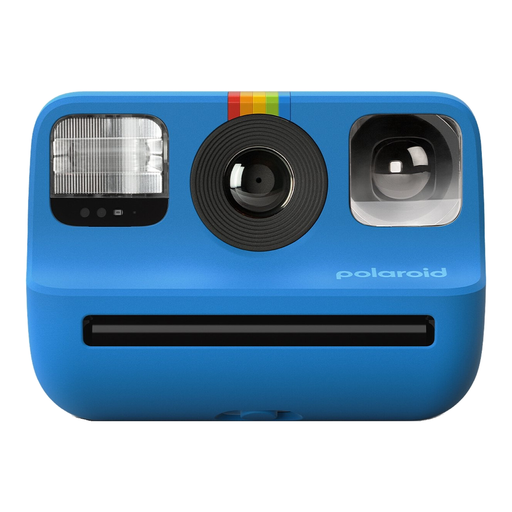
Polaroid Go Gen 2 - Blue
This instant camera produces physical prints. The stated print size is 66,6 × 53,9 mm, so check that it’s suitable for the exhibition.
The product information lists Polaroid Go film.
View at Joybuy
 No image available
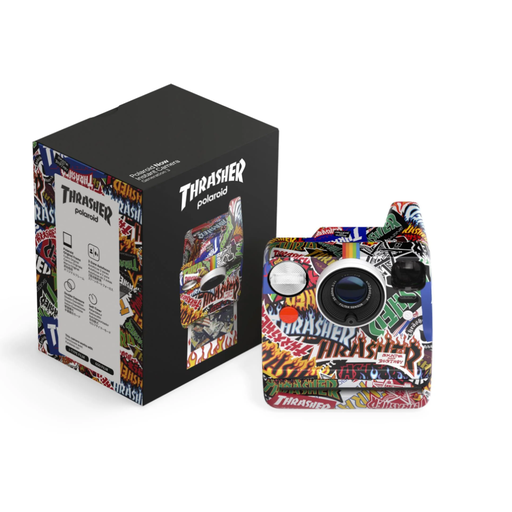
Polaroid Now Gen 3 Thrasher Edition
The product title identifies this as a Polaroid Now Gen 3 camera. Check that the version and print results meet the exhibition’s requirements.
View at Joybuy
 No image available
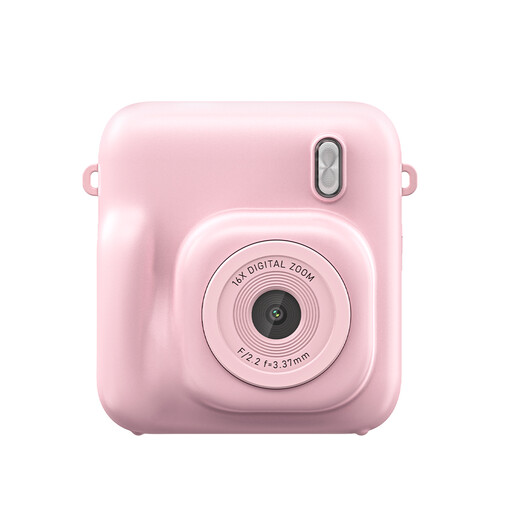
Songdian Instant Print Camera, Pink
An instant-print camera for anyone who wants physical photos. Check that the fixed focus suits the portraits you want to take.
The product information lists fixed focus and instant photos.
View at Joybuy
Frequently asked questions
Are more megapixels automatically better for my exhibition print?
No. First check the required print size and the final file, including any cropping. The Consumentenbond also highlights the importance of the sensor and lens. If possible, assess a proof print at the intended size.
How do I focus if my pet won’t sit still?
Check whether the model recognises the type of animal you’re photographing, and use continuous autofocus and tracking where available. Sony describes this approach for pets, but animal detection doesn’t guarantee that every shot will be sharp.
Do I need an extra lens straight away with a mirrorless camera?
Not necessarily: it depends on the offer, your preferred shooting distance and the available light. Check whether a lens is included and whether it fits the mount; a body-only offer isn’t a complete kit.
Does a camera automatically come with exactly two years’ legal guarantee in the Netherlands?
No. According to the Dutch government, there’s no fixed legal guarantee period in the Netherlands. You’re entitled to a product that works as it should, and if there’s a fault, the seller must provide a solution. A manufacturer’s guarantee or an extended guarantee you buy separately is different.
Can I display someone else’s photo at an exhibition without asking?
You generally need the creator’s permission to make someone else’s copyright-protected photo public. If the photo shows an identifiable person, also check what permission is needed and the circumstances surrounding the portrait before exhibiting it.


