
Vandaag of morgen in huis

Kwaliteit gegarandeerd

Welkomstaanbiedingen ontgrendelen: GRATIS bezorging | Tot 80% korting | Gratis 30 dagen JoyPlus-proefperiode
Download de app
A pet playpen for dogs, cats and small animals can be useful for short stays, playtime, resting or getting used to a new environment. But in practice, a playpen may not always live up to expectations. A low wall, an unreliable door or a floor that’s difficult to clean can make it much less practical than the product photo suggests.
Before buying, look out for these three common pitfalls:
With a puppy pen or dog playpen, floor space isn’t the only thing that matters. Your dog should be able to turn around, lie down and take a few steps without constantly bumping into the walls. Height matters too for a cat playpen, as cats often try to climb or jump.
For rabbits and guinea pigs, a spacious floor plan is usually more important than a tall playpen. A rabbit or guinea pig playpen needs room for a hideaway, hay rack and water bowl. Also check that there are no wide gaps where a small animal could get its head stuck.
600D Oxford fabric is often used for portable pet playpens. According to the product specifications, this fabric is sturdy and suitable for a lightweight construction. A PVC tube frame keeps the weight down. However, check whether your pet chews fabric or the frame.
A solid fabric wall can help to keep out draughts, but ventilation is still essential. Mesh panels let air through and give you a better view of your pet. This is useful for an indoor pet playpen, as well as for outdoor use. Place an outdoor playpen on level ground and make sure there’s shade, shelter and supervision. No playpen is a substitute for supervision or suitable housing.
A playpen with a door is more convenient than a model you have to lift up completely each time. A roof can help with pets that climb or try to jump out. If you’re choosing a fabric dog playpen with a roof, check whether the roof is removable and whether it fastens securely.
Also look for practical details such as:
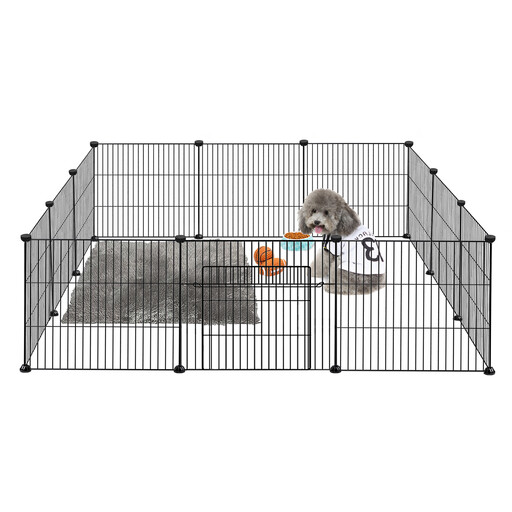
Why it suits this buyer: With 12 panels, this is a good choice if you’re looking for a simple pet playpen and don’t need a large enclosure straight away.
The number of panels is clearly stated, so you can get a better idea of the available space before buying. The door means you don’t have to move the whole playpen to get your pet in and out.
12 individual panels, a door and, according to the product name, suitable for indoor and outdoor use.
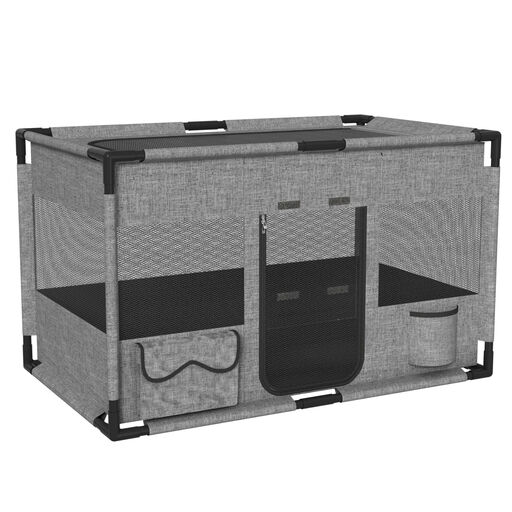
Why it suits this buyer: This version is designed for dog and cat owners looking for a complete, portable playpen with a roof, door and extra storage space.
The stated dimensions of 100 × 60 × 60 cm, along with the lid and side door, make it easier to assess the design in advance than a playpen that only gives its external dimensions.
600D Oxford fabric, PVC tube frame, roof, side door and storage pockets; available in size L according to the product listing.
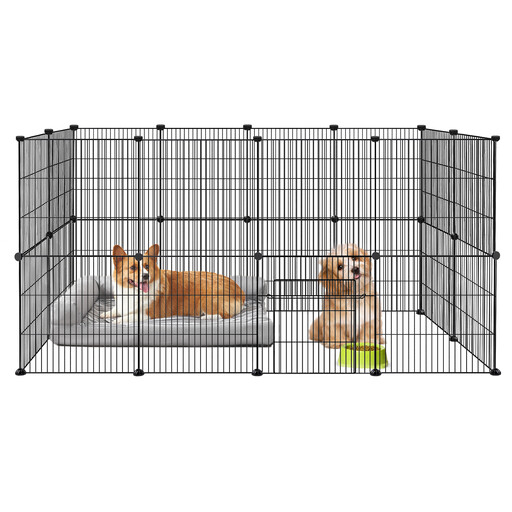
Why it suits this buyer: The 24 panels give you more flexibility when putting together a playpen for rabbits, guinea pigs, puppies or temporary outdoor use.
With more panels, you can adjust the shape and size to suit your space. Before using it outdoors, check that it’s stable and secure the playpen where needed.
24 mesh panels, a door and a design that, according to the product name, can be used indoors and outdoors.
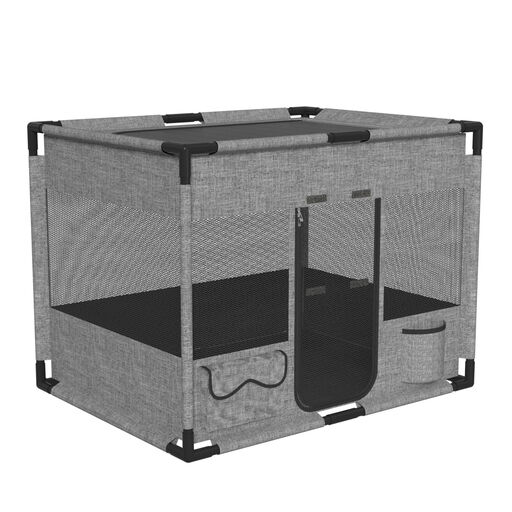
Why it suits this buyer: The more compact size is a good option if you’re looking for an indoor pet playpen for a puppy, small dog or cat.
The dimensions of 85 × 65 × 65 cm are listed, so you can check whether the playpen will fit in the room you have in mind. The door and roof mean less lifting and moving around.
600D Oxford fabric, PVC frame, lid, side door and storage pockets; size M according to the product listing.
We’ve put together a complete, up-to-date list of products that meet these strict selection criteria and comply with current European safety regulations.
Choose a level surface and check all the connectors before letting your pet inside. For an outdoor playpen, consider wind, rain, direct sunlight and other animals. Use a roof if your pet can climb or jump, but make sure there’s enough ventilation too. Don’t leave your pet unattended if it tries to push the playpen open or chew the material.
Its lifespan depends on the material, how it’s used and your pet’s behaviour. A fabric playpen may last longer if your pet can’t get to the seams or frame. With a panel playpen, check the connectors, door and any bent sections regularly. Clean it according to the material care instructions and store a portable pet playpen somewhere dry.
You may need accessories in addition to the playpen itself, such as an underlay, hideaway, water bowl, securing pegs or spare connectors. Cleaning and storage are also considerations if you’ll be using it outdoors. So compare more than just the price: check the included parts, dimensions and how it’s assembled.
