
Vandaag of morgen in huis

Kwaliteit gegarandeerd

Welkomstaanbiedingen ontgrendelen: GRATIS bezorging | Tot 80% korting | Gratis 30 dagen JoyPlus-proefperiode
Download de app
Choosing an outdoor dog house, dog crate, pet carrier or comfortable pet bed may seem straightforward. Yet many purchases disappoint because of the wrong size, poor ventilation or materials that aren’t suited to everyday use. This guide helps you compare pet essentials based on verifiable features rather than eye-catching marketing claims.
A dog house or cat bed may look spacious in the product photo, while the usable interior is smaller because of thick walls, the roof structure or a raised base. So measure your pet both standing up and stretched out. If you’re choosing a carrier, also allow enough room for your pet to turn around.
Mesh panels or openings allow air to circulate, but that doesn’t automatically mean a carrier is suitable for longer journeys. Check where the ventilation openings are and whether they could be covered when the carrier is on the ground or hanging against your body.
Words such as “sturdy”, “lightweight” and “durable” can be hard to assess without technical details. Look instead for specific information such as steel, Oxford fabric, plush, a reinforced base, dimensions and the type of fastening. For an outdoor shelter, the surface it will stand on, shelter from the elements and rain protection are also important.
For a dog crate, dog bed or cat cave, first measure the space available in your home. Don’t place a bed somewhere so cramped that your pet can only curl up in it. If you’re transporting a pet, check the carrier’s external dimensions as well as whether it’s recommended for small dogs or cats.
For example, a product measuring 34 x 30 x 44 cm is intended for small dogs and other small pets. That doesn’t mean every pet will be able to move comfortably within these dimensions. Breed, build and journey length all matter.
A carrier for small dogs should ideally have several mesh panels and a fastening that stays closed when you lift it. A zip can be practical, but check that it’s fully closed before use. When using the carrier for the first time, let your pet get used to it at home at their own pace.
Open sides are useful for keeping an eye on your pet and allowing air to circulate in a dog crate or outdoor shelter. Don’t place an outdoor kennel in full sun, and make sure it stands on a dry, stable surface.
A reinforced base helps stop a carrier from sagging when you lift it. A non-slip base can help prevent a cat or dog bed from moving around on a smooth floor. Also check whether the cover is removable or can be cleaned with a damp cloth.
Regular cleaning is important for fabric pet essentials. Let materials dry completely before using them again. Check zips, seams, fastening points and any metal parts regularly for signs of wear.
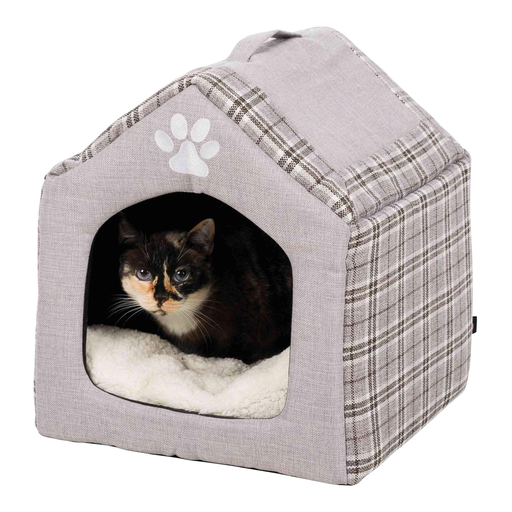
Why it suits this profile: This igloo-shaped bed is designed for cats and small dogs that like having a sheltered place to rest indoors. Its compact dimensions make it easy to check in advance whether it will fit in a favourite corner.
The product details give specific dimensions and state that it’s intended for cats and small dogs. Be sure to measure your pet and the available space; the dimensions in the specifications differ from the rounded product name.
Igloo shape, soft plush lining and non-slip base. The stated product dimensions are 45 cm long, 33 cm wide and 40 cm high.
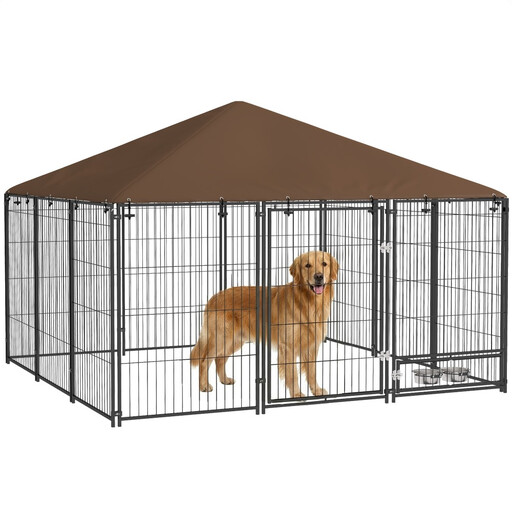
Why it suits this profile: This outdoor enclosure is intended for a garden or other outdoor space. According to the product name, it has a steel frame, Oxford fabric, a roof and a holder for a food or water bowl.
The dimensions of 211 x 211 x 151 cm and the listed materials make it clear that this isn’t a compact dog crate. You’ll need to assess the location, shelter and how to secure it yourself.
Generous stated external dimensions, steel components, Oxford fabric and a roof with a bowl holder, according to the product listing.
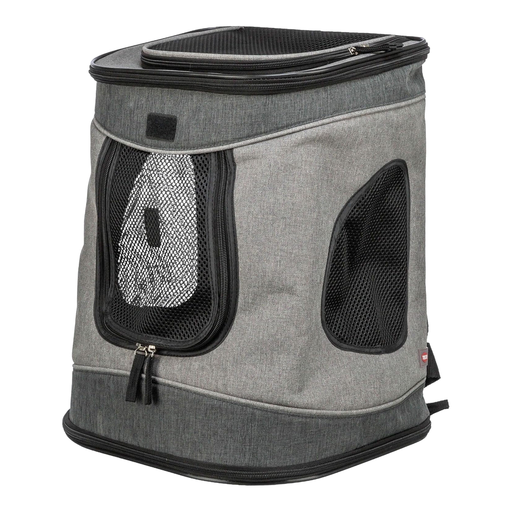
Why it suits this profile: This carrier for small dogs and other small pets is handy for vet visits, short outings and trips when you need a portable option.
The product description mentions mesh panels, a reinforced base and a zip fastening. Before buying, check that the size suits your pet and that the carrier is suitable for the planned journey length.
Dimensions of 34 x 30 x 44 cm, mesh panels for ventilation and visibility, handles and an adjustable shoulder strap.
We’ve put together a complete, up-to-date list of products that meet these strict selection criteria and the applicable European safety regulations.
Your dog should be able to stand, turn around and lie stretched out. Measure your dog’s body length and height at the shoulder, then compare these with the usable interior dimensions. A larger enclosure won’t always be more comfortable if it can’t be properly sheltered or placed securely.
That depends on your pet, the temperature, ventilation and the journey. A carrier is mainly intended for supervised travel. Plan breaks for longer journeys, and check regularly that your pet is settled and getting enough air.
It can be, as long as the dimensions and opening suit your dog’s build. Also check the material and stability, and whether your dog chooses to retreat into the cave. Use a cat cave as a place to rest, not as a substitute for exercise or supervision.
