
Vandaag of morgen in huis

Kwaliteit gegarandeerd

Welkomstaanbiedingen ontgrendelen: GRATIS bezorging | Tot 80% korting | Gratis 30 dagen JoyPlus-proefperiode
Download de app
A pet carrier is useful for visits to the vet, walks, train journeys or longer car trips. However, not every dog carrier or cat carrier is suitable for every animal. A bag that looks spacious in a photo may be too small, poorly ventilated or difficult to secure in practice.
So don’t just focus on colour, price or marketing terms such as “travel comfort”. Pay particular attention to the dimensions, load capacity, ventilation and how you plan to use the carrier.
Pet carriers are often advertised with a maximum weight, but that is not the whole story. A cat or dog must also be able to stand, turn around and lie down. Measure the length from the nose to the base of the tail and the height from the floor to the top of the head. Allow extra room for movement and compare these measurements with the carrier’s internal dimensions.
For example, a small dog carrier may be suitable for a 5 kg dog but too cramped for a long-bodied dog of the same weight.
Ideally, a breathable pet carrier should have mesh panels on several sides. This allows air to circulate and lets your pet see outside. A small window at the front is not automatically enough, particularly on longer journeys or in warm weather.
Also pay attention to the position of the zips and fastenings. A carrier with large openings may offer good ventilation, but it must still be possible to close it securely without your pet escaping.
A pet carrier for travelling is not automatically suitable for use in a car or on an aeroplane. When travelling by car, check whether it has a seat belt attachment point. For air travel, you must check the dimensions and requirements of the relevant airline yourself. Rules vary by airline and route.
A soft carrier is also different from a foldable dog crate or foldable transport crate. A crate generally provides more internal space, while a carrier is mainly designed for carrying a small pet.
Look at both the internal and external dimensions. The external dimensions determine whether the carrier will fit on a train, under a seat or on the back seat. The internal dimensions determine whether your pet has enough room to move around.
Also check:
A rigid or reinforced base stops your pet from sinking down while being carried. With a small cat carrier or dog travel bag, a removable baseboard can also make cleaning easier.
Choose a cat carrier or dog carrier with clearly visible mesh panels and sturdy zips. An internal safety strap can help prevent escapes, but it must be adjusted correctly. Do not leave an animal unattended in a closed carrier for extended periods.
For the car, a seat belt attachment, stable base and suitable size are important considerations. A dog crate for use in the car must also fit securely on the back seat or in the boot. Never use a product in a way other than that specified in the product information.
Many travel bags are made from nylon, polyester or Oxford fabric. These materials are relatively lightweight and can usually be cleaned with a damp cloth. Check whether the inner mat is removable and washable.
Silicone accessories, such as foldable food and water bowls, are not a replacement for a carrier but make feeding on the go easier. The portable pet bowl takes up very little space and is practical for walks and trips.
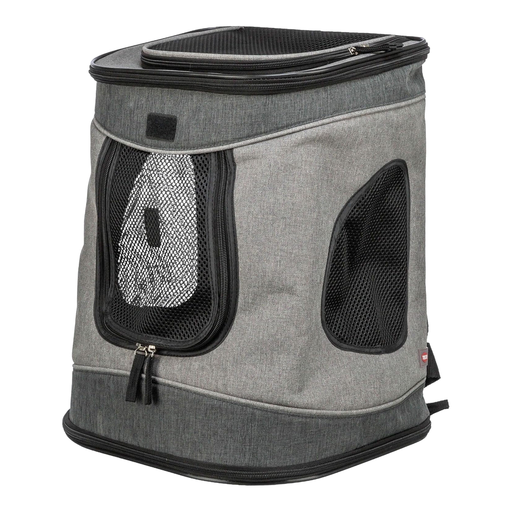
Why it suits this profile: Measuring 34 × 30 × 44 cm, this carrier is a practical size for owners of small dogs or cats looking for a bag for vet visits and short trips.
The product information lists a reinforced base, mesh panels and a zip closure. However, check beforehand that the internal space is suitable for your pet.
Handles and adjustable shoulder strap; ventilation through mesh panels; suitable for small pets according to the product description.
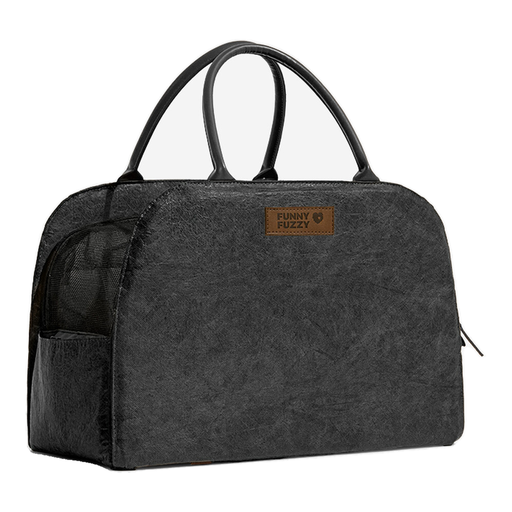
Why it suits this profile: This pet carrier combines several uses for cats and small dogs: carrying every day, car journeys and travelling.
The bag has a safety strap, a large mesh window and an expandable side compartment. According to the product description, it is intended for use in the cabin; always check the airline’s current rules.
Dimensions of 44 × 22 × 30 cm; removable inner mat; underside with a seat belt attachment.
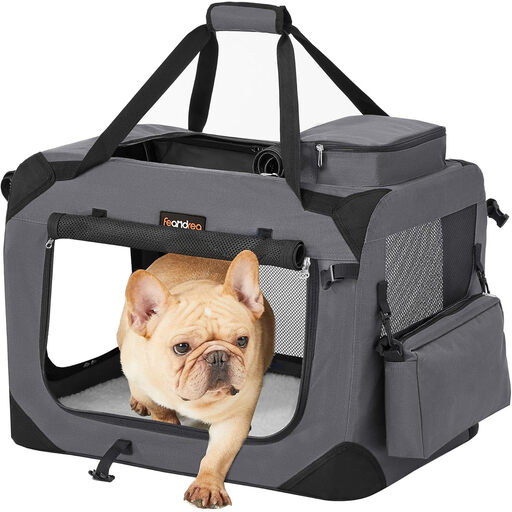
Why it suits this profile: For a medium-sized dog or cat that needs more space than a shoulder bag can offer, this is a practical foldable transport crate for the car, camping or home.
The dimensions, maximum load of 11 kg and folded thickness of 8 cm are listed. This makes it easier to compare than relying on general terms such as “spacious”.
Steel frame; several mesh panels; removable fleece mat; folds from 60 × 42 × 42 cm to 60 × 42 × 8 cm.
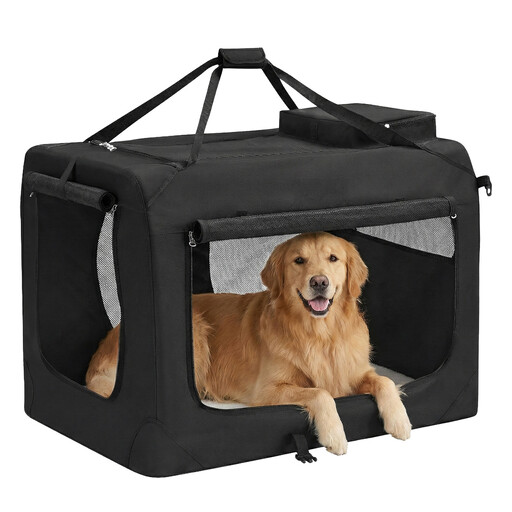
Why it suits this profile: The spacious size is designed for larger dogs and can be used during car journeys, camping trips or stays in a hotel.
The product information mentions a steel frame, mesh doors and a removable mat. Before buying, check that the large external dimensions will fit in your car.
Internal dimensions of 102 × 69 × 69 cm; folds flat to just 8 cm thick; side pockets for accessories.
We have put together a complete, up-to-date list of products that fully meet these strict selection criteria and the applicable European safety regulations.
Measure the length from the nose to the base of the tail and the height from the floor to the head. Your pet must be able to sit, turn around and lie down in the carrier. Compare these measurements with the internal dimensions and allow for a potentially thick mat.
That depends on the model. Look for an explicit seat belt attachment or a design that the product information states is intended for use on a car seat. Secure the carrier firmly and check the zips, seams and attachment points before every journey.
Always follow the manufacturer’s washing and care instructions. You can often wash a removable mat and clean the outside with a damp cloth. Allow the carrier to dry completely before folding it away. Regularly check the frame, mesh panels and zips for signs of wear.
