
Vandaag of morgen in huis

Kwaliteit gegarandeerd

Welkomstaanbiedingen ontgrendelen: GRATIS bezorging | Tot 80% korting | Gratis 30 dagen JoyPlus-proefperiode
Download de app
Whether you're driving your dog to the park, taking your cat to the vet, or flying on holiday together, a good pet carrier is essential. However, the market is flooded with options, and it's easy to fall for marketing claims that don't hold up in practice. The wrong choice not only wastes money but also causes stress for your pet.
As a Joybuy Product Recommendation Officer, I see where things go wrong every day. These are the three most common pitfalls when buying a pet carrier:
To avoid these pitfalls, it's important to focus on a few objective specifications. These will determine if a carrier is truly suitable for you and your pet.
The choice between a hard-shell or soft-sided carrier depends on your needs.
The most important rule for sizing is that your pet must be able to comfortably stand, turn around, and lie down. Measure your pet from the tip of its nose to the base of its tail (length) and from the floor to the top of its head (height). Add about 10 cm (4 inches) to both measurements to determine the minimum internal dimensions of the carrier. This applies to both a carrier for a small dog and a carrier for a large dog.
A safe carrier is more than just a roof over your pet's head.
Not everyone has the same needs. Below are several options suited to specific situations, based on their product specifications.
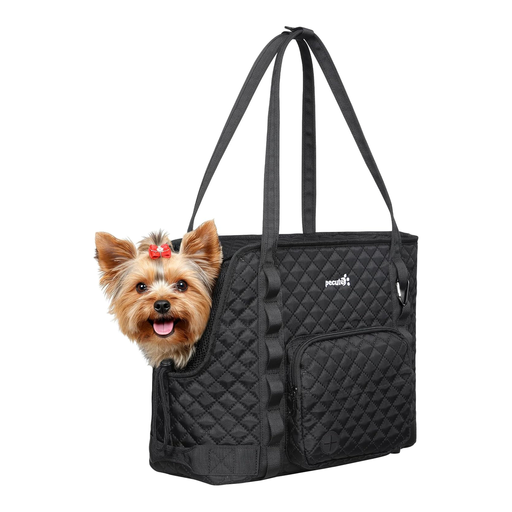
Why This Fits Their Persona: This stylish and lightweight dog carrier bag is ideal for city dwellers who take their small dog or cat (up to 5 kg) on short trips, like to the vet or to visit friends. It's designed like a tote bag, making it discreet and easy to handle.
The bag has convenient storage pockets, so you don't have to juggle loose items. This avoids the pitfall of an impractical design. The internal safety tether provides extra security.
Lightweight (0.7 kg) and equipped with a removable, sturdy base with soft lining for comfort and stability.
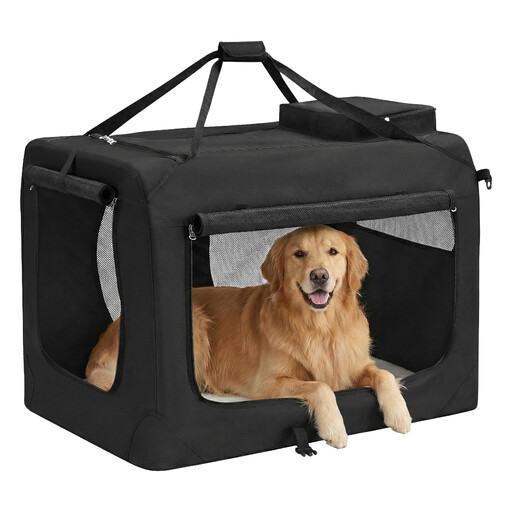
Why This Fits Their Persona: This very spacious and foldable crate is designed for owners of large dog breeds. It's perfect for the boot of your car during holidays, camping trips, or as a secure resting place in an unfamiliar location.
With its generous dimensions and mesh windows on multiple sides, this carrier for large dogs bypasses the pitfalls of cramped space and poor ventilation. It's also foldable, which solves the storage problem.
Sturdy steel frame with durable Oxford fabric. Comes with a washable mat and storage pockets for essentials.

Why This Fits Their Persona: This pet backpack (also suitable for cats) is for owners who prioritise technology and comfort. The large window provides a great view, and the built-in fan ensures active air circulation, which can reduce stress, especially for cats.
It directly tackles the ventilation trap with an active, intelligent ventilation system. This goes far beyond passive mesh windows, offering a solution for warm weather or stress-prone pets.
Built-in mini-fan for optimal air circulation and an ergonomic design for shock absorption while walking.
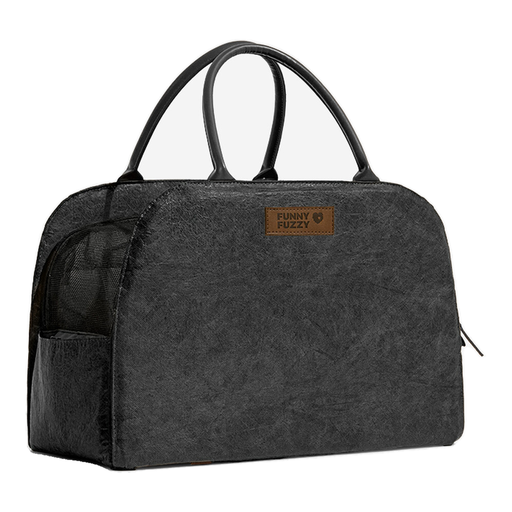
Why This Fits Their Persona: This bag is designed for maximum versatility. According to the manufacturer, it complies with airline carry-on regulations and features a seatbelt strap. It's ideal for those who travel by both car and plane.
This multifunctional design prevents the need to buy multiple, separate products. It's an airline-approved carrier and a secure car seat in one, avoiding the pitfall of impractical, single-use solutions.
Expandable for extra space, has a strap for car seatbelts, and a removable liner that can be used as a separate bed.
We have compiled a complete, up-to-date list of products that meet these strict selection criteria and UK/EU safety standards.
The rule of thumb is that your pet should be able to stand up, turn around, and lie down comfortably. Measure your pet (length and height) and add about 10 cm (4 inches) to both dimensions to determine the minimum internal size. A carrier that's too small is stressful, but one that's too large offers no support during braking or turns.
You can easily clean hard plastic carriers with water and a mild detergent. For soft-sided bags, models with a removable, washable liner or base are preferable. Always check the manufacturer's care label. Regular cleaning prevents unpleasant odours and keeps the carrier hygienic.
A few days before the first trip, place the new carrier in the living room with the door open. Put a favourite blanket or toy inside and reward your pet with a treat if it enters on its own. Make the first few journeys short and positive—like a quick trip around the block—instead of a long drive straight to the vet. This helps your pet associate the carrier with something neutral or positive.
