
Vandaag of morgen in huis

Kwaliteit gegarandeerd

Welkomstaanbiedingen ontgrendelen: GRATIS bezorging | Tot 80% korting | Gratis 30 dagen JoyPlus-proefperiode
Download de app
A pet carrier may seem simple at first: choose a size, check the colour and place your order. In practice, ventilation, carrying comfort and the right internal dimensions determine whether it remains suitable for a trip to the vet, a car journey or a holiday.
A cat carrier may be all you need for a small cat, while a larger dog may need a travel crate or dog carrier backpack. Read on to find out what to look for and which models suit different situations.
A weight limit doesn’t tell you everything. Your pet needs to be able to stand, turn around and lie down in the pet carrier without its back or tail touching the sides. For dogs, you’ll also need to consider body length and height at the withers.
Measure your pet from the nose to the base of the tail, and from the floor to the top of the head. When comparing carriers, remember that external and internal dimensions can differ. Manufacturers don’t always list both.
Mesh panels can improve airflow, but pay attention to where they’re positioned. A single small window is less practical than ventilation on several sides. Also check that the mesh is sturdy enough for a pet that scratches or tries to bite it.
A breathable pet carrier should also let your pet see outside without having to leave the carrier fully open. This means you can keep an eye on your pet while travelling, while keeping them better protected.
A foldable dog travel crate is handy for storage, but being foldable doesn’t automatically make a crate suitable for travel. Check that the frame locks securely when unfolded, the zips close properly and the base offers enough support.
A carrier isn’t necessarily a substitute for an approved car restraint system. Only secure it as described in the product information, and check that the model is suitable for your vehicle.
Choose a carrier based on your pet’s measurements first, then consider its appearance. Some carriers for small dogs and cats have a weight limit of around 5 to 8 kg. Larger soft-sided carriers offer more space, but they also weigh more.
Check the following:
A metal or steel frame helps a soft-sided carrier keep its shape. Oxford fabric, nylon and mesh differ in durability, ease of cleaning and water resistance. A rigid baseboard prevents the bottom from sagging when you lift the carrier.
A soft carrier is practical for everyday use and storage. A sturdier carrier may be more suitable for a pet that chews a lot or moves around constantly. Check the zips, seams, handles and attachment points regularly.
An internal safety strap can help prevent your pet from jumping out unexpectedly. Use it as instructed, and make sure your pet’s collar or harness can’t get caught. Some carriers specifically recommend removing your pet’s collar and harness before placing them inside.
Useful extras include:
Always check an airline’s requirements before choosing a carrier for air travel. Size, weight and acceptance rules vary between airlines.
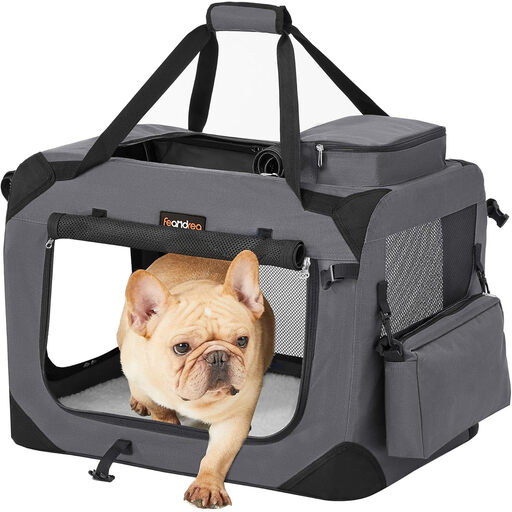
Why it suits this type of buyer: A straightforward option for medium-sized dogs and cats, suitable for car journeys, camping or use at home.
The product information lists internal dimensions of 60 × 42 × 42 cm, a maximum load of 11 kg and a folded thickness of 8 cm. Check your pet’s measurements before buying.
Steel frame, mesh windows, two side pockets and a removable fleece mat.
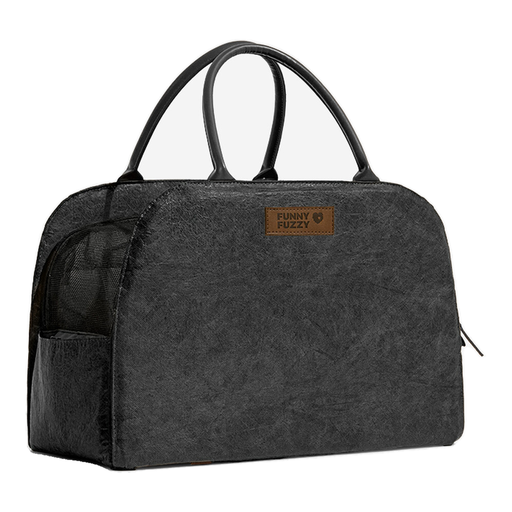
Why it suits this type of buyer: For anyone looking for one pet carrier to use on car journeys, everyday outings and trips with a small dog or cat.
The carrier has an expandable side panel, a safety strap and an attachment point for a car seat belt. The product description advises checking the fastenings and attachment before each use.
Measures 44 × 22 × 30 cm, with a removable inner mat and a large mesh window.
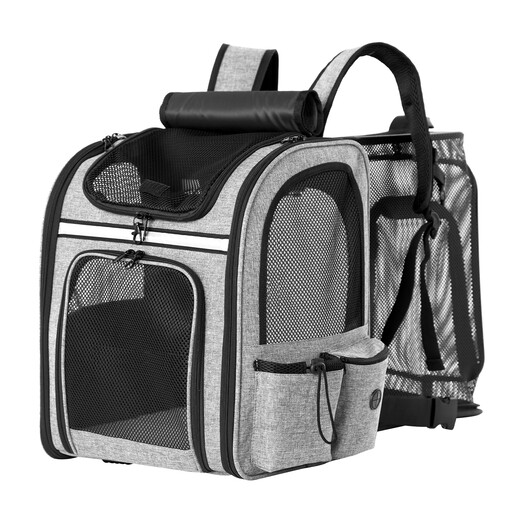
Why it suits this type of buyer: A practical dog carrier backpack or cat carrier for walking, camping, public transport and longer outings with a pet weighing up to 8 kg.
The steel frame helps the backpack keep its shape. According to the product description, it has four mesh windows, safety fastenings and a safety strap.
Expands from 41 to 60 cm in height, folds down to 5 cm thick and includes chest and waist straps.
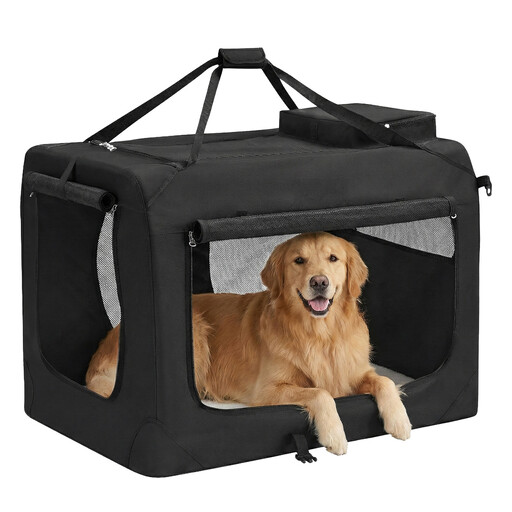
Why it suits this type of buyer: This spacious carrier is designed for larger dogs and can be used for car journeys, camping or stays in a hotel.
Its generous size and metal frame make it important to check the space available in your car and your dog’s measurements in advance.
Measures 102 × 69 × 69 cm and folds down to 8 cm, with Oxford fabric, mesh panels, a washable mat and side pockets.
We’ve put together a complete, up-to-date list of products that meet these strict selection criteria and the applicable European safety requirements.
Look for a model with a sturdy base, good ventilation and a clearly stated weight limit. A cat travel carrier or small dog carrier isn’t suitable if your pet only fits when sitting. Measure their length and height, then compare these with the internal space.
Remove the mat or baseboard first. You can clean many soft-sided models with a damp cloth and mild detergent. Check the product instructions: some inner mats can be machine-washed, while the carrier itself may only be suitable for spot cleaning. Allow all parts to dry completely before putting the carrier away.
Its lifespan depends on your pet’s weight and behaviour, as well as how often you use it. Before every journey, check the frame, seams, mesh panels, zips and safety strap. Stop using the carrier if any parts are bent, torn or no longer close securely.
