
Owners with a washable pet bed cover
If you want to clean the entire removable cover, the washing and drying label is the most useful place to start. Its instructions apply to the cover, not automatically to the filling or the whole pet bed.


If the care label says the removable cover is machine washable and you want to clean the whole cover, use the permitted wash cycle; a spot cleaner is not a substitute for washing it. For an individual stain, a spray-extraction cleaner may be suitable if the care instructions allow wet cleaning. However, remember to allow time for drying and to clean the appliance afterwards.
If you want to clean the entire removable cover, the washing and drying label is the most useful place to start. Its instructions apply to the cover, not automatically to the filling or the whole pet bed.
If you want to treat one spot on a suitable cover, you could consider cleaning it locally instead of washing the whole cover straight away.
If you need to use the cover again soon, allow time not only for cleaning but also for the recommended drying time and for cleaning the appliance.
First, check that the cover is suitable for the cleaning method you have in mind. Then consider how much fabric you want to clean and how much time you have to let it dry.
| Consideration | What to look for when buying | Who is this important for? |
|---|---|---|
| Cover suitability | Check the label on the removable cover and follow its washing and cleaning instructions. Don’t assume the same methods are suitable for the filling. | If I want to avoid damage, I first check which cleaning methods are suitable for my cover. Around 40% of consumers prioritise material suitability. |
| Time until it can be used again | Follow the drying instructions after both washing and local wet cleaning; an appliance cannot guarantee a particular drying time. | If the cover needs to be ready for guests, I allow time for it to dry. Around 30% of consumers give the time until reuse their top priority. |
| Treating a small stain | Check the reach and size of the hand tool. Use it only if the care instructions allow wet cleaning. | For a small, isolated stain, I don’t want to clean more fabric than necessary. Around 20% of consumers prioritise spot treatment. |
| Care after use | Check the manual for how to empty and clean the tanks, tool and hose. A rinse or self-cleaning function does not remove the need for all routine maintenance. | If I’m short on time after cleaning, I also consider how much effort it takes to clean the appliance. Around 10% of consumers make this their main consideration. |
Electrical appliances placed on the EU market must carry the required CE marking. The Dutch government describes this marking as a requirement for electrical appliances; check the information for the specific appliance before choosing it.
Permission to wash a cover does not automatically mean the fabric or filling is suitable for another wet-cleaning method. Using an unsuitable method could damage the fabric or filling.
Check the instructions for the removable cover and the appliance manual before using water or cleaning products.
Cleaning and drying are separate steps. A spray-extraction cleaner cannot guarantee a particular drying time.
Allow time for the cover to dry according to the relevant instructions, and clean no more fabric than necessary.
The BISSELL SpotClean C5 and SpotClean C5 Select are not necessarily the same product. Different versions may also come with different accessories.
Before buying, compare the full model name, version and package contents.
The SpotClean range includes portable cleaners for spot-cleaning upholstery. The features mentioned below relate to the SpotClean C5.
Rowenta describes the Clean It IN5020F0 as suitable for stains on upholstery and other surfaces.
Kärcher describes the SE 3 Compact Home N1 as a spray-extraction cleaner for surfaces including fabric upholstery.
The Dutch product information consulted relates to the refurbished Philips 3000 Series stain remover XW3193/11R1.
These products are designed for spot-cleaning upholstery and other specified fabric surfaces; they are not a substitute for machine-washing an entire pet bed cover when washing is permitted. Before use, check that the cover can be wet-cleaned and that the specific electrical appliance carries the required CE marking.
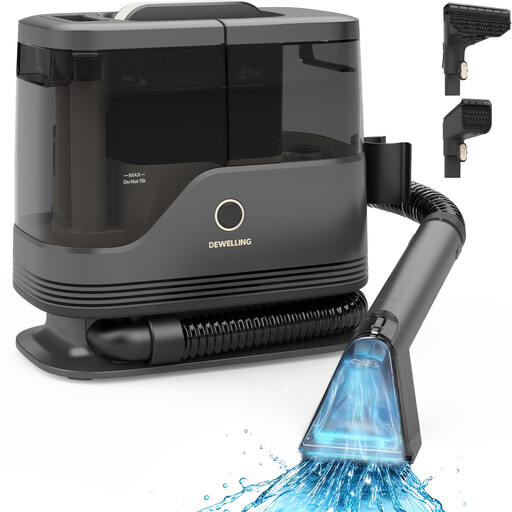 No image available
The title mentions upholstery and separate clean- and dirty-water tanks, making it a possible option if you want to treat a spot stain.
The listed specifications are 400 W, 13 kPa and a self-cleaning function on the handle.
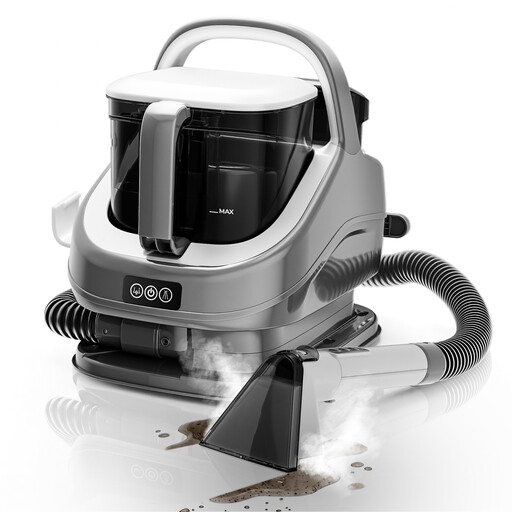 No image available
The product information mentions upholstery and home textiles; check the cover’s care instructions before wet-cleaning it.
The title lists three water modes, 13 kPa, two water tanks and 1300 W. The description mentions a 1.1 m hose.
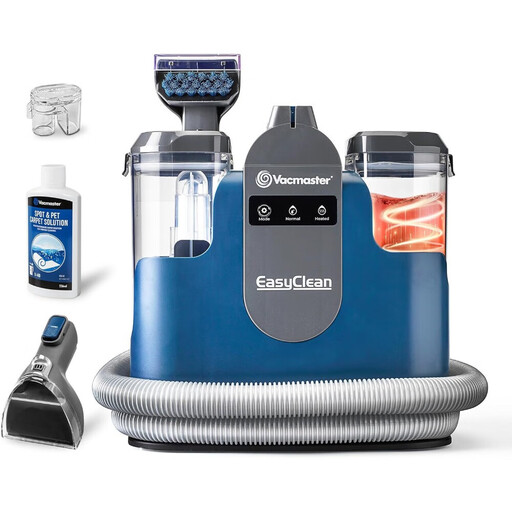 No image available
The description mentions spraying and suction for spot stains on upholstery and carpets.
The title lists 500 W, tanks with capacities of 1.6 l and 0.95 l, and a 1.8 m self-cleaning hose.
 No image available
The product information mentions spot-cleaning upholstery and separate clean- and dirty-water tanks.
The title lists 500 W and a 1.8 m hose.
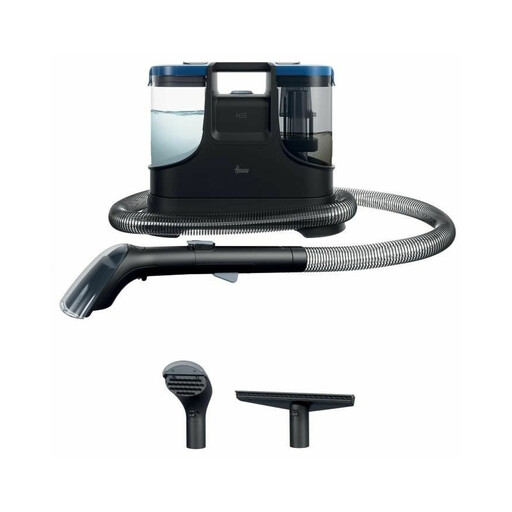 No image available
The title lists pet beds as one of the surfaces; only treat the cover if its care instructions allow wet-cleaning.
The title lists spraying, brushing and vacuuming, removable tanks with capacities of 1.5 l and 0.8 l, and a 6.5 m operating radius.
No. A spot cleaner treats individual areas and doesn’t replace a permitted machine wash of the whole cover. Check the cover’s label: the washing symbols show whether it can be washed at home and what instructions to follow.
Follow the cover’s care instructions and check that they allow wet-cleaning. BISSELL describes upholstery codes W and WS as suitable for wet-cleaning; don’t assume this applies if those codes aren’t listed for your cover. Also follow the material and appliance instructions when testing on an inconspicuous area.
Follow the manual for your specific model to empty the dirty-water tank and clean the tool and hose. Kärcher lists a rinsing function for the SE 3 Compact Home N1, while Rowenta lists a self-cleaning accessory for the Clean It IN5020F0. Check which version you’re choosing.
Check that the specific electrical appliance carries the required CE marking; according to the Dutch government, electrical appliances placed on the EU market must comply with this requirement. In the Netherlands, a seller must supply a product of satisfactory quality, but there is no fixed statutory guarantee period. If a product is faulty, contact the seller.