
Cooking for a crowd
If you’re making pesto for several people, compare the processing capacity with the quantity in your recipe. A large bowl doesn’t automatically mean you can process the whole batch at once.


For basil pesto for a crowd, a mini chopper, a hand blender with a chopper attachment or a food processor are all sensible options for processing herbs, garlic and pine nuts. The right choice depends mainly on the quantity you can process at a time and the texture you want. A standard blender is better suited to larger, wetter mixtures: according to the Consumers’ Association, small, thick or dry portions are less suitable. With any type, check the processing capacity and accessories for the exact model.
If you’re making pesto for several people, compare the processing capacity with the quantity in your recipe. A large bowl doesn’t automatically mean you can process the whole batch at once.
If you want to chop the basil and pine nuts and control the texture yourself, pay attention to the chopping blade and controls. Motor power alone doesn’t tell you how an appliance will handle your ingredients.
If you want to use the appliance for other jobs after your meal, compare the accessories included and consider how many parts you’re willing to store and clean.
Best for: chopping herbs, garlic and pine nuts in manageable quantities.
Bear in mind: you may need several batches for a larger meal, and chopping alone won’t automatically make your pesto smooth.
Best for: chopping pesto ingredients and using the appliance for sauces too. The Netherlands Nutrition Centre lists a hand blender as one way to make basil pesto.
Bear in mind: capacity and accessories vary by set, so check the full model code and what’s in the box.
Best for: anyone planning to use it for other chopping and mixing jobs as well as pesto. The Netherlands Nutrition Centre lists a food processor as one way to prepare it.
Bear in mind: a large bowl doesn’t tell you the minimum amount that can be processed around the blade. Check the instructions for your portion size.
Best for: anyone who also often blends larger, wetter mixtures.
Bear in mind: according to the Consumers’ Association, small, thick or dry portions are less suitable. So a larger jug doesn’t guarantee that a small portion of pesto will blend well.
| What to consider | What should you check? | Who should consider this? |
|---|---|---|
| Chopping firm ingredients | Check whether the chosen model includes a chopping blade or suitable chopper attachment, and whether it’s suitable for herbs and nuts. | If you mainly want to chop basil, garlic and pine nuts, make suitability your top priority. Around 40% of consumers prioritise processing firm pesto ingredients. |
| Quantity per batch | Compare the processing capacity, not just the total bowl capacity, with your recipe and planned portion. | If you’re cooking for a shared meal, you’ll want to know whether your portion fits in one batch or whether it’s better to work in stages. Around 30% of consumers prioritise the amount they can process at a time. |
| Texture you want | Check whether you can control the processing using features such as pulse settings or speed levels; also check how the recipe adds liquid. | If you want to choose between a coarser or finer texture, control over chopping matters. Around 20% of consumers prioritise their preferred pesto texture. |
| Cleaning, storage and other uses | Check which parts can be detached, how they can be cleaned and which accessories are actually included. | If you want to use the appliance for other jobs after your meal, weigh up that convenience against storage and cleaning. Around 10% of consumers prioritise versatility and practical considerations. |
A bowl’s total capacity may be greater than the quantity you can chop at once. For example, Philips lists a bowl capacity of 0.7 l and a chopping capacity of 0.5 l for the HR1393/00, /01 and /90.
Compare the stated processing capacity of the exact model with your recipe, and plan to work in batches if needed.
Working in batches can mean more preparation time and washing up.
A blender may be less suitable for small, thick or dry portions. The jug’s large capacity alone doesn’t tell you how well the appliance will handle your quantity of pesto.
Choose based on your usual portion size and ingredients, and compare a mini chopper or food processor too.
An appliance that isn’t right for your portions may also take up more space and create more washing up than you need for this recipe.
Accessories vary by model. For example, Braun lists a 500 ml chopper for the MQ 9138XI; that capacity doesn’t automatically apply to other sets.
Before buying, check the full model code and which parts are included in the box.
An additional package and your legal rights against the seller aren’t the same thing. ACM ConsuWijzer explains that you may have a legal right to a remedy if a product breaks too soon during normal use.
Check exactly what a paid package covers, separately from your rights against the seller.
A package may involve extra costs, so compare its cover with the rights you already have.
The HR1393 mini choppers are worth considering if you want to process herbs and nuts in a compact chopper.
MultiQuick sets combine a hand blender with accessories that can vary by model.
The 5KFC3516EER is a mini chopper with features for adding liquid in a controlled way.
The MultiTalent 3 MCM3201B is a food processor option for anyone considering a larger kitchen appliance too.
The Mini Plus is a compact food processor where the difference between total capacity and processing capacity matters.
These product options include compact mini choppers and hand blender sets with a chopper attachment, for chopping pesto ingredients and potentially tackling other kitchen jobs. For any electrical appliance on offer, check for the CE mark and applicable product safety information; the NVWA states that CE marking is mandatory for electrical products.
 No image available
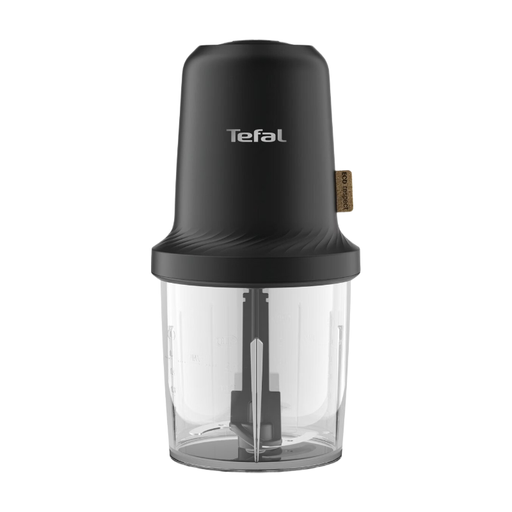
The product description says it chops, stirs and mixes firm and semi-liquid ingredients.
The stated maximum quantities are 300 g of firm ingredients or 500 ml of semi-liquid mixtures; compare these with your recipe.
The product name lists a capacity of 0.5 l and 500 W.
 No image available
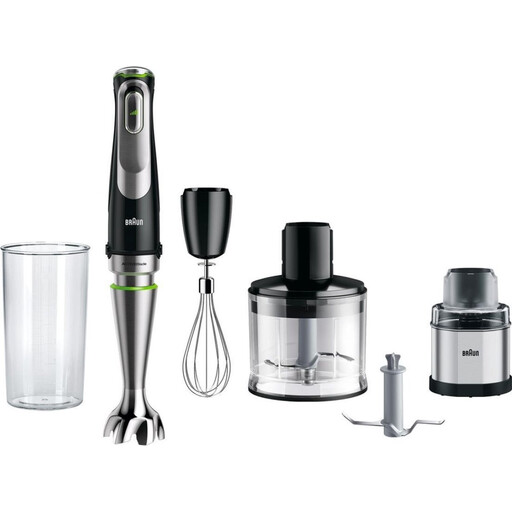
This set combines a hand blender with a chopper, for anyone who wants to chop firm ingredients and purée food too.
Braun lists a capacity of 500 ml for the chopper in this model. The product description also mentions a whisk, measuring beaker and coffee and spice grinder; check what’s included with the exact model.
 No image available
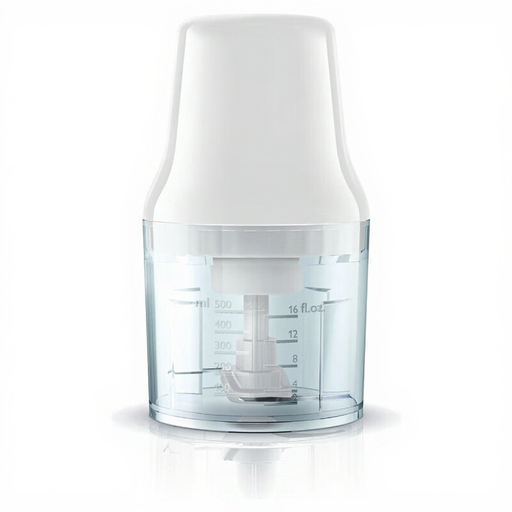
The product description lists herbs and nuts among the ingredients this chopper can process.
Philips lists a chopping capacity of 0.5 l and a bowl capacity of 0.7 l for the HR1393/00. The product name lists 400 W.
 No image available
This hand blender set includes a chopper as well as a blending foot and whisk, for anyone who wants to chop, purée or whisk.
The product name lists a 500 ml chopper and a 500 ml measuring beaker, plus standard and turbo settings.
 No image available
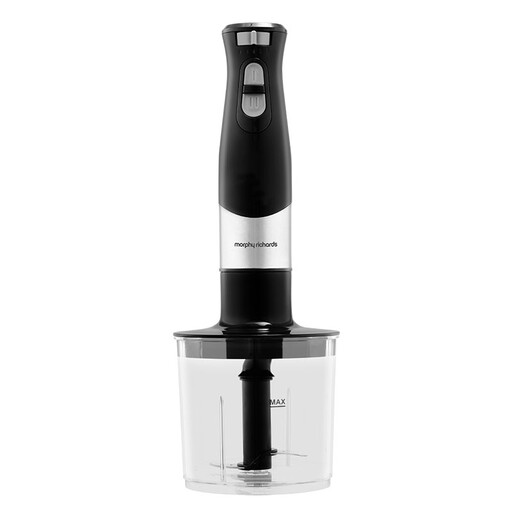
According to the product description, the set includes a chopper bowl and a detachable blending foot, for chopping ingredients and puréeing sauces.
The product name lists 600 W. The description mentions five speeds, a turbo setting, a whisk and a 700 ml measuring beaker.
It depends on the preparation and the model, but a standard blender isn’t automatically suitable for every portion. According to the Consumers’ Association, small, thick or dry quantities are less suitable, so compare your recipe with the instructions for the exact blender.
Compare the amount you plan to make with the processing capacity, and work in batches if necessary. Philips lists a chopping capacity of 0.5 l and a bowl capacity of 0.7 l for the HR1393/00, /01 and /90; these figures don’t automatically apply to other mini choppers.
Yes. The NVWA states that CE marking is mandatory for electrical products. A CE mark doesn’t indicate how well an appliance makes pesto.
Ask about the specific allergy and check the ingredients you’re using. The Netherlands Nutrition Centre’s basil pesto recipe includes pine nuts and cheese, among other ingredients, so don’t assume a standard recipe is suitable when cooking for guests with allergies.
Put perishable food back in the fridge promptly: the Netherlands Nutrition Centre recommends keeping your fridge at 4 °C and advises against leaving perishable food out of the fridge for more than two hours. Its Storage Guide recommends keeping opened pesto in the fridge for four days; this isn’t a specifically validated storage period for every homemade recipe.