
Colleague who’s mindful of noise
Wants to know how audible blending is in a shared space, and may choose to blend elsewhere or before work. The Dutch Consumers’ Association assesses noise separately from smoothie performance.


Choose based on where you’re allowed to blend: a cordless blender suits an approved workplace without a plug socket, while a blender with a travel cup is handy if you can blend near a socket. Noise is another consideration in a shared office. Power or a claim about a quiet setting doesn’t tell you how audible a specific model is. Check the instructions for cold ingredients and cleaning, and store cut watermelon covered in the fridge, as advised by the Netherlands Nutrition Centre.
Wants to know how audible blending is in a shared space, and may choose to blend elsewhere or before work. The Dutch Consumers’ Association assesses noise separately from smoothie performance.
May want to blend watermelon with ice or frozen fruit. Check the instructions for the exact model: Nutribullet lists this as an option for the Portable.
Wants a cup that suits the portion and needs to choose between cordless blending and using an appliance near a plug socket. Nutribullet and Philips describe these different ways of using their specific models.
First, find out where you’re allowed to blend and whether there’s a plug socket there. Also consider noise, cleaning and the ingredients you want to use.
| What to consider | What should you check? | Who is this important for? |
|---|---|---|
| Noise in the office | Look for a noise assessment of the exact model; if necessary, choose a blending spot that suits your workplace. | If you work in the same room as colleagues, you’ll want to know how audible a blending session is and may prefer to blend elsewhere. Around 31% of consumers say noise is their top priority. |
| Cleaning | Check the cleaning instructions for each part, especially the cup, blade holder and seal. | You’ll want to clean the cup thoroughly after your drink and know which parts are dishwasher-safe. Around 25% of consumers put cleaning first. |
| Cold ingredients and portion size | Check the model’s instructions for ice, frozen fruit and the fill line. Also check the information about parts that come into contact with the drink. | If you want your watermelon drink chilled or plan to blend a particular portion, the ingredients and quantity need to suit the blender. Around 25% of consumers give these points priority. |
| Blend and take with you | Find out whether you need a plug socket, where you’re allowed to blend and whether the cup seals securely. | If you want to blend at your workplace and take the drink with you afterwards, the available power supply will determine which type is right for you. Around 19% of consumers say portability is their top priority. |
Motor power alone doesn’t tell you how audible a blender will be in a shared office or how it handles cold ingredients. The Dutch Consumers’ Association treats noise and blending results as separate assessment criteria.
Check the instructions for the ingredients you want to use. If noise is a key concern, look for an assessment of the exact model or choose somewhere else to blend.
A dishwasher-safe claim may apply to certain parts only. It doesn’t automatically mean you can put the motor base, seal and every other component in the dishwasher.
Read the cleaning instructions for each part individually, and refit a removable blade holder as directed.
The Netherlands Nutrition Centre advises storing cut watermelon covered in the fridge. For opened fruit smoothies, it recommends keeping them in the fridge for 1–2 days; this does not apply to unrefrigerated storage at the office.
Make sure you can keep the ingredients and any prepared drink chilled, or make only as much as you’ll use straight away.
The Portable NBP003NBL is a cordless model with an integrated drinking cup for a personal portion.
The Blend & Go HR2670/01 is designed for blending in a cup that you can take with you afterwards.
The On the Go BL1A0D is designed for use with a travel cup, while the Blend Up Essential BL1EHB has more programmes and two bottles.
The BC151EUBK is a cordless personal blender in the Blast range.
This selection includes portable blenders and smoothie-to-go models for making a drink for one. Choose based on the power supply available, the portion size you want and the instructions for ingredients and cleaning.
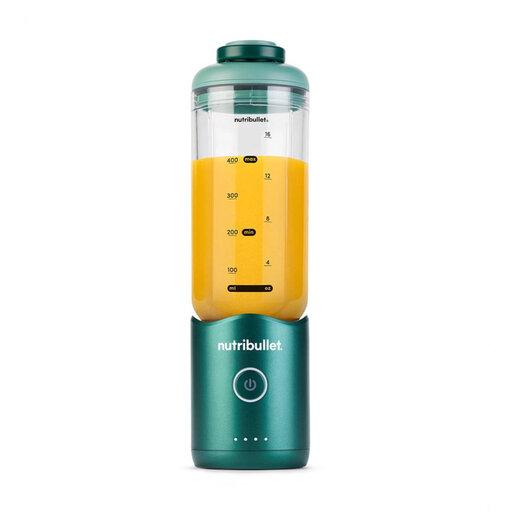 Image unavailable
This portable model with a rechargeable battery is suited to places where you don’t have a plug socket while blending.
The product name specifies a 590 ml capacity, a rechargeable battery and USB-C charging.
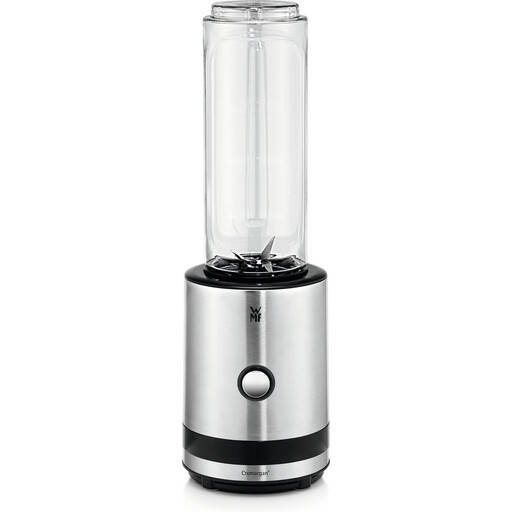 Image unavailable
A smoothie-to-go model is a good fit if you want to drink your smoothie from a travel bottle after blending.
The product name specifies a capacity of 0,6 l.
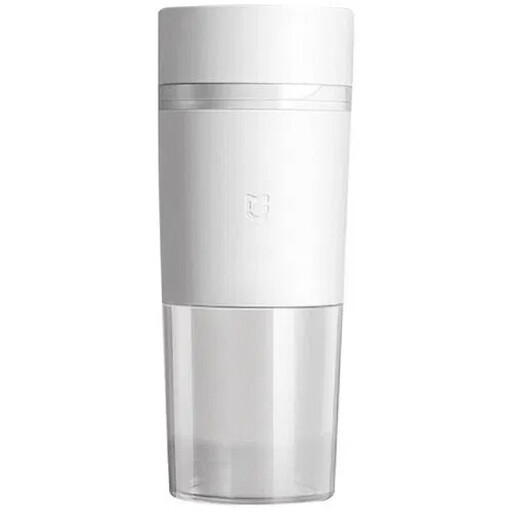 Image unavailable
This portable model is worth considering if you need a blender you can use in different places.
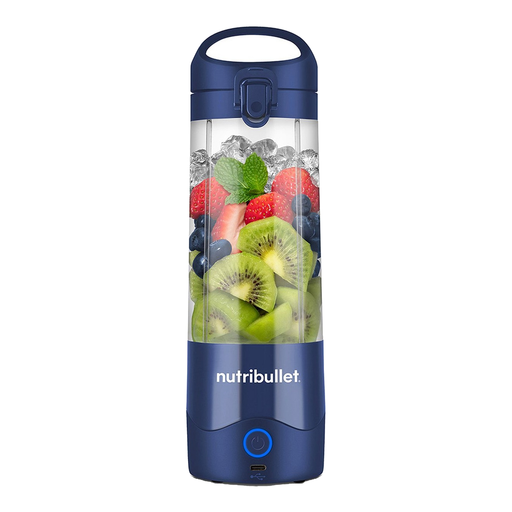 Image unavailable
A cordless model with a drinking cup suits anyone who wants to blend at work and take their drink with them afterwards.
The product name specifies a capacity of 475 ml, USB-C charging and a 20-minute run time.
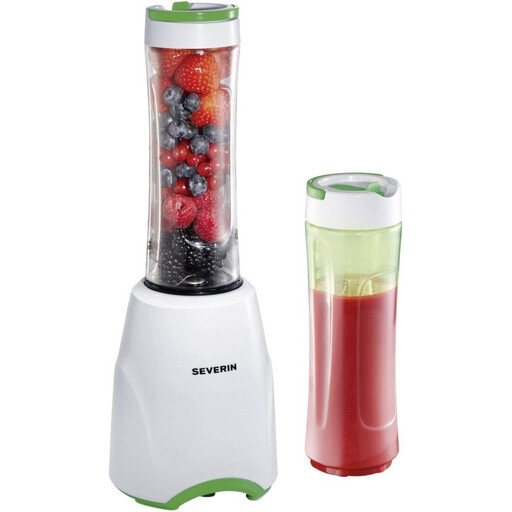 Image unavailable
The Mix & Go model is a good option if you want to make a smoothie and take it with you afterwards.
Check a noise assessment for the exact model and choose a blending spot that suits your workplace. The Dutch Consumers’ Association treats noise as a separate assessment criterion; motor power or a quiet-mode claim isn’t an independent noise measurement.
No, don’t assume every model can handle them. Nutribullet lists ice and frozen fruit as suitable for the Portable; for any other blender, follow its own instructions and fill line.
The Netherlands Nutrition Centre advises storing cut watermelon covered in the fridge. For opened fruit smoothies, it recommends 1–2 days in the fridge; this is not a storage period for keeping them unrefrigerated at the office.
For an online consumer purchase in the Netherlands, ACM ConsuWijzer states that you have a 14-day cooling-off period after delivery, although exceptions may apply. This is separate from your statutory guarantee: the Netherlands Authority for Consumers and Markets points out that the seller is responsible if a product doesn’t meet what you can reasonably expect from it under normal use.
In the Netherlands, products intended to come into contact with food must meet certain requirements. The Netherlands Food and Consumer Product Safety Authority refers to the Commodities Act Decree on Packaging and Consumer Articles; the general requirements of Regulation (EC) 1935/2004 also apply. Check the product information for the parts that come into contact with your drink.