
Families who pour drinks together
If you want to pour several glasses in the morning, weigh up a personal cup against a larger jug. The Dutch Consumers’ Association describes on-the-go smoothie blenders as models with a smaller blending cup.


If you want to pour several glasses at once, a jug blender is generally more practical. A personal blender is better suited to making individual portions, so you may need to blend several batches. If you’re using frozen mango or ice, check that it’s suitable for the exact model and follow the instructions. Also compare the maximum fill line, the cups supplied and the cleaning instructions.
If you want to pour several glasses in the morning, weigh up a personal cup against a larger jug. The Dutch Consumers’ Association describes on-the-go smoothie blenders as models with a smaller blending cup.
If you want to use frozen mango or ice, it’s worth checking whether the exact model is suitable and reading its instructions. Philips and nutribullet specify this for certain models.
If you want to tidy up quickly or take a cup with you, check which parts are dishwasher-safe and whether the model you choose comes with a drinking cup. Bosch, nutribullet and Princess describe these features for specific models.
Best for: anyone who usually makes one portion or wants to drink straight from the cup. Bosch lists a 0.6 l capacity for the MMB2111S; nutribullet gives the NB904CP a capacity of approximately 0.7 l.
Consider: you may need to blend in batches to make several glasses. The cup’s stated capacity isn’t necessarily the maximum fill level.
Best for: anyone who wants separate portions or cups for different family members. Princess lists 1000 and 500 ml cups for the 212067; according to Philips, the refurbished HR2767/00R1 comes with 700, 500 and 300 ml cups.
Consider: having several cups doesn’t automatically mean you can make one large batch. Check the fill limit and which parts are included with the exact model.
Best for: anyone who mainly wants to pour drinks for the family all at once and doesn’t need a takeaway cup. Princess lists a 1.5 l jug for the 212106.
Consider: a jug blender isn’t designed for drinking straight from the blending jug and you’ll need space to store it. Check the maximum fill line too.
| What to consider | What to look for | Who is this for? |
|---|---|---|
| Enough drink for the family | Compare the maximum fill line on the exact model with the amount you want to make in each batch. | If I want to pour several glasses at once at breakfast, I focus on the amount I can make per batch. Around 36% of consumers give family-sized capacity their top priority. |
| Frozen mango or ice | Check whether the exact model can handle frozen fruit or ice, and follow the instructions on quantities and liquids. | For an ice-cold cooler, I want to know whether my ingredients are suitable according to the instructions. This is the first thing around 29% of consumers look for. |
| Cleaning | Check the cleaning instructions for each part. A cup being dishwasher-safe doesn’t necessarily mean the blades or motor base are too. | If I use my blender often on busy mornings, I want to know in advance which parts are easy to clean. Around 21% of consumers put cleaning first. |
| Taking a portion with you | Check whether the model you choose comes with a drinking lid and whether the cup is the right size for your portion. | If you want to take your own drink with you after breakfast, consider the cup and lid. Taking a drink with you is the top priority for around 14% of consumers. |
Higher wattage alone doesn’t prove that a blender will handle ice or frozen mango better. The Dutch Consumers’ Association assesses different blending tasks separately.
Check the instructions for ice and frozen ingredients for the exact model. Don’t treat a manufacturer’s claim as an independent comparison.
The capacity in the product specifications doesn’t automatically tell you how much you can safely blend at once. Making several batches can mean extra preparation time and washing up.
Compare the amount you want to make with the maximum fill line and the instructions in the manual.
Products with similar names can differ in model code, cup or included parts.
Before buying, check the full model code and compare the version and accessories with what you need.
Bosch lists a 0.6 l personal to-go cup for the MMB2111S.
The manufacturer lists a cup capacity of approximately 0.7 l for the Pro 900 NB904CP.
The models mentioned from Princess come in different formats: the 212067 personal blender and the 212106 jug blender.
The HR2767/00R1 mentioned here is a refurbished model from the 5000 Series.
These product choices focus on jug blenders for making drinks to pour together at family breakfast. Check the maximum fill line and instructions for the exact model. If you want to use ice or frozen mango, check specifically whether it’s suitable.
 No image available
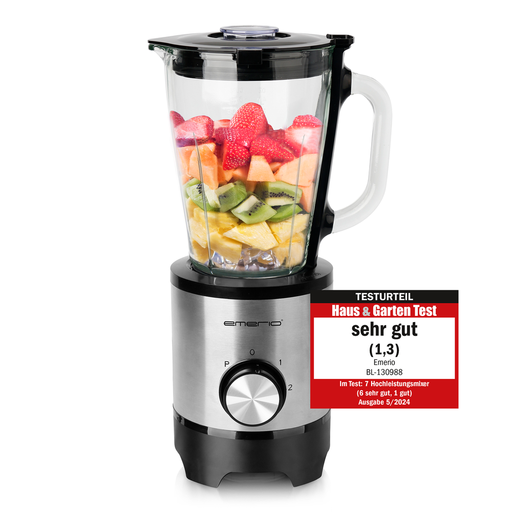
This jug blender is a good fit if you want to make a batch to pour for everyone.
The product name lists 1300 W, a 1.5 l jug, four blades, two speeds and an ice-crushing function.
 No image available
The jug design suits anyone who wants to make a batch for the family and pour it out afterwards.
The product name lists a 1.5 l glass jug.
 No image available
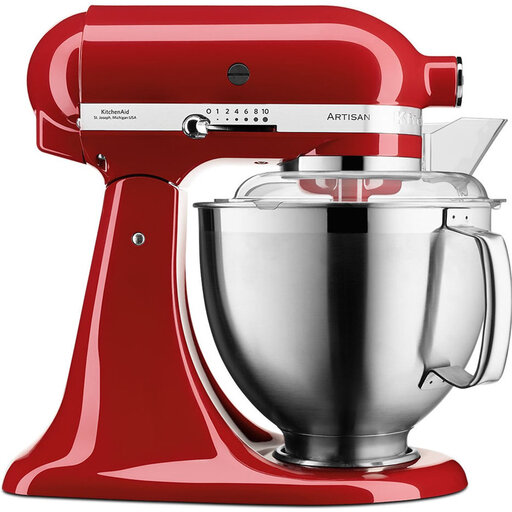
A jug blender is a practical option for making a larger batch to pour and share.
The product name lists 1000 W and a 1.5 l jug. Check the fill line and instructions for the exact model.
 No image available
This jug blender suits anyone who wants to pour a batch for everyone rather than drink straight from a personal cup.
The product name lists a 1.5 l jug, five speeds and a pulse function.
 No image available
This jug blender is an option for making a larger batch to pour out and share.
Check the product specifications and instructions to see whether the exact model is suitable for ice or frozen mango.
It depends on the amount you want per glass and the maximum fill level of the blender you choose. Bosch lists a 0.6 l cup for the MMB2111S, while the manufacturer gives the nutribullet NB904CP a capacity of approximately 0.7 l. The cup’s capacity doesn’t automatically confirm the maximum fill level, so work out whether you’ll need to blend several batches.
Check whether frozen fruit and ice are suitable for the exact model, and follow the instructions on quantities and any liquid needed. Wattage alone doesn’t prove blending performance; the Dutch Consumers’ Association assesses different blending tasks separately.
The Netherlands Nutrition Centre recommends keeping your fridge at 4 °C and not leaving perishable foods out of the fridge for more than 2 hours. The right storage time also depends on what’s in the cooler.
According to the European Union, the CE mark indicates that the manufacturer declares the product meets the relevant EU rules; it isn’t a certification issued by the EU. Check the product information and documentation for the specific model.
The Dutch government says that if a product is faulty, you should be able to contact the seller for an appropriate solution. The Netherlands doesn’t have a fixed statutory warranty period of two years; a manufacturer’s warranty is separate from your legal rights.