
If you want to use frozen strawberries or ice
Check whether each model allows frozen fruit and ice, and find out what quantities it can handle. The Dutch Consumers’ Association warns that not every blender can process ice or frozen fruit.


A corded blender is a good choice if you have a plug socket handy at your holiday cottage; a rechargeable model is more practical if you want to blend without one. If you’re using frozen strawberries or ice, check the manual for the exact model to see what it allows: a general smoothie claim doesn’t mean every ice-based recipe is suitable. Then compare the usable cup capacity and which parts you can clean.
Check whether each model allows frozen fruit and ice, and find out what quantities it can handle. The Dutch Consumers’ Association warns that not every blender can process ice or frozen fruit.
Compare the charging options, cup capacity and ingredients allowed for the specific model. A rechargeable blender needs to be charged in advance.
Check the model information to see which removable parts are dishwasher-safe. This doesn’t automatically apply to the electrical base.
| What to consider | What should you check? | Who is this important for? |
|---|---|---|
| Ice and frozen fruit | Check the manual for the exact model, the ingredients it allows and the quantity of ice. | If I want to make a really cold cooler with frozen strawberries or ice, I need to know what my blender can handle. Around 36% of consumers rank ice and frozen fruit as their top buying priority. |
| Blending without a plug socket | Check how the appliance is charged and whether you can charge it where you plan to blend. | If there isn’t always a plug socket where I want to blend at my holiday cottage, I want to be able to blend somewhere else. Around 29% of consumers give the freedom to choose where they blend top priority. |
| Portion size | Compare the cup capacity, maximum fill line and number of cups supplied. | If I’m making a cooler for several people, I want to know how much I can make in one go. Around 21% of consumers rank portion size as their top buying priority. |
| Cleaning | Check the cleaning instructions for each part; don’t assume the motor base is dishwasher-safe. | If I want to keep washing up to a minimum while on holiday, I look for parts that are easy to clean. Around 14% of consumers rank ease of cleaning as their top buying priority. |
Not every blender can process ice, and some models limit the quantity. The Dutch Consumers’ Association points out that this varies from one blender to another.
Before buying, check the ice and filling instructions for the exact model and your recipe.
The maximum fill line can limit how much of a recipe fits in the cup at once. You may need to blend in several batches if you’re making drinks for a group.
Compare the cup capacity and fill line with the number of portions you want to make.
Blending in several batches also takes extra time and means more washing up.
Cleaning instructions can vary from one part to another. The Dutch Consumers’ Association recommends checking the manual for removable parts.
Check the instructions for the cup, lid, blades and electrical base separately.
The VitaPower Serie 2 MMB2111S is a compact corded blender with a to-go cup, designed for use near a plug socket.
The Portable NBP003W is a rechargeable blender with a drinking cup, for blending away from a plug socket.
The Blend Up BL19H4F0 is a corded blender supplied with two travel bottles; the Lightmix BL1C0430 is a separate rechargeable model.
The 3000 Series HR2620/40 is a compact blender with a tumbler for taking your smoothie with you.
This selection includes compact and portable blenders for making a strawberry cooler. Check that the ingredients and portion size you want are suitable for each model; their suitability for ice varies.
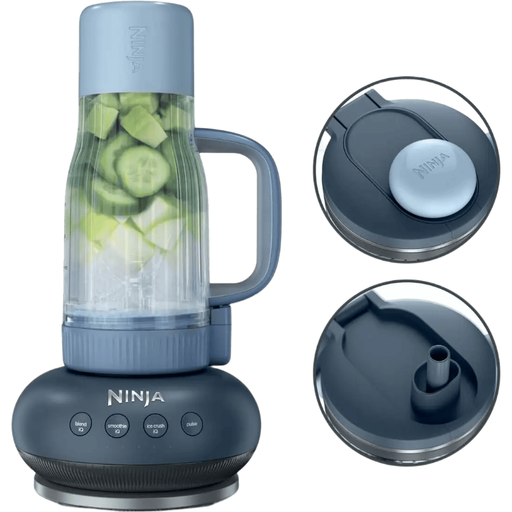 No image available
A portable option with a travel cup for taking your drink with you. The product information lists a 710 ml capacity, a leakproof lid and removable, dishwasher-safe parts.
The product information mentions ice and frozen fruit; check the instructions for your recipe and the quantity you plan to add.
 No image available
A compact corded blender for a spot where you have access to electricity. The product information lists a 0.6-litre capacity, two speeds and a pulse setting.
The instructions specify a speed for hard ingredients and ice. Check the manual for the permitted ingredients and quantities.
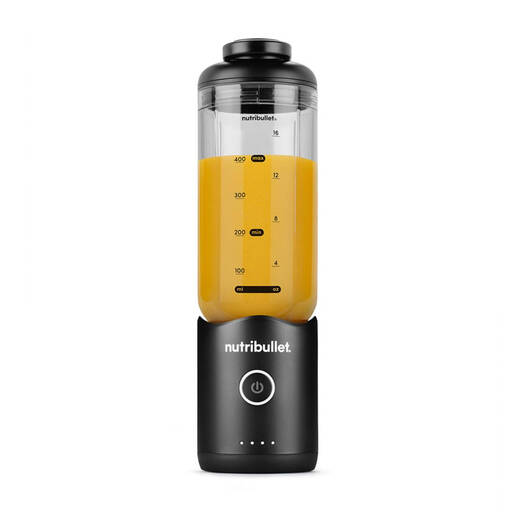
 No image available
A rechargeable blender with a drinking cup for blending without a plug socket and taking your drink with you. The product information lists USB-C charging and a 475 ml capacity.
The battery must be charged before cordless use. The product information mentions smoothies and shakes; check the manual if you want to use ice or frozen fruit.
 No image available
A rechargeable option for blending without a plug socket. The product information lists a 590 ml capacity and USB-C charging.
The product description mentions ice and frozen ingredients. Fully extend the foldable design before use, and check the instructions for your recipe.
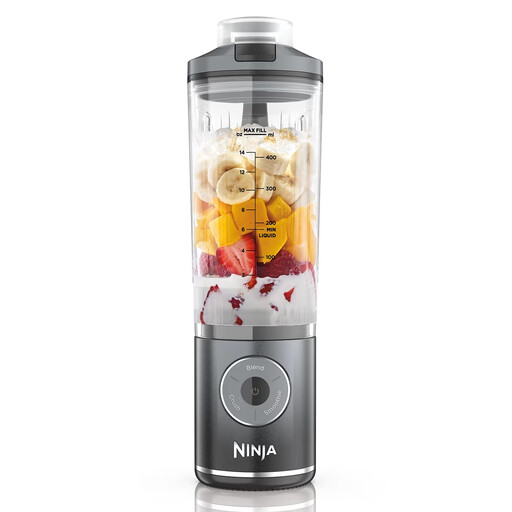 No image available
A rechargeable blender for blending without a plug socket. The product information lists two 530 ml Tritan cups and dishwasher-safe parts.
The battery must be charged before cordless use. The product description mentions smoothies and shakes; check the manual if you want to blend ice.
No, it varies from one blender to another. The Dutch Consumers’ Association warns that not every model can crush frozen fruit or ice. Nutribullet says the Portable NBP003W can handle small quantities of ice; check the manual for your exact model and recipe.
Clean the removable parts according to the manual, and wipe the electrical housing as instructed by the manufacturer. The Dutch Consumers’ Association recommends checking the instructions before putting any parts in the dishwasher.
For a fruit smoothie, the Netherlands Nutrition Centre recommends keeping it in the fridge for 1–2 days. A cooler may contain other ingredients, so check the storage advice for those too.
No. According to the Dutch Government, there is no set period for the statutory guarantee in the Netherlands; what you can expect from a product depends on factors including the product itself and the information provided. If a product is faulty, the seller must provide a solution; a manufacturer’s guarantee is in addition to this.
Yes, where the applicable product rules require one. The Netherlands Food and Consumer Product Safety Authority (NVWA) classifies kitchen appliances as electrical equipment, but a CE marking doesn’t prove that a specific model has been independently approved.