
Colleague using frozen pineapple
Wants to make a shake with frozen pieces, so checks the instructions for hard ingredients for the exact model. Consumentenbond notes that wattage alone doesn’t tell you everything about blending results.


Start with the pineapple you want to use: if it’s frozen, check the instructions for the exact model, and don’t judge blending results on wattage alone. A battery-powered blender works without a socket, while a compact mains-powered model could suit you if you have an approved spot with a power socket. Then compare the cup, cleaning requirements and noise information for your shared space.
Wants to make a shake with frozen pieces, so checks the instructions for hard ingredients for the exact model. Consumentenbond notes that wattage alone doesn’t tell you everything about blending results.
Wants to make a shake without relying on an available power socket. Cup capacity, charging and portability all factor into the choice.
Wants to leave the workspace clean after use and be considerate of noise and the cleaning facilities available. Consumentenbond assesses noise separately from smoothie performance.
Consumentenbond assesses smoothie performance and noise separately, so don’t choose on wattage alone or assume that a small or cordless model will be quiet.
A good fit if: you want to blend in an approved spot without a power socket.
Check: the capacity, charging method and instructions for frozen pineapple.
A good fit if: you can blend in an approved spot with a power socket and want to take your shake with you afterwards.
Check: you’ll need a suitable workspace and a power socket; check which cup and lid are included.
A good fit if: you’ll mainly blend in an approved workspace and have your own suitable drinks bottle.
Check: don’t assume a blending jug is a leakproof travel cup.
| What to consider | What to look for | Who it matters to |
|---|---|---|
| Blending pineapple | For frozen fruit, check the model’s instructions and filling guidelines; where possible, compare smoothie performance for the exact model. | If I want to use frozen pineapple, I need to know whether it’s suitable for my blender and how much fruit and liquid will fit. Around 31% of consumers prioritise how well it blends pineapple. |
| Noise in the office | Check where and when blending is allowed; if noise is a deciding factor, look for an independent assessment of the exact model. | If I blend while colleagues are working, I want to avoid causing a disturbance. Around 25% of consumers give minimising disruption their highest priority. |
| Power and portability | For a battery-powered model, check charging and capacity; for a mains-powered model, check the location, power socket and whether a drinking cup is included. | If I can’t always blend near a power socket or want to take my shake with me, I’ll look at the power supply and whether there’s a suitable cup. Around 25% of consumers prioritise portability. |
| Cleaning and storage | Check which parts can be removed and which the manufacturer says are dishwasher-safe. Store cut pineapple in a sealed container in the fridge. | If I share a kitchen with colleagues, I want to be able to clean the cup and workspace easily after use. Around 19% of consumers give easy cleaning their highest priority. |
Wattage doesn’t tell you everything about how well a blender makes a smoothie. Consumentenbond assesses smoothie performance separately.
Check that the exact model is suitable for your fresh or frozen ingredients and, if possible, look for an independent test of that model.
A standard blending jug isn’t necessarily designed to be taken out when full. Philips does not confirm that the HR2510/90 comes with a takeaway lid.
Check which cup and lid are included with each version and what they’re designed for.
If a suitable sealable cup isn’t included, you may need a separate drinks bottle.
A battery lets you blend without a power socket, but it doesn’t tell you how noisy the appliance is. Manufacturer information about battery cycles isn’t an independent noise measurement.
Check the charging and operating instructions, and look for separate noise information for the exact model.
The Portable is a battery-powered option for making a shake in an approved spot without a power socket.
The VitaPower Serie 2 MMB2111S is a compact mains-powered model with a blending cup for one person.
The HR2510/90 mini blender is a compact option for a fixed, approved blending spot.
WMF offers both the mains-powered KITCHENminis Smoothie-to-go and the separate, rechargeable Mix on the Go.
This selection includes personal blenders for pineapple shakes in an approved workspace, with both mains-powered and battery-powered options. Check whether the ingredients you want to use are suitable for the exact model and which cup is included.
 No image available
Suitable if you want to take your shake with you and clean the removable parts in the dishwasher.
The product description lists a 710 ml cup with a leakproof lid and removable straw, three automatic programmes and dishwasher-safe removable parts.
 No image available
Suitable if you blend at a fixed workspace and want removable parts for easy cleaning.
The product information lists a 0,6 l jug, 350 W, two speeds and removable dishwasher-safe parts. A takeaway lid isn’t confirmed.
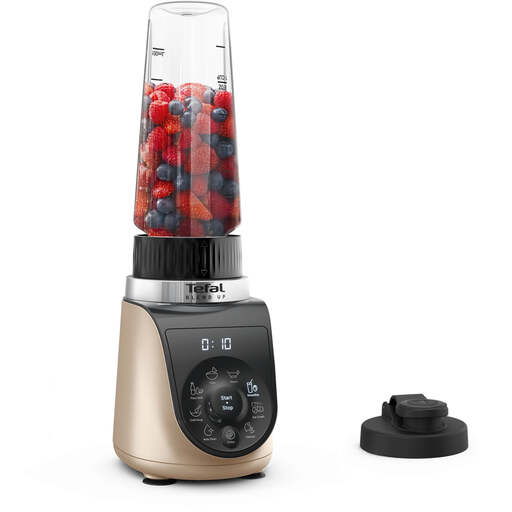 No image available
The product title describes this as a personal smoothie blender; check the ingredient instructions and included cup for your pineapple shake.
 No image available
Suitable if you want to blend in an approved spot without a power socket and take your shake with you in the cup.
The product title lists a rechargeable battery and USB-C charging; the product description mentions a drinking lid and rinseable parts. The stated operating time is 20 minutes.
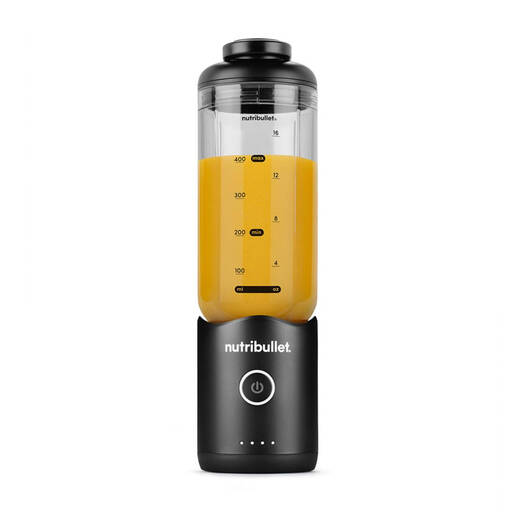 No image available
Suitable if you want to blend without a power socket and are looking for a 590 ml cup.
The product title lists a rechargeable battery and USB-C charging. The product description mentions a removable blade assembly and blending frozen ingredients; check the instructions for pineapple.
No, don’t assume that you can. Bosch lists recipes using frozen fruit for the MMB2111S, but check the manual for your exact model, including which ingredients are suitable and the filling instructions. Voedingscentrum recommends peeling pineapple, removing the tough core and cutting the fruit into pieces before freezing.
Follow the cleaning instructions for the exact model and check which parts are dishwasher-safe. Philips confirms this for the removable parts of the HR2510/90. Also clean the workspace you used and store cut pineapple in a sealed container in the fridge.
According to Rijksoverheid, when you buy a product you’re entitled to a product that works properly, and the seller must help resolve any problems. Any manufacturer’s warranty is separate; check the terms and who the seller is before buying.
Electric blenders must comply with the applicable product safety rules. According to the Netherlands Food and Consumer Product Safety Authority (NVWA), CE marking is mandatory for products covered by the Commodities Act Decree on Electrical Equipment. Parts that come into contact with food or drink are subject to the applicable EU rules on food contact materials. The electrical rules that apply depend, among other things, on the appliance and its power supply; a product listing alone doesn’t prove that an individual item complies with the rules.