
If you make one portion
You make one pear smoothie at home during your lunch break and want a compact appliance with a cup that suits your portion size. Philips and Bosch describe models with a cup for taking with you or drinking from straight away.


For a fresh pear smoothie, a cup suited to your portion size and parts that are easy to clean make a practical starting point; wattage alone won’t predict the blending results. If you want to take your smoothie with you or blend other ingredients too, check the cup and features of the exact model, and look at the product marking before you buy.
You make one pear smoothie at home during your lunch break and want a compact appliance with a cup that suits your portion size. Philips and Bosch describe models with a cup for taking with you or drinking from straight away.
You blend your smoothie before your break and want to drink from the same lidded cup or take it with you. Philips describes this use for the HR2620/40; Bosch lists a To Go Bottle for the MMB2111S. A travel cup is no substitute for chilled storage.
You start with fresh pear, but are also considering recipes with frozen ingredients or extra programmes. Check the features of the exact model; Bosch and Tefal describe these for each version.
| What to consider | What to look for | Who is this most important for? |
|---|---|---|
| Portion size and dimensions | Compare the cup capacity with your usual portion size and measure the space where you plan to store the appliance. | I make one smoothie during my break and don’t want an appliance that takes up unnecessary space. Around 33% of consumers make a suitable portion size and compact storage their top priority. |
| Taking it with you | Check that the correct cup and a suitable drinking lid are included with the exact model; also consider how you’ll keep the smoothie chilled. | I blend in advance and drink my smoothie somewhere else, so I want to be able to drink from the same cup. Around 25% of consumers make portability their top priority. |
| Other ingredients | Check the manual to see which ingredients and preparation methods are suitable for the exact model. Consumentenbond emphasises that wattage alone doesn’t determine how well a blender makes smoothies. | I might want to use other ingredients as well as fresh pear, so I want to know what my chosen model can handle. Around 17% of consumers make versatility their top priority. |
| Cleaning | Check which parts need to be washed by hand and which the manufacturer says are dishwasher-safe. | After a short break, I want to clean the cup and any dishwasher-safe parts without too much fuss. Around 25% of consumers put ease of cleaning first. |
The stated motor power alone doesn’t predict how a blender will handle your ingredients. Consumentenbond assesses blending results separately.
Compare the ingredients allowed and, where available, independent results for the exact model and intended use.
A lid is handy for taking your smoothie with you, but it doesn’t mean you can store it outside the fridge. Voedingscentrum offers advice on storing fruit smoothies in the fridge.
Make a separate plan for keeping your smoothie chilled until your break.
A manufacturer’s warranty and your statutory rights against the retailer aren’t the same thing. The Dutch government explains that the expiry of a manufacturer’s warranty doesn’t automatically mean your rights expire too.
Check exactly what any additional warranty covers and keep your proof of purchase.
A paid-for extended warranty may offer little extra if it doesn’t give you any additional rights.
Philips describes the HR2620/40 as a compact blender that lets you blend directly in a tumbler.
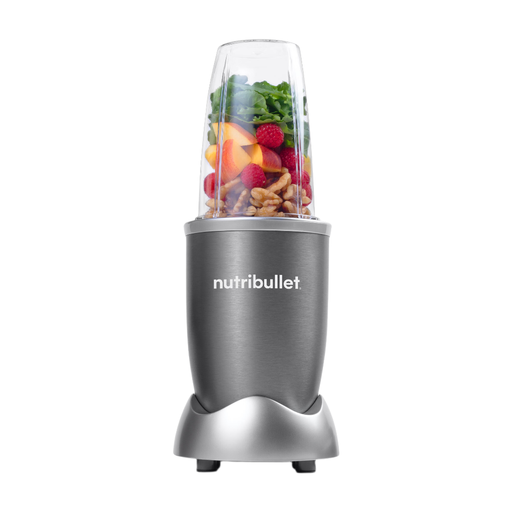
The manufacturer describes the Original 600 NB603DG as a personal blender with a 600 W base unit and a 700 ml cup.
Bosch describes the VitaPower Serie 2 MMB2111S as having a 0,6 l cup and a To Go Bottle.
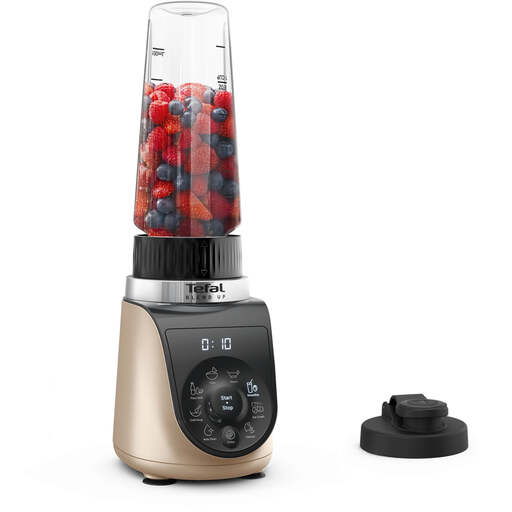
Tefal describes the Blend Up BL19H4F0 as having different programmes and bottles for a range of recipes.
These models are designed for making a smoothie for one, with options for extra programmes or a travel cup. Check the manual and product marking for the exact model before making your choice.
 No image available
An option for making a smoothie if a compact jug and removable parts are important to you.
The product description lists a 0,6 l jug, 350 W, two speeds, a pulse function and removable dishwasher-safe parts.
 No image available
An option if you want to try making other things as well as a pear smoothie.
The product description lists six programmes; check the manual to see which preparations and ingredients are suitable for this model.
 No image available
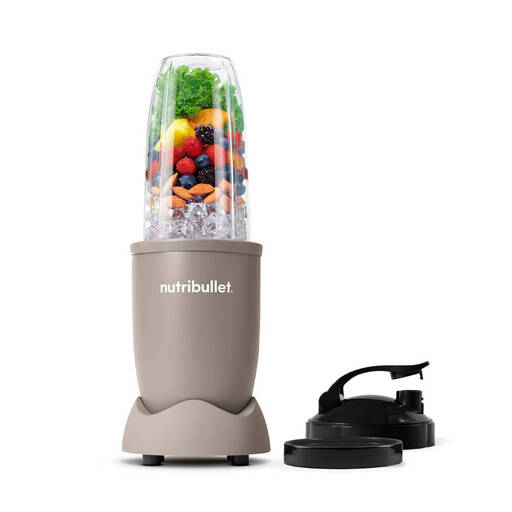
An option if you want to make a smoothie in a cup with a travel lid and are considering using other ingredients too.
The product name lists a 700 ml capacity and 900 W. The description mentions a pulse function, use with frozen fruit and dishwasher-safe accessories.
 No image available
An option for making a smoothie in a personal cup, with extra programmes to consider.
The product description lists a 0,70 l cup, six automatic programmes, a pulse function and a dishwasher-safe cup.
 No image available
An option if you want to blend your smoothie before your break and drink from the same cup.
The product name lists a 475 ml capacity, a rechargeable battery and USB-C charging. The description mentions a lidded drinking cup and removable parts that can be rinsed with soap and water.
No. Consumentenbond says that power isn’t everything and assesses how well blenders make smoothies separately. Where possible, compare results for the exact model and your intended use.
This varies by model and part. For the nutribullet NB603DG, the manufacturer instructs you to rinse the blade assembly with soap and water; according to those instructions, the cup can go on the top rack of the dishwasher. Check the manual for your model.
Voedingscentrum recommends keeping an opened fruit smoothie in the fridge for 1–2 days. This advice doesn’t give a storage time for a filled travel cup kept unrefrigerated.
According to the Dutch government, you should contact the retailer if there’s a problem. The Netherlands has no fixed statutory two-year guarantee period; what you can expect from a product depends, among other things, on the product and how it is normally used.
Yes. The Netherlands Food and Consumer Product Safety Authority states that CE marking is compulsory for electrical products. Check the marking and product documentation for the specific model; a compulsory marking doesn’t automatically mean that every product needs a separate inspection.