
Smoothie maker with limited worktop space
You make small portions and want to know whether the appliance, cup and separate parts will fit in your kitchen. The Consumentenbond recommends comparing blenders based on how you intend to use them.


For a single smoothie made with fresh melon, start by considering the space you have, the usable capacity of the cup and how easy the parts are to clean. A higher wattage alone doesn’t guarantee a smoother result. If you use frozen melon or want to take your smoothie with you, also check which ingredients are permitted and whether the right cup and lid are included.
You make small portions and want to know whether the appliance, cup and separate parts will fit in your kitchen. The Consumentenbond recommends comparing blenders based on how you intend to use them.
You freeze peeled melon in pieces and want to check in advance whether your chosen blender can handle frozen ingredients. The Voedingscentrum recommends freezing melon without the rind and cut into pieces; also check the instructions for your specific appliance.
You look for parts that are easy to clean and, if you take your smoothie with you, for an included cup and lid. Philips and Tefal describe these features for the models discussed here.
| What to consider | What to look for | Who is this important for? |
|---|---|---|
| Space and portion size | Compare the appliance dimensions and cup capacity. Also measure the available height and think about where you’ll store any spare cups. | If I have limited worktop space, I want a blender that fits and has enough room for my portion. Around 36% of consumers give space and portion size top priority. |
| Ingredients and desired texture | Check the manual to see whether frozen fruit and ice are permitted. Where possible, compare smoothie test results rather than just wattages. | If you want to use frozen melon, you’ll want to know whether the appliance is suitable and which instructions to follow. Around 29% of consumers prioritise how ingredients are processed. |
| Cleaning | Check whether each part is dishwasher-safe and how to remove the blade safely. | If I use it regularly, I want to clean the cup and other food-contact parts without any fuss. Around 21% of consumers give everyday cleaning the most weight. |
| Taking it with you | Check that the drinking cup and the right lid are included. If you’re not drinking the smoothie straight away, follow the appropriate storage advice. | If I want to take my smoothie with me, a suitable cup with a lid matters more than a large cup capacity alone. Around 14% of consumers choose portability as their main consideration. |
A power rating on its own doesn’t tell you how well a blender will make a melon smoothie. The Consumentenbond assesses blenders on factors including how well they actually make smoothies and how easy they are to use.
Start with the ingredients and portion you want to prepare. Treat wattages as model specifications, not as a ranking of quality.
The stated capacity doesn’t tell you how much room will be left once you add the ingredients. The melon pieces also need to fit inside the cup.
Cut the melon to size, check the fill mark in the manual and decide how many cups you want to store.
A small cup may mean you need to blend more often; extra cups also take up storage space.
A cup with a lid doesn’t change the storage advice for cut melon or a prepared smoothie.
Drink the smoothie straight away or follow the relevant fridge storage advice. Wash the melon before cutting it.
Philips describes the HR2670/00 Blend & Go as a compact blender with a drinking cup, lid, 350 W and two speed settings. This combination may be a good fit if you want to make one smoothie and take it with you.
Bosch lists a 0,6 l blending cup and dimensions of 367 × 122 × 126 mm for the VitaPower Serie 2 MMB2111S. These measurements can help you check whether you have enough space.
According to nutribullet, the Original 600 NB606DG comes with 700 and 500 ml cups. This may suit you if you switch between portion sizes.
Tefal lists 400 and 700 ml bottles, eight automatic programmes and a self-cleaning setting for the Blend Up BL19H4F0.
These Joybuy picks are aimed at small portions, blending straight into a cup, taking your smoothie with you, and making smoothies with fresh or frozen fruit. Check the product information for each model to see which ingredients and parts are permitted.
 No image available
An option if you want to blend straight into a travel cup; the product description also says it can be used with frozen ingredients.
The product description lists a 710 ml cup, three automatic settings and removable, dishwasher-safe parts.
 No image available
This mini blender may suit you if you want to make a small portion and clean the parts after use.
The product information lists a capacity of 0,6 l, two speeds and removable, dishwasher-safe parts. It also mentions a setting for soft fruit and an ice-crushing function.
 No image available
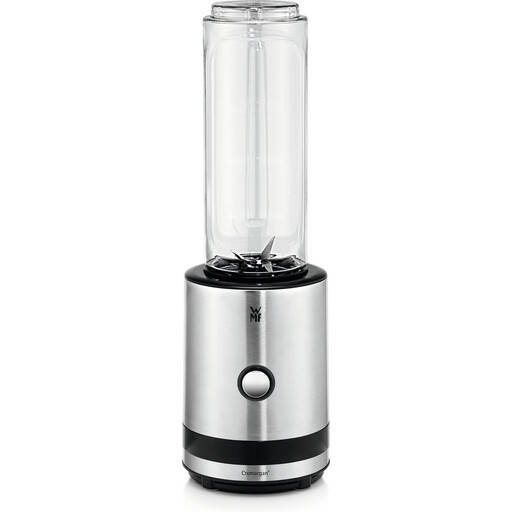
The cup capacity may suit a single portion; the product description also mentions a lid for taking the cup with you.
The product information lists a 500 ml glass jug, 250 W and removable, dishwasher-safe parts. The stated dimensions are 13 × 13 × 35 cm; check the available height before buying.
 No image available
An option if you want to take smoothies with you and the listed ice-crushing function is suitable for your ingredients.
The product description lists two 600 ml bottles, dishwasher-safe bottles and a height of 28 cm. Allow for storage space for both bottles.
 No image available
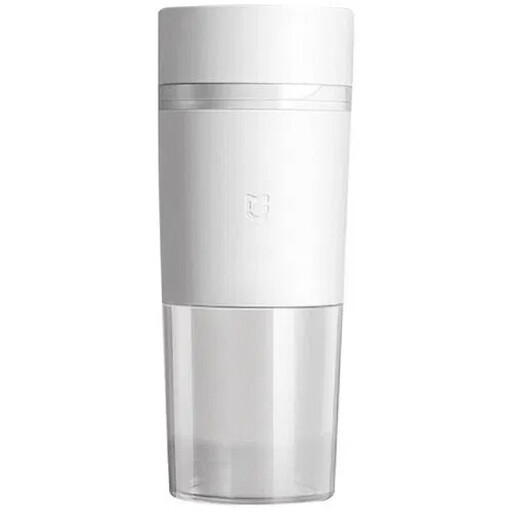
A portable option for a single portion if you don’t want to blend in one fixed place on the worktop.
The product description lists a capacity of 400 ml, a rechargeable battery and a USB-C connection. It says the blender isn’t suitable for hot liquids.
Wash the melon before cutting it and keep cut pieces covered in the fridge. The Voedingscentrum recommends peeling melon and cutting it into pieces before freezing.
For an opened product labelled ‘fruit smoothie’, the Voedingscentrum recommends storing it in the fridge for 1–2 days. This isn’t advice to store a filled travel cup unrefrigerated for a long time; check the appropriate guidance if you add other ingredients.
This varies by model and part. Philips says the HR2670/00 has dishwasher-safe parts, while Tefal says the BL19H4F0 has dishwasher-safe bottles. Check the manual for the cup, lid and blades individually.
For eligible distance purchases made online from a business, the Dutch government says you generally have a 14-day cooling-off period. You’re also entitled to a product that meets legal standards; if there’s a fault, contact the seller about your statutory guarantee. This doesn’t mean that a fixed two-year statutory guarantee period applies in the Netherlands.
The NVWA says CE marking is mandatory for electrical products covered by the relevant requirements and gives kitchen appliances as an example of electrical equipment. The requirements that apply to a particular blender depend on its design and the relevant regulations; CE marking isn’t a test of smoothie performance.